





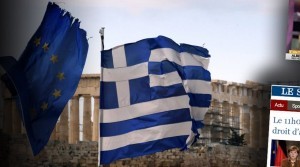
The hot topic in all major financial networks is the possibility of a Grexit, fueled by yesterday’s Spiegel publication, regarding Germany’s stance and how Berlin has now accepted the possibility of a Greek exit from the eurozone.
RBS: “Why a Grexit will not be so isolated”
The assessment that a possible Grexit will not be as isolated as Berlin wants to make it look like is made by the head of the Bank’s macro credit analysis.
Unicredit: “The chaos of a Grexit will give an example to the rest”
At the same time, a head economist of Unicredit, Eric Nielsen, stated that if Greece decides to leave the Eurozone, then this will not be stopped and it might actually take place if the ECB withdraws its support to Greek banks.
According to him, however, the exit will be a disastrous example for the rest of Europe, preventing them from similar initiatives.
According to Nielsen, who was an executive at Goldman Sachs and the IMF, in the event of a crisis in the Eurozone which will start from a Grexit, the ECB will act as a “Breakwater” for other countries.
Le Soir: The Grexit possibility is left open by Merkel
Chancellor Merkel has caused controversy on Sunday, when the majority government seems willing to let Greece leave the Eurozone, should a radical leftist come to power, says Le Soir.
When asked by the AFP, the chancellor and the German finance minister neither confirmed nor denied Spiegel’s reports.
In an article published by the Financial Times, Wolfgang Münchau argues that the moment of truth is approaching for the euro zone, as three crucial national elections will take place within the year: Greece will go to the polls on January 25 and Portugal and Spain in the second half of the year.
According to the article’s editor, these elections will reveal whether the EU’s approach to crisis resolution is politically effective or not. And, given the fact that in both Greece and Spain far left parties lead the polls, political unrest is just around the corner.
Mr. Münchau characterizes the policy followed by Prime Minister Antonis Samaras and the coalition government as “a version of extend-and-pretend: extend the loans, and pretend that you are solvent,” stating that these kind of strategies always fail.
On the other hand, main opposition SYRIZA makes a convincing case for a debt restructuring. But, despite the fact that this is the right position, the far right party is insincere regarding the possible outcome of such a strategy. More specifically, SYRIZA is ruling out a eurozone exit, however it does not clarify what will happen if the negotiations fail.
“The choices then would be either to revert to the status quo — in which case there would be no point in voting for Syriza — or leave the eurozone, and unilaterally default against foreign creditors,” states the article. But this truth is being hushed up, FT say.
Bild: Germany begins quantifying the cost of a Grexit
According to an article published by German Bild newspaper, Greece’s exit from the euro zone would cost Germany approximately 50 billion euros.
“The European crisis has returned. The threat of Greece leaving the euro in the first semester and returning to the drachma is back… What happens to a country that does not comply with the rules and agreements?” the German newspaper asks.
Ask me anything
Explore related questions




