





The implementation of Maritime Rights in Exclusive Economic Zones and illegal immigrant policy improvements are among its achievements.
Italian Prime Minister Renzi is to visit Greece, Luxemburg’s Bettel and Portugal’s Coelho also scheduled to visit afterwards.
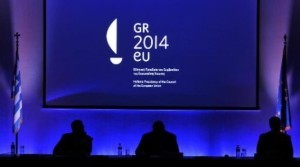
Following the completion of an important Eurogroup Conference which marked the conclusion of the Greek EU presidency, Juncker’s election and the EU-Ukraine association agreement, government sources refer to the details of a voting that will determine Europe for the next 5 years.
The English ”assault”
The voting commenced with the UK Prime Minister taking the stand and fully elaborating on the arguments cast against Mr Juncker,to the extent of characterizing the voting day as a ”sad day”.
However, he didnt himself proceed to any negative comments towards Mr .Juncker. As mentioned, the English didn’t attempt to renegotiate in order to gain any benefits out of Juncker’s election. They just remained steadfast and then faced the result.
Victor Orban, the Hungarian Prime Minister then took point by being the sole supporter of the English policy versus Mr. Juncker.
The European ”answer”
Following the opening statements, there was a mass strike back by 10 Prime Ministers who firmly backed Juncker. The most fervent of his supporters proved to be the French Prime Minister who stressed the remarkable work achieved by Mr. Juncker and disproved all of Cameron’s arguments.
Mr. Samaras also had the chance to support Mr. Juncker by stressing his knowledge and passion on all European Affairs, as well as his stance towards Greece which was strict but purely just.
Upon the Conference completion he had the opportunity to congratulate him over the phone and once more express his support.
Recognition of Greek progress and unexpected tension
Government sources mention that there was a general feeling of recognition and obtainment
as regards the Greek presidency, which was successful in its targets despite various factors which acted as serious deterrents.
To be more specific, the Greeks had only 4 months to conduct their work instead of 6,as the European Elections took up 2 full months in which European officials and relevant organizations dealt with it as a prior engagement.
The Ukranian crisis was also a major setback, though confronted competently, and major steps towards its resolution have been attained.
Finally, the Greeks managed to lower the expected Presidency budget from 50 to a mere 19 million Euro, a fact which made an utterly positive impression among Europeans.
Greek developments – Immigration policy – Maritime right economy
There was also significant progress in matters of great national interest, such as in immigration policy.
For the first time ever, the term ”irregulars” was applied in official European documents to define illegal immigrants.
Also, the issue of repatriation was posed, and though considered of low priority over the past few years, it has now gained major significance for the years to follow.
An overhaul of the Maritime Rights was also set to the table of discussions, along with the just implementation of Exclusive Financial Zones rights, democratic problem solving within naval territories,
and the concept that any condition involving Member States faced with alien threat will constitute a threat to Europe itself.
Financial issues were also discussed, with Europe emphasizing on performance and yield improvements in the economy. High competitiveness and a smart policy in the issue of Energy costs are deemed as vital in the achievement of reforming
Europe’s energy issues and resource self-containment with proportionate improvements to the economy.
The Greek PM future agenda
As mentioned earlier, the PM’s of Italy followed by those of Luxemburg and Portugal are scheduled to visit. The Italian PM will discuss
issues on Illegal immigrant policy and maritime affairs, while Mr Bettel and Mr Coehlo’s agenda of affairs is currently not defined.
Ask me anything
Explore related questions




