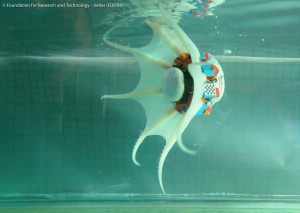
The Foundation for Research and Technology-Hellas (FORTH), led by computer scientist Dimitris Tsakiris, has recreated the nimble movements of the octopus as it pumps its eight limbs in a synchronized motion known as sculling. The FORTH team published a paper last year detailing their research and went on to create a plastic octopus with non-flexible limbs. After improvements to the initial design, including the use of silicon webbing and the addition of a missing octopodes feature that gives the creature more thrust, the team managed to double the robot’s speed. It can travel at up to 180 millimeters (7 inches) per second. 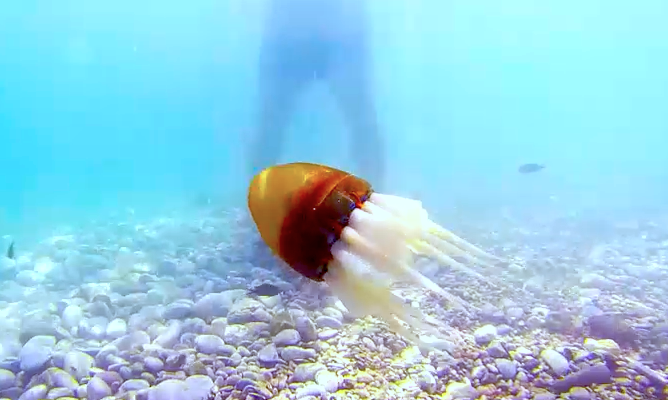
The robotic swimmer is the first to demonstrate a novel mode of underwater propulsion combining patterns of sculling. The video beneath shows the robot being tested in lab conditions in the Aegean sea where it is followed by shoals of small fish, proving that it can be used for the non-disruptive monitoring of ocean life. Apart from surveillance, it might even be used to measure and examine water quality and conditions.
The video below was first unveiled at the International Conference on Intelligent Robots and Systems in Chicago a few days ago. It shows the difference between the robotic octopus with just flexible arms and one with a silicone web (to detail speed) and it shows how the creature crawls around the ground like a real octopus.
Ask me anything
Explore related questions