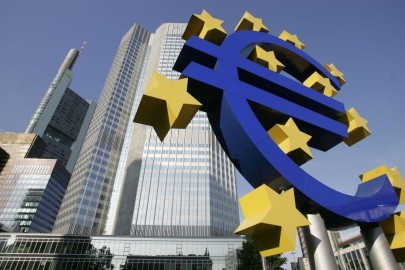
The European Central Bank (ECB) has published on October 26 the results of a thorough year-long examination of the resilience and positions of the 130 largest banks in the euro area as of 31 December 2013.
“This unique and rigorous exercise is a major milestone in the preparation for the Single Supervisory Mechanism, which will become fully operational in November,” said Vítor Constâncio, Vice-President of the ECB. “This unprecedented in-depth review of the largest banks’ positions will boost public confidence in the banking sector. By identifying problems and risks, it will help repair balance sheets and make the banks more resilient and robust. This should facilitate more lending in Europe, which will help economic growth.”
The comprehensive assessment—which consisted of the asset quality review (AQR) and a forward-looking stress test of the banks—found a capital shortfall of €25 billion at 25 banks. Twelve of the 25 banks have already covered their capital shortfall by increasing their capital by €15 billion in 2014. Banks with shortfalls must prepare capital plans within two weeks of the announcement of the results. The banks will have up to nine months to cover the capital shortfall.
The AQR showed that as of end-2013 the carrying values—or book values—of banks’ assets need to be adjusted by €48 billion, which will be reflected in the banks’ accounts or prudential requirements. Furthermore, using a standard definition for non-performing exposures (any obligations that are 90 days overdue, or that are impaired or in default), the review found that banks’ non-performing exposures increased by €136 billion to a total of €879 billion.
The comprehensive assessment also showed that a severe scenario would deplete the banks’ top-quality, loss-absorbing Common Equity Tier 1 (CET 1) capital—the measure of a bank’s financial strength—by about €263 billion. This would result in the banks’ median CET1 ratio decreasing by 4 percentage points from 12.4% to 8.3%. This reduction is higher than in previous similar exercises and is a measure of the rigorous nature of the exercise.
“This exercise is an excellent start in the right direction. It required extraordinary efforts and substantial resources by all parties involved, including the euro area countries’ national authorities and the ECB. It bolstered transparency in the banking sector and exposed the areas in the banks and the system that need improvement,” said Danièle Nouy, Chair of the Supervisory Board. “The comprehensive assessment allowed us to compare banks across borders and business models, and the findings will enable us to draw insights and conclusions for supervision going forward.”
Since the announcement of the exercise in July 2013, the largest 30 participating banks have undertaken various measures, including capital raising to an amount of €60 billion, to strengthen their balance sheets by a total of more than €200 billion. These frontloaded measures are part of the overall successful outcome of the exercise. Some of the measures taken in 2013 reduced the insufficiencies detected by the comprehensive assessment; some measures adopted in 2014 may count toward the coverage of the capital shortfall.
According to the announcement released by the ECB today, the key results of comprehensive assessment of 130 largest euro area banks are:
– Capital shortfall of €25 billion detected at 25 participant banks
– Banks’ asset values need to be adjusted by €48 billion, €37 billion of which did not generate capital shortfall
– Shortfall of €25 billion and asset value adjustment of €37 billion implies overall impact of €62 billion on banks
– Additional €136 billion found in non-performing exposures
– Adverse stress scenario would deplete banks’ capital by €263 billion, reducing median CET1 ratio by 4 percentage points from 12.4% to 8.3%
Ask me anything
Explore related questions