Christmas and New Years Day are two of the most joyful days of the Orthodox Church and they always held a special place in the heart of Greek people. There are many customs associated with the Christmas holiday period, which in Greece lasts 12 days, until the celebration of the Feast of the Holy Epiphany on January 6.
Some of these customs are relatively recent, “imported” from other parts of the world, such as the traditional turkey meal on Christmas day. Others have their roots back in Greek folklore and can even be traced back to ancient Greece.
All these traditions have inspired Greek artists through the centuries, who have managed to capture the magic of the festive season in their work. These are some of their most important works, the nostalgic reminders of a time when Christmas was not all about the presents.
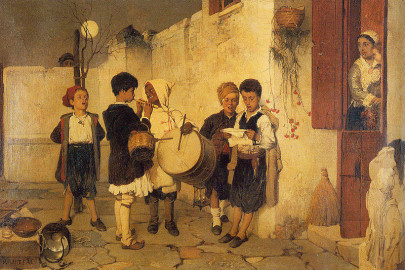
“Christmas Tree” by Spyridon Vikatos
Although an imported custom, the decorating of the Christmas tree is very popular in Greece. In the past, Greeks decorated small Christmas boats in honor of St. Nicholas, a tradition that is still honored by some.
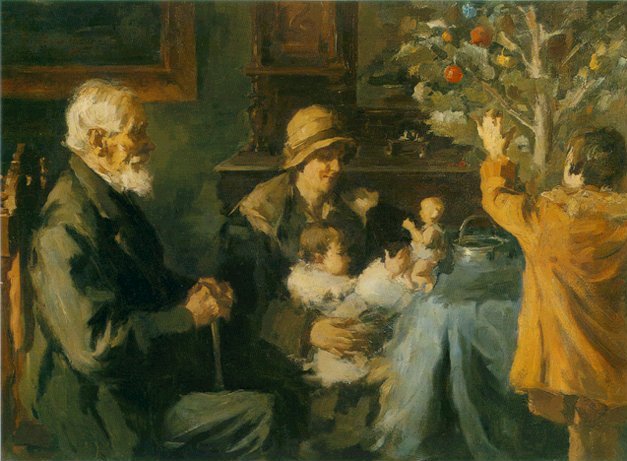
“Carols” by Nikiphoros Lytras
The singing of Christmas carols (or kalanda) is a custom preserved to this day. On Christmas and New Year Eve, children go from house to house in groups singing the carols, accompanied usually by the sounds of the musical instrument “triangle,” but also by guitars, accordions, lyres and harmonicas. Until some time ago, children were rewarded with pastries but nowadays they are usually given money.
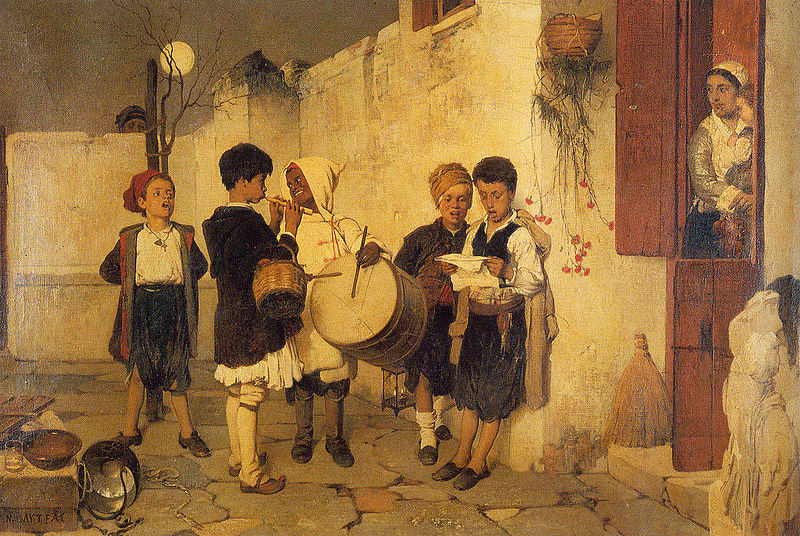
“Pomegranates” by Georgios Jakobides
Pomegranate, an ancient symbol of fertility, regeneration and youth was hanged above the doors of Greek households throughout the 12 days of Christmas. Right before midnight on New Year’s Eve, the householder stands outside the front door and smashes the fruit on the floor so that the seeds may spread everywhere and bring happiness to the household.
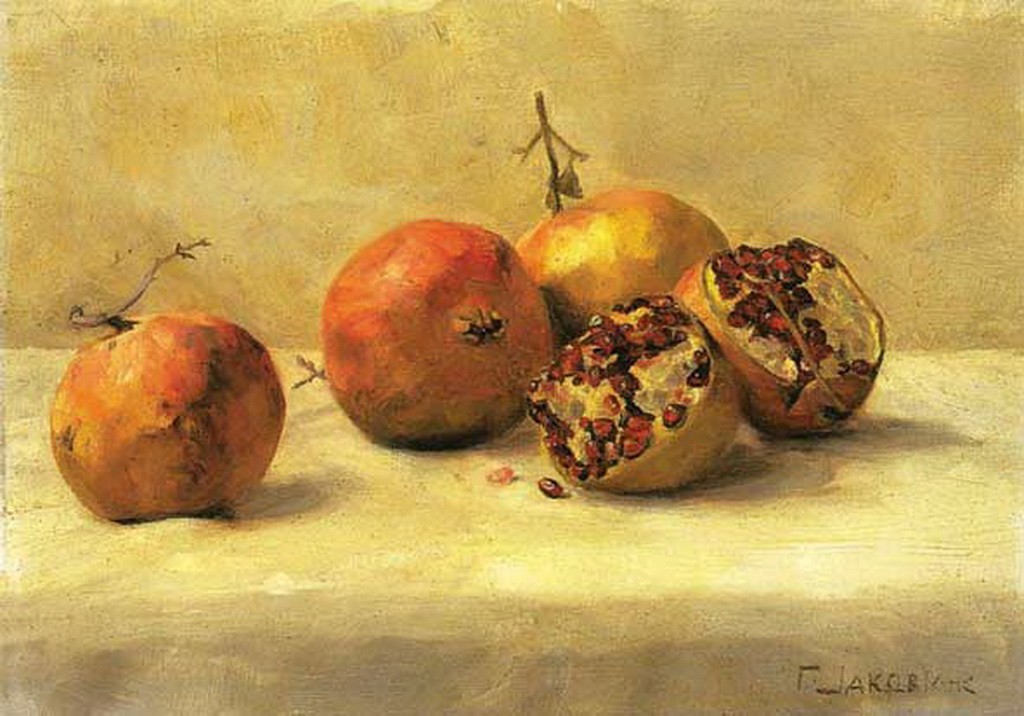
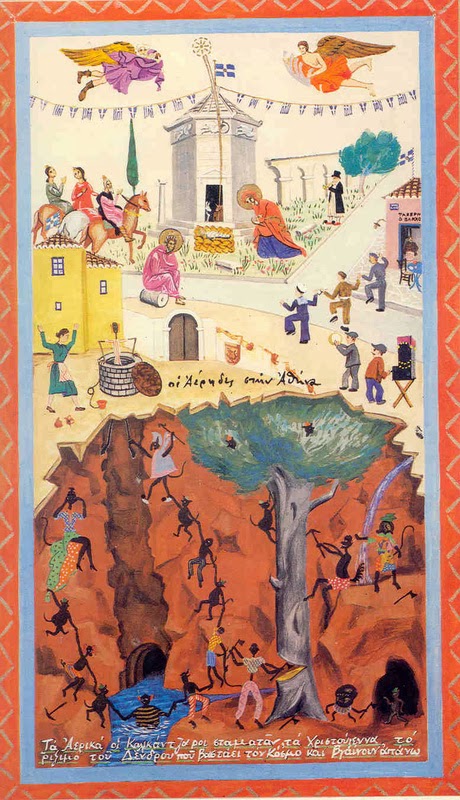
Illustration by P. Tetsis, taken from the book Fairies, elves and goblins by Th. Velloudios
Kalikantzari are Greek malevolent goblins! According to Greek folklore, Kalikantzari stay underground all year round sawing the world tree, so that it will collapse, along with Earth. When they are about to saw the final part, Christmas dawns and they are able to come to the surface and bring trouble to mortals. They love to hide in houses, slipping down chimneys and frightening people. Finally, on the Epiphany, the sun starts moving again, and they must go underground again to continue their sawing. They see that during their absence the world tree has healed itself, so they must start working all over again.
Ask me anything
Explore related questions