
×
GreekEnglish

×
  • Politics
  • Diaspora
  • World
  • Lifestyle
  • Travel
  • Culture
  • Sports
  • Cooking
Tuesday
24
Feb 2026
weather symbol
Athens 16°C
  • Home
  • Politics
  • Economy
  • World
  • Diaspora
  • Lifestyle
  • Travel
  • Culture
  • Sports
  • Mediterranean Cooking
  • Weather
Contact follow Protothema:
Powered by Cloudevo
> Health

Synthetic organs: We’re one step closer to having bioartificial kidneys!

New advances will change our future

Newsroom February 23 07:52

Changing treatment

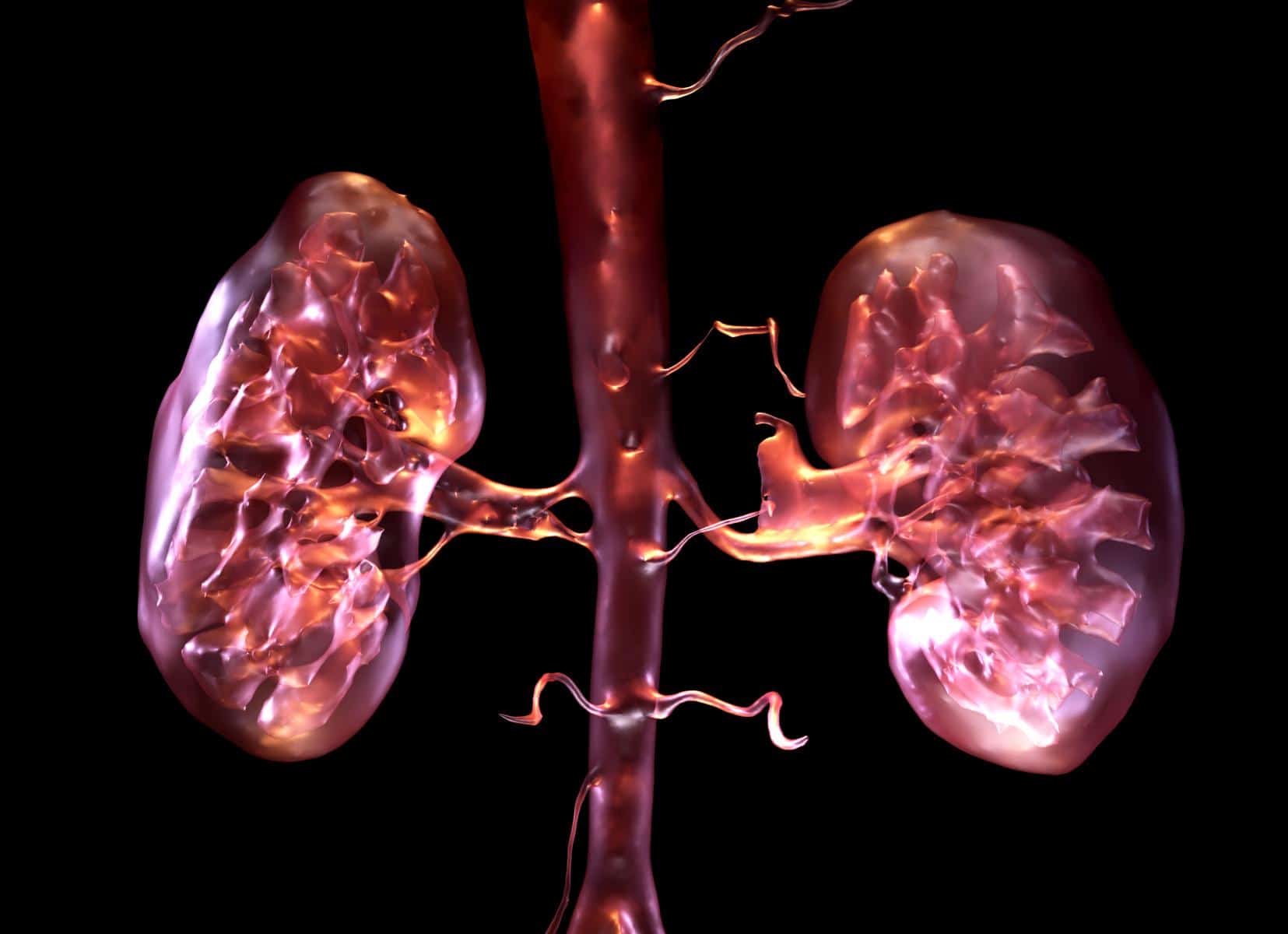
A new study being presented at the American Society of Nephrology (ASN) Kidney Week 2016 at McCormick Place in Chicago is poised to revolutionize kidney failure treatment. Dutch researchers Dimitrios Stamatialis of the University of Twente, Roos Masereeuw from the University of Utrecht, and their teams have successfully engineered a key requirement for a functional bioartificial kidney.

Using conditionally immortalized human renal proximal tubular epithelial cells (ciPTECs) on polyethersulfone-based hollow fiber membranes, the researchers managed to form a “living membrane” consisting of a tight kidney cell layer on artificial membrane surfaces. They were able to demonstrate that the cell monolayer is indeed a functional one, as it can transport molecules from one side to the other.

“[This is] an important step towards the development of a bioartificial kidney device,” according to Stamatialis. “The strategies and methods of this work could be relevant to the development of other bioartificial organs, such as a bioartificial liver or bioartificial pancreas, and organs on chips — such as a kidney on chip, a lung on chip, or a liver on chip.”
ακ

Synthetic organs

>Related articles

In a first, study finds apes recognize pals they haven’t seen in decades

Pan-Hellenic Examinations 2024: General Lyceum candidates are examined today in Ancient Greek, Mathematics and Biology

Frozen human brain tissue works perfectly when thawed 18 months later

A functional bioartificial kidney could make dialysis or transplantation unnecessary for the millions of patients suffering from renal failure (about 26 million in the United States alone). Although synthetic, its components are still largely based on biological materials, as described above. This is what’s wonderful about developing synthetic organs for treatment purposes — they can work seamlessly with organic systems already in place.

Thanks to developments in synthetic biology, medical researchers are getting quite good at engineering synthetic organs. They’ve already been able to grow artificial lungs and create mini-retinas using stem cells, as well as 3-D print artificial bones and a heart. More progress in the field is still needed as it’s far from perfected, but where conventional and contemporary medicine fails, the medical developments of the future will prevail.

Source

Ask me anything

Explore related questions

#artificial#biology#synthetic organs
> More Health

Follow en.protothema.gr on Google News and be the first to know all the news

See all the latest News from Greece and the World, the moment they happen, at en.protothema.gr

> Latest Stories

Retatrutide enters the weight-loss battle – “Magic drug No. 3,” reduces body weight by 25%

February 24, 2026

DEOS to replace SDOE, with 30,000 market inspections, 450 armed officers, drones, AI, and vessels

February 24, 2026

Washington hosts the crucial crash test for the Vertical Corridor

February 24, 2026

Tsipras aiming for autumn, Samaras probably not, and Nikos… sandwiched; the Lenten outings of the energy players, Mykonos’ Four Seasons, shipping’s butter babies

February 24, 2026

Gerapetritis in the U.S. for a meeting with Rubio

February 24, 2026

Weather: Rise in temperatures and a mild two-week period after three months of disturbances

February 24, 2026

A new era in military service begins today: The new model comes into force – all the changes foreseen

February 24, 2026

At Souda, the world’s largest aircraft carrier USS “Gerald R. Ford” (333 meters long) with 75 fighter jets – watch video

February 23, 2026
All News

> Culture

The photos of a national trauma: This is the Nazi sergeant who photographed the executions in Kaisariani

For the first time, the face of Sergeant Hermann Hoyer is revealed—the man who captured on film the heroes executed by the Nazis. Rare historical documents also come to light, including images from the funeral of General Krech, who was killed in Molai, as well as from the unit stationed in Malakasa

February 23, 2026

Eleni Glykatzi-Arveler: How she changed the historical image of Byzantium

February 23, 2026

The Herodion closes for three years: It will reopen with a new entrance, roof, lighting, no speaker towers, and an expanded forecourt

February 20, 2026

Brad Pitt’s secluded accommodation on Hydra: Why he chose the small hotel in Vlychos (video-photos)

February 20, 2026

Giannis Aggelakas: Transforms into “The Little Prince” on the Stage of Stegi

February 20, 2026
Homepage
PERSONAL DATA PROTECTION POLICY COOKIES POLICY TERM OF USE
Powered by Cloudevo
Copyright © 2026 Πρώτο Θέμα