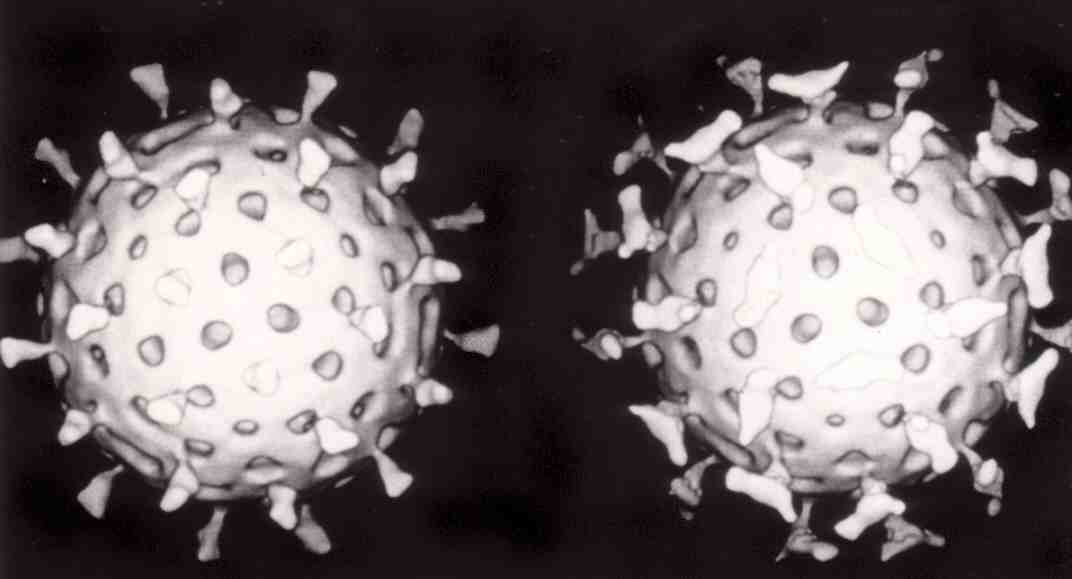
The committee to advise the President first met approximately one month after the virus first appeared.
There had been more than 400 cases and 50 deaths so far, mostly split between Frankfurt, Germany, and Caracas, Venezuela.
Patients presented with fever, cough, and confusion. In a disturbing number of cases, encephalitis — swelling in the brain — caused patients to fall into a potentially fatal coma.
Researchers had been able to isolate what appeared to be a new pathogen, a disease-causing agent.
The virus seemed to be a new type of parainfluenza virus from a family of respiratory viruses that normally cause mild illnesses like the cold. Scientists studying the disease couldn’t identify where the virus fit in the parainfluenza family, so they referred to the pathogen as parainfluenza Clade X.
Health authorities said Clade X, which appeared to spread by coughing and to take up to a week before patients started showing severe symptoms, had pandemic potential.
This situation described here is fictional.
It’s part of a scenario created by researchers at the Johns Hopkins Center for Health Security, designed to see how real policy experts and government decisionmakers would respond to a similar situation.
The scenario was designed to be completely realistic, with a disease that could plausibly exist and a world that has the exact same resources to respond as we do now.
On May 15th, when the “Clade X” simulation was played out real-time, the people acting out the scenario were the sorts of individuals who’d be responding to this situation in real life. The players included former Senate Majority Leader Tom Daschle, Indiana Representative Susan Brooks (R), former CDC Director Julie Gerberding, and others with extensive experience.
Yet by the day’s end, representing 20 months after the start of the outbreak, there were 150 million dead around the globe, and 15 to 20 million deaths in the US alone. With no vaccine for the illness yet ready, that death toll would have been expected to climb.
“I think we learned that even very knowledgeable, experienced, devoted senior public officials who have lived through many crises still have trouble dealing with something like this,” Dr. Eric Toner, a senior scholar at the Johns Hopkins Center for Global Health Security and the designer of the Clade X simulation, told Business Insider. “And it’s not because they are not good or smart or dedicated, it’s because we don’t have the systems we need to enable the kind of response we’d want to see.”
If efforts to develop a vaccine continued to fail, Toner said a disease like this could kill 900 million people, or more than 10% of the world’s population.
We’ve been lucky in the past
A virus capable of wiping out more than 10% of the world might sound like it would need to be one of the most fatal, contagious diseases ever — as easy to catch as measles, which spreads to 90% of the non-vaccinated people near an infected person, but as fatal as Ebola.
This is not the case, according to Toner, who spent a year creating the simulation.
The Clade X virus that Toner and colleagues used in the simulation was only moderately contagious and moderately lethal. It spread as easily and was about as deadly as SARS, which infected more than 8,000 between 2002 and 2003, killing about 10% of those infected.
The world was lucky SARS wasn’t worse. That virus wasn’t particularly contagious until people were already very sick. As a result, it spread more in healthcare settings, once patients had landed in clinics and hospitals. That limited the spread of SARS in broader public spaces.
There’s also evidence it mutated to become less virulent. SARS was stopped, but there was “a great deal of luck involved,” according to Toner.
With Clade X, which theoretically would spread relatively fast in community settings (like SARS did in healthcare facilities), the world would not be as lucky.
“We think this scenario is quite plausible,” said Toner.
‘We don’t want to provide a recipe for how to do this’
Shortly after the committee to advise the President met to discuss how to respond to Clade X, the first case appeared in the US, at a university in Massachusetts.
New information about the pathogen emerged. Despite being a parainfluenza virus, Clade X also had genetic elements of the Nipah virus, a rare but extremely lethal virus that the World Health Organization considers an urgent research priority because of its potential to cause a pandemic.
In the simulation, the virus was bioengineered and released by a group known as A Brighter Dawn, with the intention of reducing the world’s population back to pre-industrial levels. The group was largely modeled after the cult Aum Shinrikyo, which released the chemical weapon sarin on the Tokyo subway in 1995.
Before the sarin attack, Aum Shinrikyo reportedly tried to develop biological weapons. Advances in the field of synthetic biology make the production of deadly biological weapons a far simpler procedure today than when Aum Shinrikyo carried out attacks, to the point that many experts believe weaponized disease may be the biggest threat humanity now faces.
Toner said researchers are convinced a virus like the one released by A Brighter Dawn could be created and released. But he said the simulation designers will not reveal exactly how they determined this disease would be designed.
“We don’t want to provide a recipe for how to do this,” he said.
Dark Winter, Atlantic Storm, and the lessons learned
The Center for Health Security has run two other major simulations before Clade X.
In June of 2001, a similar group of policy experts played the Dark Winter scenario, in which a terrorist group released smallpox at shopping malls in the US — still a scary enough potential scenario that the FDA for the first time this month approved a drug to treat smallpox in case of an attack. An analysis of that exercise suggested that if the outbreak couldn’t be stopped using vaccines within two months, the devastating illness could have infected 3 million and killed one million.
“People were just beginning to think of bioterrorism as a threat” at the time, said Toner. Not long after, the 9/11 attacks and anthrax letters would convince the world that the threat of terrorism was of far greater concern.
In 2005, in the Atlantic Storm exercise, political leaders played through another smallpox release scenario. By then, governments around the world had stockpiled smallpox vaccines. But as the health experts behind the scenario explained after, a smallpox outbreak in a world with vaccines is not a worst-case scenario — other pandemics, naturally occurring or created, could be even more dangerous. Clade X reflects that.
Though Clade X involved a bioengineered virus, Toner said the response required wasn’t necessarily different from what we’d need to deal with a naturally-emergent pathogen. A virus like Clade X could just as easily emerge naturally — if SARS had been just slightly different, it might even have been that virus.
We aren’t ready for what’s coming
A deadly disease with the potential to cause widespread loss of life around the world is coming. Whether it’s manufactured or jumps to humans after spreading in animal species, that’s considered a fact by infectious disease and bioterror experts.
George Poste, an ex officio member of the Blue Ribbon Study Panel on Biodefense, a group created to assess the state of biodefense in the US, previously told Business Insider it was inevitable that a disease as deadly as the 1918 flu pandemic that killed 50 million people would emerge again.
At a recent talk, Bill Gates warned that we’re not prepared.
“In the case of biological threats, that sense of urgency is lacking,” he said. “The world needs to prepare for pandemics in the same serious way it prepares for war.”
Toner said the Clade X scenario highlighted many of the shortcomings in our global healthcare system.
“We don’t have the ability to produce vaccines to a novel pathogen within months rather than decades and we don’t have the global public health capabilities that would allow us to rapidly identify and control an outbreak before it becomes a pandemic,” he said.
He also said that the health systems in the US and around the world aren’t ready for the rapid surge in cases they’d see in the case of pandemic disease spread.
A pandemic could cause hospital systems to collapse under the pressure. Most people don’t know how close we came to having that happen in the US in 2009, he said, due to a not particularly virulent flu strain.
We also don’t have systems in place to deal with the overlap between healthcare, foreign policy, and national security.
“It will happen, but I don’t know when,” Toner said. Whenever it does, we have to hope that we’ll be more prepared than we are now.
Source: iflscience
Ask me anything
Explore related questions