×
GreekEnglish

×
  • Politics
  • Diaspora
  • World
  • Lifestyle
  • Travel
  • Culture
  • Sports
  • Cooking
Monday
08
Dec 2025
weather symbol
Athens 16°C
  • Home
  • Politics
  • Economy
  • World
  • Diaspora
  • Lifestyle
  • Travel
  • Culture
  • Sports
  • Mediterranean Cooking
  • Weather
Contact follow Protothema:
Powered by Cloudevo
> Culture

Genetic Study Examines Europe’s Hunter-Gatherers – The Balkan link

Migrants from the Balkans as early as 17,000 years ago are likely to have produced Epigravettian culture

Newsroom March 8 07:12

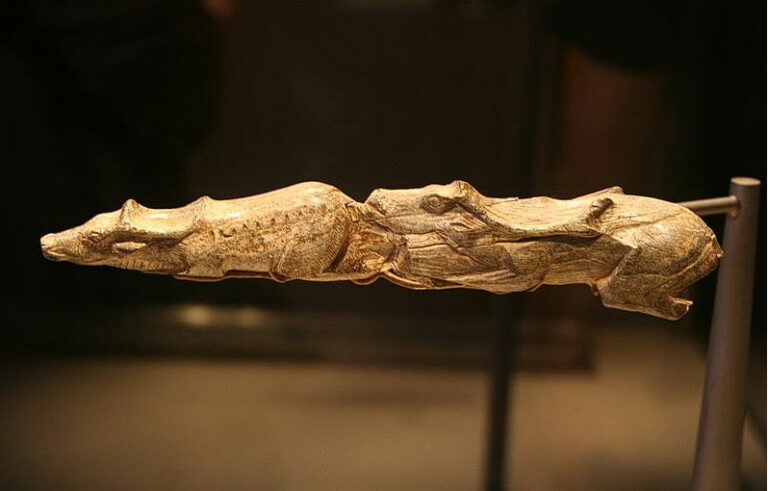
According to a Live Science report, an analysis of the genomes of 356 European hunter-gatherers who lived between 35,000 and 5,000 years ago suggests that two genetically distinct groups comprised the Gravettian culture, which produced similar weapons and art known today between 33,000 and 26,000 years ago.

>Related articles

From MAGA to Make Europe Great Again, with support for patriotic parties and a “stop” on mass immigration – How to stop the onslaught of China

Billionaire Andrej Babis reappointed Prime Minister of the Czech Republic on Tuesday

US Ultimatum to the EU: Take on the majority of NATO spending by 2027

Cosimo Posth of the University of Tübingen said that one of these lineages, dubbed Fournol after a site in France, belonged to a group of people whose remains have been recovered in France and Spain, while the other, named Věstonice for a site in the Czech Republic, came from the Czech Republic and Italy. He added that the Fournol were descended from the Aurignacians, who lived in Europe between 43,000 and 33,000 years ago. Ancestors of the Věstonice came from western Russia, however.

The study also indicates that the Fournol survived the Last Glacial Maximum, but the Věstonice died out. It had been previously thought that the Věstonice lived in Italy during the Last Glacial Maximum, with their descendants producing what is known as Epigravettian culture after the glaciers retreated. Instead, migrants from the Balkans as early as 17,000 years ago are likely to have produced Epigravettian culture. Finally, the study suggests that as the climate warmed and forests spread across Europe some 14,000 years ago, the Epigravettians spread northward as the descendants of the Fournol died out.

source archaeology.org

Ask me anything

Explore related questions

#Balkans#europe#hunter gatherers
> More Culture

Follow en.protothema.gr on Google News and be the first to know all the news

See all the latest News from Greece and the World, the moment they happen, at en.protothema.gr

> Latest Stories

Netherlands: Government pledges another €700 million in aid for Kiev in 2026

December 8, 2025

Three things scientists fear for 2026

December 8, 2025

Zelensky: Till now no agreement has been reached on eastern Ukraine with the US

December 8, 2025

Cable: The three developments that are “blowing the fuse” on the project

December 8, 2025

Strong 5.3 magnitude earthquake in Antalya, Turkey

December 8, 2025

Farmers sharpen their stance: Clashes outside Heraklion Airport, nationwide highway blockades, and preparations for port shutdowns (updated)

December 8, 2025

Restoration and enhancement works begin at the historic Church of Agios Nikolaos Rangavas in Plaka

December 8, 2025

The Feast of Saint Nicholas at the Finnish Parish of Stockholm

December 8, 2025
All News

> Lifestyle

Taylor Swift: The date of her wedding to Travis Kelce has been revealedThe couple may marry in Rhode Island

The date of Travis Kelce and Taylor Swift’s wedding has been revealed, as the countdown to the ceremony has already begun

December 6, 2025

Is the myth of youth collapsing? Why the best years of our lives start after 40

December 3, 2025

Why some people are always late to their appointments – The 5 types

December 2, 2025

Simona Procházková: Miss Czech Republic wants to inspire the world through her activism

December 2, 2025

Christina Koletsa welcomes December at the beach

December 1, 2025
Homepage
PERSONAL DATA PROTECTION POLICY COOKIES POLICY TERM OF USE
Powered by Cloudevo
Copyright © 2025 Πρώτο Θέμα