
×
GreekEnglish

×
  • Politics
  • Diaspora
  • World
  • Lifestyle
  • Travel
  • Culture
  • Sports
  • Cooking
Wednesday
11
Mar 2026
weather symbol
Athens 16°C
  • Home
  • Politics
  • Economy
  • World
  • Diaspora
  • Lifestyle
  • Travel
  • Culture
  • Sports
  • Mediterranean Cooking
  • Weather
Contact follow Protothema:
Powered by Cloudevo
> Culture

2,600-year-old stone busts of ‘lost’ ancient Tartessos people discovered in sealed pit in Spain

The carved stone faces, which archaeologists date to the fifth century B.C., were found hidden inside a sealed pit

Newsroom April 26 04:48

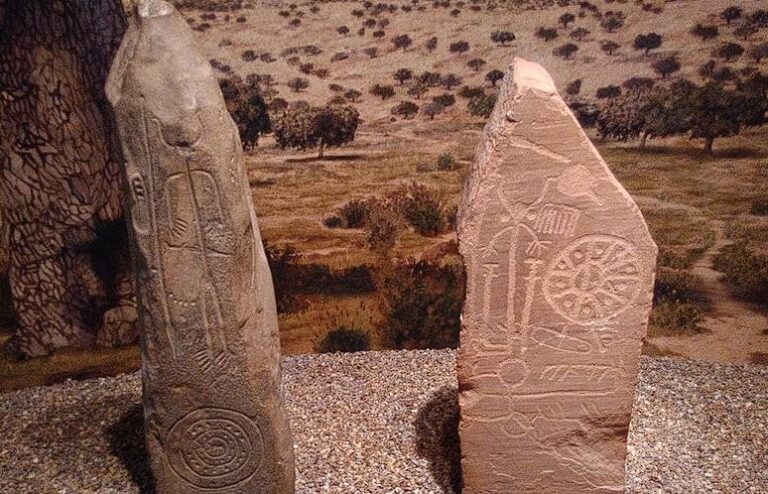
Archaeologists in Spain have unearthed five life-size busts of human figures that could be the first-known human depictions of the Tartessos, a people who formed an ancient civilization that disappeared more than 2,500 years ago.

The carved stone faces, which archaeologists date to the fifth century B.C., were found hidden inside a sealed pit in an adobe temple at Casas del Turuñuelo, an ancient Tartessian site in southern Spain. The pieces were scattered amongst animal bones, mostly from horses, that likely came from a mass sacrifice, according to a translated statement(opens in new tab) published April 18.

“The unusual thing about the new finding is that the representations correspond to human faces,” Erika López(opens in new tab), a spokesperson for the Spanish National Research Council (CSIC), said in the statement.

also read

Fire breaks out at Russian Cultural Center in Nicosia (video)

>Related articles

Spain raises alarm over swine flu, warns of human-to-human transmission

Sales of energy drinks to children under 16 to be banned in Spain

Hellenic Heritage: The new digital hub connecting visitors with 350 archaeological sites and museums

Marvel Universe’s Loki in Greece (photo)

Archaeologists from the CSIC called this discovery “a profound paradigm shift in the interpretation of [Tartessos],” since this ancient civilization, which existed from about the eighth to the fourth centuries B.C., was long considered an aniconic culture in which divinity was represented through animal or plant motifs, rather than idolized humans, according to the statement.

more at livescience.com

Ask me anything

Explore related questions

#ancient civilisations#archaeological excavations#archaeology#excavations#spain
> More Culture

Follow en.protothema.gr on Google News and be the first to know all the news

See all the latest News from Greece and the World, the moment they happen, at en.protothema.gr

> Latest Stories

Athanasios Kanakis, a traveler of art

March 11, 2026

Curtain falls on Golden Dawn appeal trial: 13 years for organization leadership — See the sentences in detail

March 11, 2026

Two repatriation flights for Greeks today from Dubai and Doha

March 11, 2026

Monaco announces split with Spanoulis: “We thank him for the passion, energy, and dedication he showed to the team”

March 11, 2026

Greek Community of Toronto appoints Georgia Papaspyrou as Chief Operating Officer

March 11, 2026

Intervention from OLME following the death of Sofia Christidou: ‘Teachers are not expendable’

March 11, 2026

The Administrative Judges express their concern about the dangerous escalation of the war in the Middle East

March 11, 2026

Spain launches tool to monitor hate speech on social media

March 11, 2026
All News

> Travel

Hydra in a day – A timeless seaside escape

Hydra sweeps away the pulse of city life and welcomes you into its effortlessly serene pace

February 18, 2026

Kimolos wins over International Media: “A hidden gem waiting to be discovered”

August 28, 2025

French Vogue discovers the exotic beauty of Skopelos

August 28, 2025

Naxos tops the list of Greek kitesurfing destinations for 2025

July 9, 2025

Holidays in Psara

June 20, 2025
Homepage
PERSONAL DATA PROTECTION POLICY COOKIES POLICY TERM OF USE
Powered by Cloudevo
Copyright © 2026 Πρώτο Θέμα