





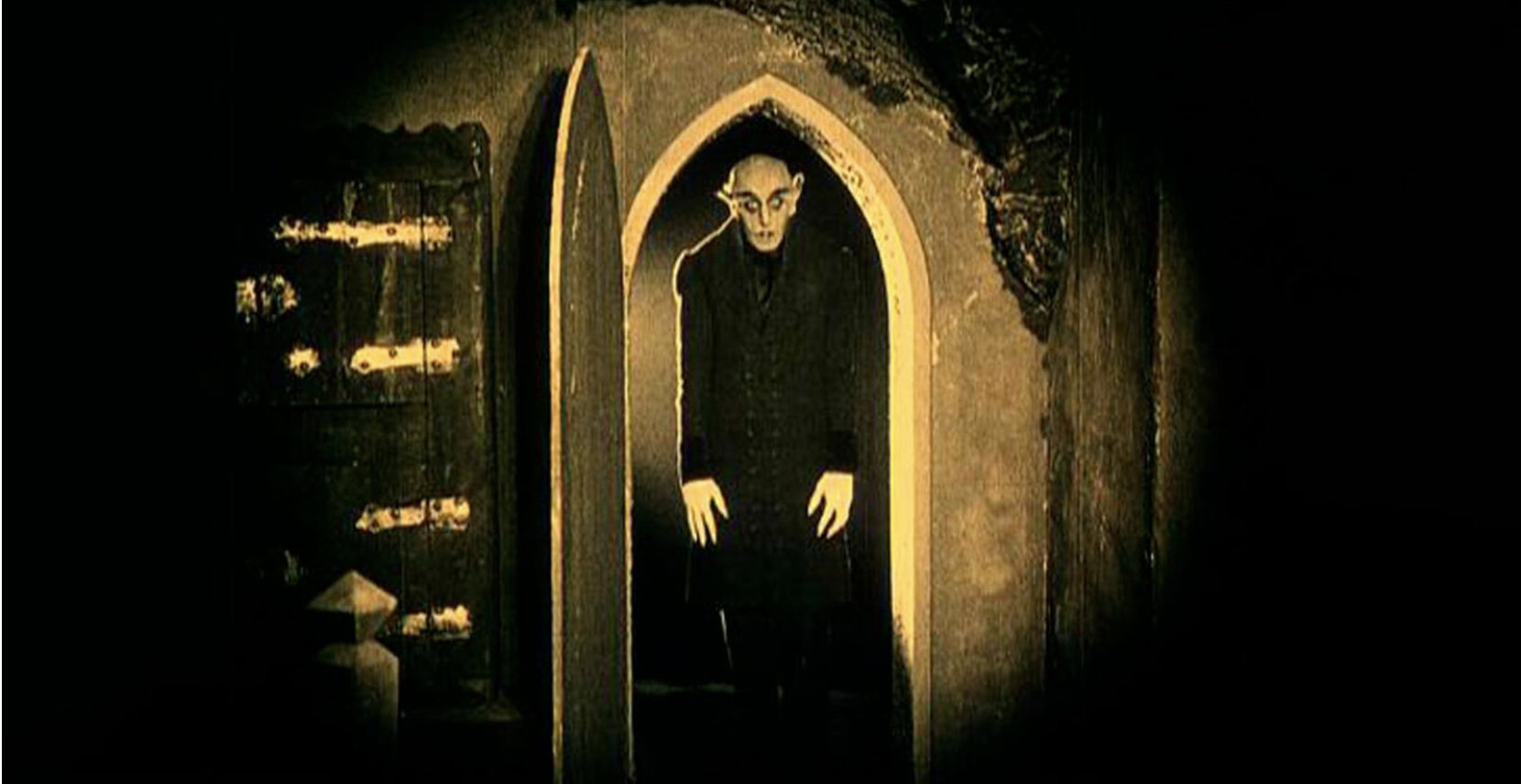
Robert Eggers decided to bring back to the big screen one of the most beloved vampires in cinematic history: Nosferatu. Starring Bill Skarsgård, Nicholas Hoult, Lily-Rose Depp, and Willem Dafoe, Eggers reintroduces the character, based on Bram Stoker’s Dracula, in a gothic atmosphere, just before Christmas.
The film is scheduled to be released on December 25, 2024, but it has already received critical acclaim, both for its direction and performances, as well as for the dedication it shows in paying tribute to F.W. Murnau’s 1922 film.
Today recognized as a classic from the silent film era and one of the earliest examples of cinematic horror, Nosferatu: A Symphony of Horror (or Nosferatu – Eine Symphonie des Grauens in German), presented a dark, dreamlike world, starring a vampire. It quickly became popular not only for the messages it conveyed about contemporary social issues but also for its prophetic warnings of the horrors to come with the rise of Hitler’s Nazi regime. Nosferatu is still considered one of the foundational films of German Expressionism, with its influence on cinema still evident.
Nosferatu
— FilmoteCanet Cinema (@CanetCinema) November 28, 2024
Dir. F.W. Murnau pic.twitter.com/EkPLiDLLBc
A Terrifying Vampire
Nosferatu was an unauthorized adaptation of Bram Stoker’s Dracula (1897), with key details changed to avoid legal issues. In Murnau’s version, Count Dracula becomes Count Orlok, a grotesque vampire who brings death wherever he goes. The story follows Thomas Hutter, a real estate agent who travels to Transylvania to help Orlok purchase property. Hutter’s arrival at Orlok’s castle triggers a chilling chain of events as the vampire spreads terror, culminating in a battle between darkness and light.
Though not the first vampire film, nor the first adaptation of Stoker’s novel (the lost Hungarian film The Death of Dracula was made a year earlier), Nosferatu established many stylistic and narrative details of the vampire story that are still used today. For example, Nosferatu was the first time a vampire was killed by sunlight, a feature that has since become standard in all vampire films.
However, at the heart of the film is Max Schreck’s unsettling portrayal of Count Orlok. Unlike later depictions of vampires that romanticized Dracula, Orlok is grotesque and otherworldly. With his bald head, pointy ears, long fingers, and hunched posture, the vampire appears as the true embodiment of death and disease. His shadowy presence—which is famously seen crawling up a staircase in one of the film’s most iconic scenes—has become a symbol of cinematic horror.
Schreck’s performance was so haunting and realistic that rumors circulated claiming the actor was a real vampire. This myth was later immortalized in the 2000 film Shadow of the Vampire, a fictionalized account of the Nosferatu production that reimagines Schreck as a true undead creature.
The Legacy of Nosferatu
Nosferatu is a masterpiece of German Expressionism, an artistic movement characterized by distorted images, stark contrasts, and exaggerated forms designed to evoke emotions and unease. Murnau’s use of light and shadow in the film remains revolutionary. Orlok’s creeping shadows are used to suggest his power and malevolence, building suspense without relying on explicit violence. The film also pushed boundaries by using real locations. While most Expressionist films relied on elaborate, distorted sets, Murnau shot scenes in the Carpathian Mountains and various German cities, combining realism with nightmarish visuals. This blend of harsh landscapes and eerie visual effects helped define the atmosphere and style of Nosferatu.
Beneath its supernatural terror, Nosferatu reflects the social anxieties of the early 20th century. The film was released after World War I and during the devastation of the 1918 pandemic. Thus, the parasitic nature of the vampire evoked fears of infection and moral decay, themes that would remain present in society for decades to come. Beyond that, the German film portrays the aristocratic figure of Orlok, who exerts his supernatural influence on unsuspecting people, sucking the blood of life from them, choosing who will die and who will join his hated army of monstrous creatures that carry out his will.
For critic Siegfried Kracauer, the figure of Count Orlok represented the combination of fear and fascination that the German people felt toward the specter of fascism and Hitler, as he wrote in 1947.
Today, the visual language of the film remains deeply embedded in popular culture. The image of Count Orlok’s shadow climbing the stairs has been referenced and parodied in all genres, from cartoons to music videos, underscoring the timeless power of Murnau’s imagery. Thus, Nosferatu has earned an immortal place in film history, as it laid the groundwork for countless vampire stories and inspired generations of filmmakers who adore its dark aesthetics and narrative power.
Ask me anything
Explore related questions




