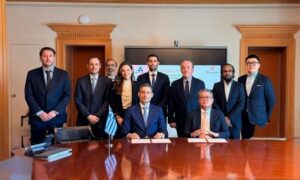
Messages slowing down the process of Greek-Turkish rapprochement are being sent from both sides of the Aegean, as Turkey insists on loading the agenda with an expanded framework of claims, while both Athens and, primarily, Ankara are waiting for the first signs of the new U.S. president, Donald Trump.
Turkey and President Recep Tayyip Erdoğan currently prioritize the Syrian issue, not only for reasons of “national security” with the clearing of the Kurdish autonomous entity in northeastern Syria but also because Syria is the playing field for Turkey’s further geopolitical elevation and its rise as a regional hegemonic power.
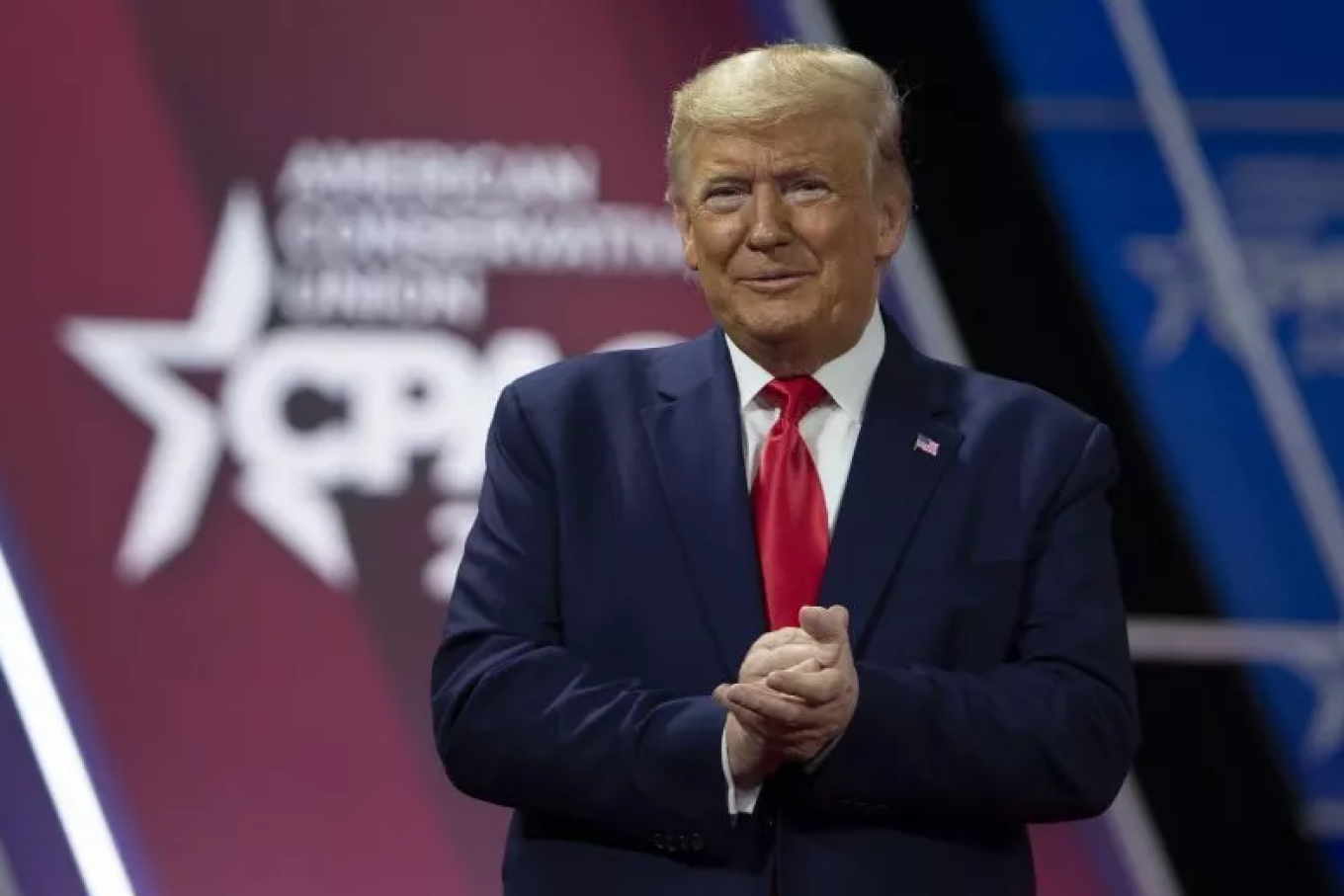
The way the new American government proceeds from here on out will have a profound impact on advancing Turkish ambitions across all open fronts, from Syria, Gaza, and Israel to the Caucasus and Eastern Africa, as well as on its relationship with Greece.
Ankara cannot ignore the actions made until the very last moment by the Biden administration to fully upgrade military relations with the Republic of Cyprus, which effectively provides it with all the advantages of a full NATO member in its relations with the U.S.
The Presidential Decree signed by Joe Biden last Wednesday, as a result of the contacts started with Nikos Christodoulides in October, grants Cyprus access to U.S. defense materials and services through three separate programs: the Foreign Military Sales (FMS) program, which allows the procurement of defense equipment through direct agreements between the U.S. government and Cyprus; the Excess Defense Articles (EDA) program, through which surplus materials can be offered as gifts or at a low cost to participating countries; and the “Title 10” security assistance program, which provides training and materials primarily concerning land and sea border security and counter-terrorism.
These actions, combined with Cyprus’ preparation to modernize military facilities and provide services to American forces, have enraged Ankara, as they not only strengthen the security of the Republic of Cyprus but also bolster its geopolitical role.
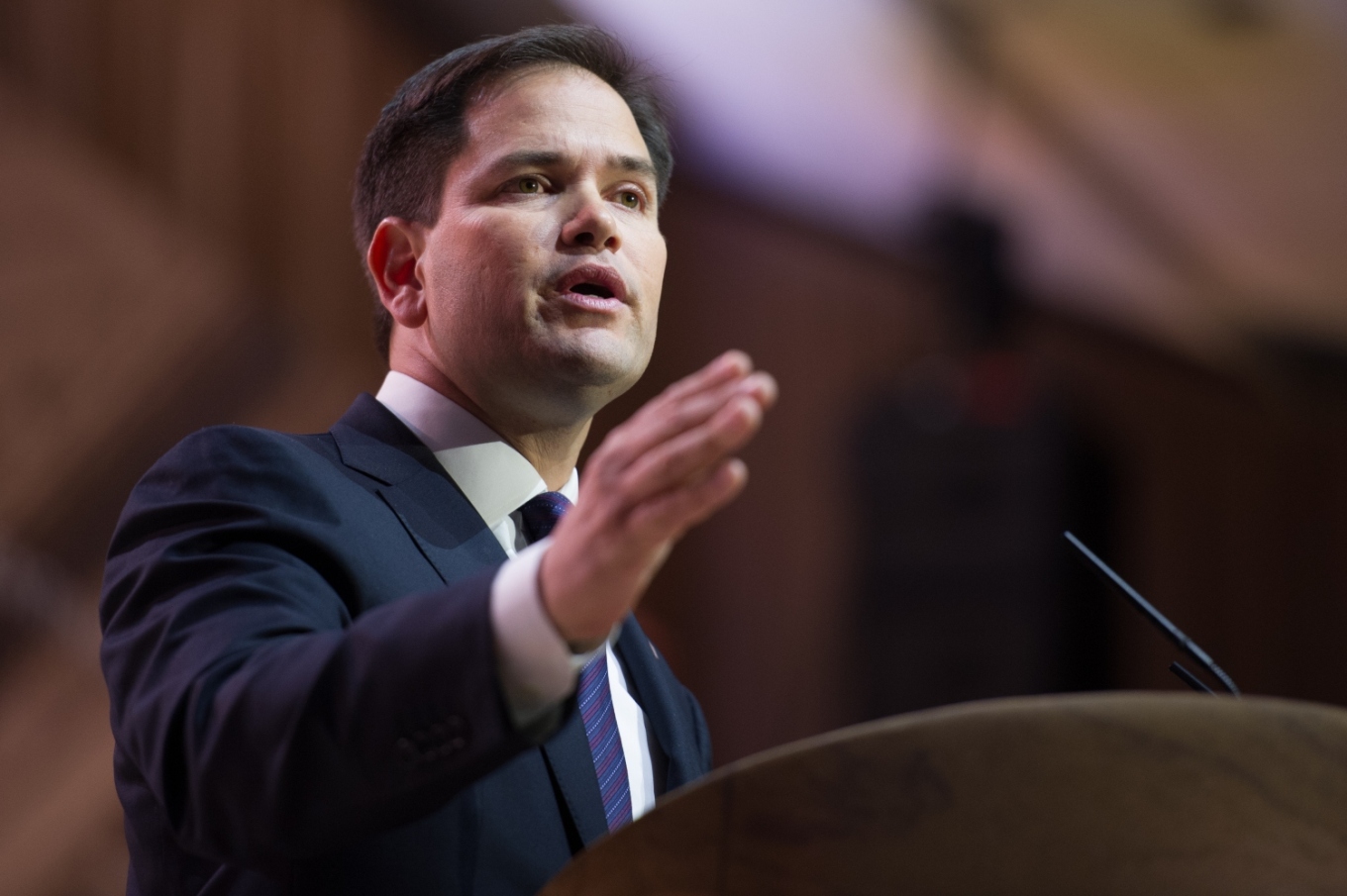
Marco Rubio
Athens is also waiting for the new U.S. government, as although the new head of the State Department, Marco Rubio, is familiar with Eastern Mediterranean affairs and does not hide his skepticism toward Turkey and its policies both in the Eastern Mediterranean and Syria, as well as its stance on Israel, the agreement in Gaza highlighted the way the new U.S. government would proceed, as the “aggressive” and transactional diplomacy of Trump’s special envoy for the region, Steve Witkoff, played a key role in securing the agreement.
Thus, the current facts suggest that the new American government will remain a strong supporter of Israel, will seek to restore its relations with Saudi Arabia, and, at least at the start of its term, has the means and the persuasion to settle crises and conflicts that hinder the achievement of its broader goals and objectives.
Within this environment, the process of rapprochement between Athens and Ankara faces increasing obstacles, showing that it has entered a critical phase.
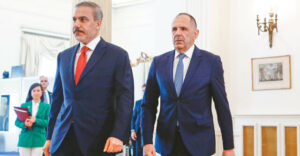
The meeting between Giorgos Gerapetritis and Hakan Fidan, which was scheduled for January to prepare for the High-Level Cooperation Council in Ankara, has yet to be scheduled.
This means that not only is there no prospect of finding common ground on the major issue of delineating the continental shelf/EEZ, but also the meetings within the framework of the Political Dialogue and the military Confidence-Building Measures (CBMs) are being postponed, and as a result, the summit meeting between Mitsotakis and Erdoğan is being pushed further back.
Messages from the Turkish side are negative, as Turkey, now fully focused on Syria and its new role in the Middle East, seeks only to avoid “disturbing moves” from Greece in the Aegean.
The uproar caused in Turkish media by a Greek article arbitrarily placing Israeli missiles on islands (while the announcement by Nikos Dendias about the anti-aircraft “dome” the Armed Forces are planning has been known since November) was indicative of the atmosphere.
Furthermore, Erdoğan’s political ally and leader of the nationalist MHP, Devlet Bahçeli, took on the role of a “troublemaker” and fanned the flames with statements that sent relations back to a time of tensions.
Bahçeli expressed the view that the Dodecanese were separated from Turkey through tricks and that they cannot exist without Turkey. He also threatened with a new 1922, while simultaneously condemning the violation of the demilitarized status of the islands.
The fact that Bahçeli is very close to Erdoğan—and was one of the first to open the peace process with the Kurds, a crucial issue for Erdoğan’s ambitions for a new presidential term—forced Athens for the first time to respond with a Foreign Ministry statement to his remarks.
“The status of the Dodecanese is governed by an international treaty, the 1947 Paris Peace Treaty. Greece, as a sovereign state, does not renounce its natural and legal right to self-defense, as provided by Article 51 of the UN Charter. Especially when it is threatened with war (casus belli) should it exercise a right stemming from its sovereignty, as provided by international law.
For peace to be maintained, prudence and responsibility are required, not hostile statements. Issues of sovereignty are off the table, and revisionist views are universally rejected,” the Foreign Ministry’s strict response read.
Athens also notes Ankara’s persistence, as expressed in Fidan’s interview with foreign correspondents, where, despite positive comments on Greek-Turkish rapprochement, he included the “minority in Western Thrace” in the negotiation package, stating that Turkey has by no means abandoned its position for a comprehensive and general negotiation, rejecting Greece’s stance to only discuss the issue of the continental shelf/EEZ delimitation.
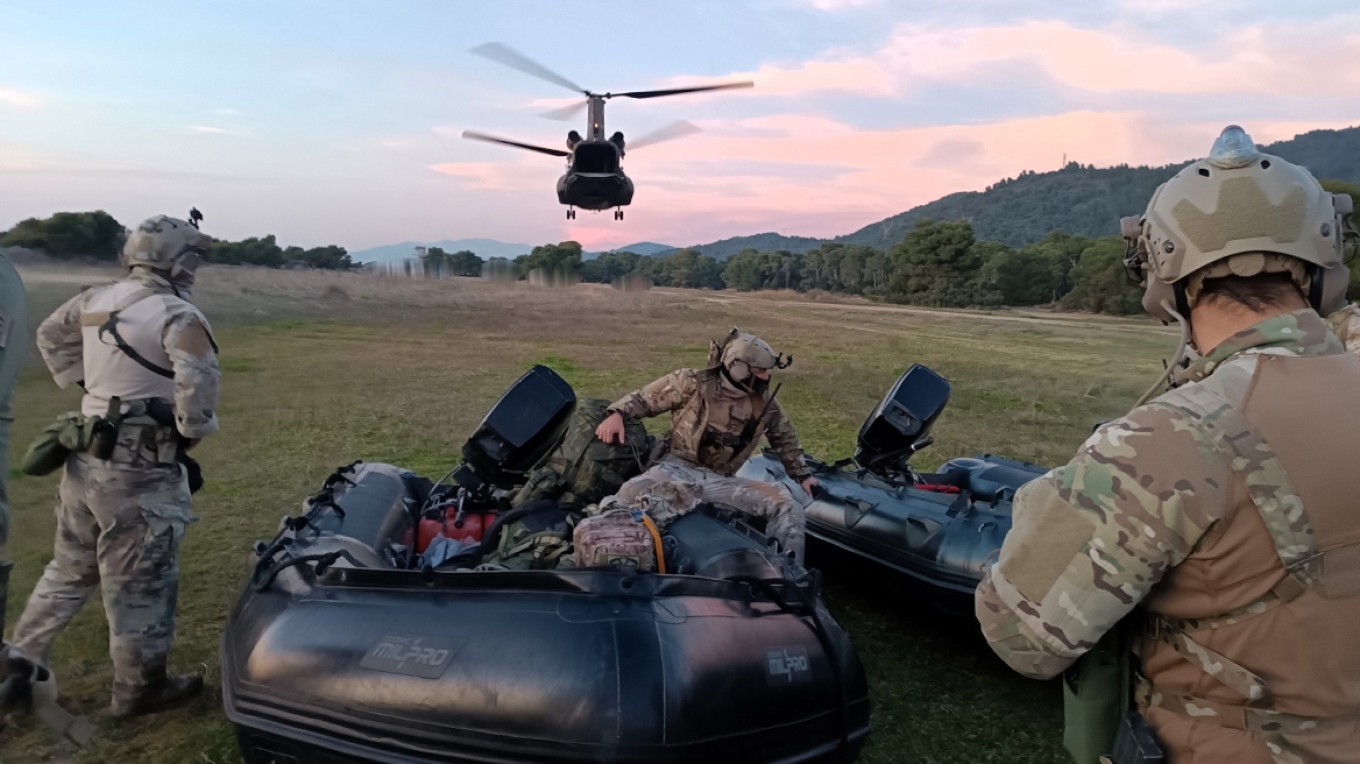
The fact that after a two-year break, Turkey organized the large-scale air-naval exercise “Blue Homeland” at the beginning of 2025, which, in addition to showcasing power, included scenarios for occupying an island, is believed to be a message from Ankara that rapprochement does not mean the retreat of its claims against Greece.
Additionally, it is considered that it wants to send a message of strength in response to Greece’s announcements regarding the strengthening of the Greek Armed Forces and the promotion of the anti-aircraft dome. In the past week, and due to the Turkish exercise, violations of Greek airspace and infringements within the Athens FIR by the Turkish Air Force have resumed.
In the coming period, Athens will face a series of challenges that are likely to strain the atmosphere, unless an amicable formula is found, even behind the scenes, with Ankara.
The plans for marine parks in the Aegean, as well as maritime spatial planning, although their technical processing has been completed, are still waiting for final political approval to proceed after long delays.
Turkey has reacted to both of these plans, as the first concerns only Greek territorial waters but includes islets that Turkey considers “grey zones,” while the second plan necessarily includes international waters within Greece’s potential maritime zones, both in territorial waters and the EEZ.
Additionally, a major unresolved issue remains the electrical interconnection between Crete and Cyprus. The two ships that have taken on the task of conducting research for the cable laying have been restricted to conducting investigations exclusively within Greek territorial waters.
Despite statements and leaks that the project is proceeding normally, no NAVTEX has been issued for areas outside Greek territorial waters since November when the works began, not even in areas concerning the demarcated EEZ from the Greece-Egypt agreement.
The Cyprus Issue
Another important milestone is the expanded Conference on Cyprus, which UN Secretary-General António Guterres is preparing, scheduled for mid-March in Switzerland. The Turkish side, which has historically sought a Four-Party Conference, has demanded a diminished role for Britain, although the format of the expanded meeting is still unclear.
In February, the UN’s Deputy Secretary-General for Political Affairs and Peacebuilding, Rosemary DiCarlo, will visit Athens, Ankara, and Nicosia for informal exploratory meetings ahead of the expanded conference. The Turkish side insists on its extreme position of abandoning the federal solution and now discussing the two-state solution.
In the occupied territories, following Fidan’s visit, the statement from the president of the Turkish Republic of Northern Cyprus (TRNC), Ersin Tatar, is of interest, as he has expressed support for “loose confederation,” a position that could potentially be adopted by the Turkish side in the coming months, potentially presenting it as a concession from the two-state position, asking for “concessions” from Nicosia in return.
On Monday in Nicosia, a meeting was held between Cyprus President Christodoulides and Turkish Cypriot leader Tatar to examine the opening of new checkpoints to facilitate movement between the occupied territories and the Republic of Cyprus.
The Turkish side insists on opening the checkpoint at Mia Milia, which serves professionals in the occupied territories, and rejects Nicosia’s proposal to open another checkpoint, either in Kokkina or Pyrgoi.
Ask me anything
Explore related questions