A strong message to the member states of the European Union was sent today by the European Commission, as part of its proposals to rearm the EU, urging them to buy more, better and more European.
About two weeks after the launch of the “ReArm Europe” project, an initiative to rearming the EU, presented by President Ursula von der Leyen, the Commission has come back, publishing today a white paper on the future of European defence, just hours before the European Council in Brussels.
White Papers, issued by the Commission, are documents containing proposals for action by the European Union in specific, critical areas and in the context of defence, the EU executive body identifies the efforts that need to be made, the gaps that need to be filled and where the necessary funds will be found.
The White Paper presented by the High Representative of the Union for Foreign Affairs and Security Policy, Kaja Kallas and the Commissioner for Defence and Space, Andrius Kubilius, addresses the EU’s key defence priorities and the legal routes that member states can take, to invest more in European defence industries and companies, to focus on air and missile defence, artillery systems, ammunition, missiles, drones and anti-drone systems, while moving towards joint procurement.
In particular, the Commission called on member states to activate the national escape clause of the Stability and Growth Pact, which would provide them with additional budgetary space to increase their defence spending, within the framework of EU budgetary rules.
To ensure fiscal sustainability, the deviation would be limited to:
Increase only defence spending, taking as a starting point the statistical category “defence” in the classification of government functions
Up to a maximum of 1.5% of GDP for each year the national escape clause is triggered.
It would apply over a period of four years. That is, flexibility under the national escape clause for defence spending will be available for four years, starting in 2025. Increases in defence spending will be calculated against the level of defence spending in 2021.
A new dedicated tool for Security Action for Europe – SAFE:
The Commission will raise up to €150 billion in the capital markets, building on the established unified funding approach to help EU Member States quickly and substantially increase investment in Europe’s defence capabilities. These funds will be disbursed to the Member States concerned on request, on the basis of national plans.
Disbursements will take the form of long term loans at competitive rates and attractively structured, to be repaid by the beneficiary Member States. The loans will be financed from the EU budget. Ukraine and EFTA/EEA countries (i.e. European Economic Area and European Free Trade Association) will be able to participate in joint procurement and purchasing by their industries will be possible.
Involvement of the European Investment Bank and mobilization of private capital accelerating the Savings and Investment Union
Open door to Turkey and the UK if they have entities within the EU
The Commission’s White Paper explicitly states that Member States should purchase eligible products from entities established and domiciled in the EU, in EEA/EFTA states (Switzerland, Iceland, Liechtenstein and Norway) and in Ukraine.
For war consumables ( non-composite products), Member States should ensure that components representing 65% of the cost of the finished product are sourced from the EFTA countries of the EU/EEA/Ukraine.
For complex systems, the same rule will apply, coupled with the need for Member States to ensure that contractors have full control over the design of defence equipment. This is to ensure that we do not create new dependencies for complex systems.
However, Commissioner Kubilius also left the door open to Turkey, saying that third countries or even candidate countries (such as Turkey) could participate if they have defence industries based in the EU.
As the Commission’s White Paper says, EEA/EFTA countries and Ukraine can participate in the joint procurement, but will not be eligible for the loans. In addition, the joint procurement may include, candidate countries, potential candidate countries and other third countries with which the Union has concluded a security and defence partnership.
Tomorrow’s European Council will receive the Commission’s White Paper
The 27 EU heads of state and government are expected to address the issue of European defence at the European Council on Thursday and Friday, but some national governments appear reluctant to cut themselves off from the US defence industry, while others do not look favourably on the European Commission’s intention to have a say in defence, a policy in which it has no competence as it is a matter for EU member states alone.
One possible approach would be to create a coalition of the willing, possibly with France, Germany and Poland which would be open to any other states that would want to join. This is a return to the idea of “Europe with a changing geography”, which was expressed by former European Commission President Jacques Delors. However, no major development is expected at the European Council on Thursday and Friday, as the 27 seem to prefer the next summit, namely in June, which will be followed by a meeting of NATO heads of state and government.
Huge defence investments announced by Berlin and Paris
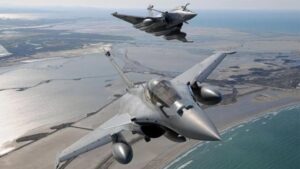
It is noted that the German lower house of parliament (Bundestag), has voted in favour of the proposal by “Chancellor-in-waiting” Friedrich Merz to revise the constitutional bankruptcy rule, which is expected to pave the way for investments of up to 500 billion euros. 500 billion in defence, while the French president announced a 1.5 billion plan to supply more Rafale fighters at an air base that will house the next version of the aircraft, which will carry supersonic nuclear missiles.
Meanwhile, Portugal has announced its intention to cancel the purchase of USF-35s, opting instead for a European defence industry.
Ask me anything
Explore related questions