






From the first call made on Sixth Avenue in New York in April 1973 to today’s smartphones, which outnumber the global population, the mobile telecommunications industry has undergone significant transformations. This vast sector now contributes an impressive 5.8% to worldwide GDP and paints a dystopian picture of a world without mobile phones and the internet.
While it may seem unimaginable for those born after the late 1990s, it’s important to remember that we existed before mobile phones. The time when landlines were the only communication method feels so distant that it is nearly forgotten by those who lived through it. Back then, acquiring a landline required waiting years for installation through the state telecommunications provider.
Today, nearly everyone in Greece carries a mobile phone, typically a smartphone, in hand. This device has transcended mere utility; it has become an extension of our identity, as many people find themselves compulsively checking their phones throughout the day. Observing friends at a café, absorbed by their smartphone screens instead of engaging in conversation, highlights this shift.
Cataclysmic Changes
Throughout history, innovations have consistently brought significant changes to facilitate daily life. However, the advent of mobile phones and the internet has revolutionized our world, leading to profound changes in both social and personal spheres. The thought of losing access to these technologies feels like a nightmare, transporting us back centuries. This fear is justified, as nearly everything today is tied to the internet and mobile telecommunications.
Even now, as we enter the age of artificial intelligence and the Internet of Things (IoT), the reality for many remains challenging. In a world where mobile devices are an integral part of our existence, a future devoid of them appears increasingly dystopian.
A Massive Industry with Impressive Numbers
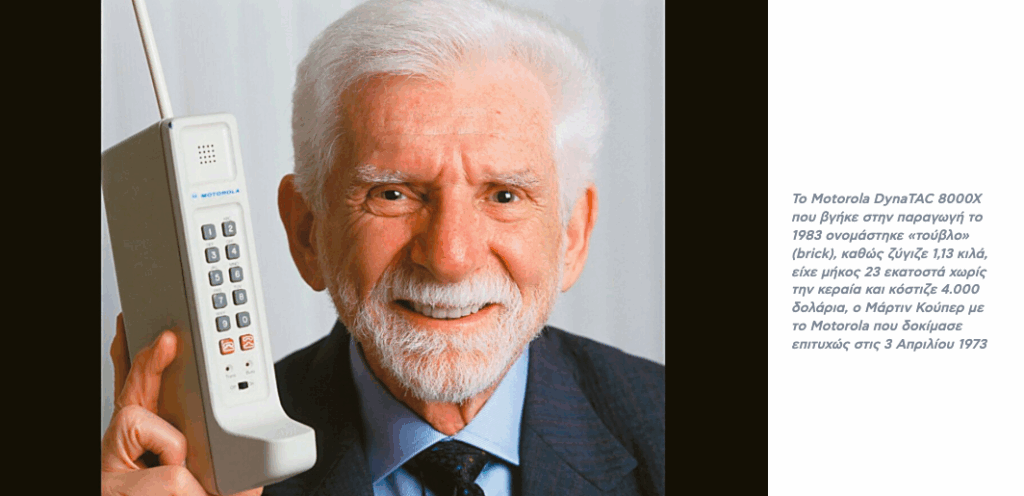
The journey began half a century ago, in 1973. On April 3 of that year, Martin Cooper, a Motorola engineer, made the first call from a mobile phone he and his team had developed while walking on Sixth Avenue in New York. He called his competitor, Joel Engel from Bell Laboratories, to announce that he was making the call while walking outside.
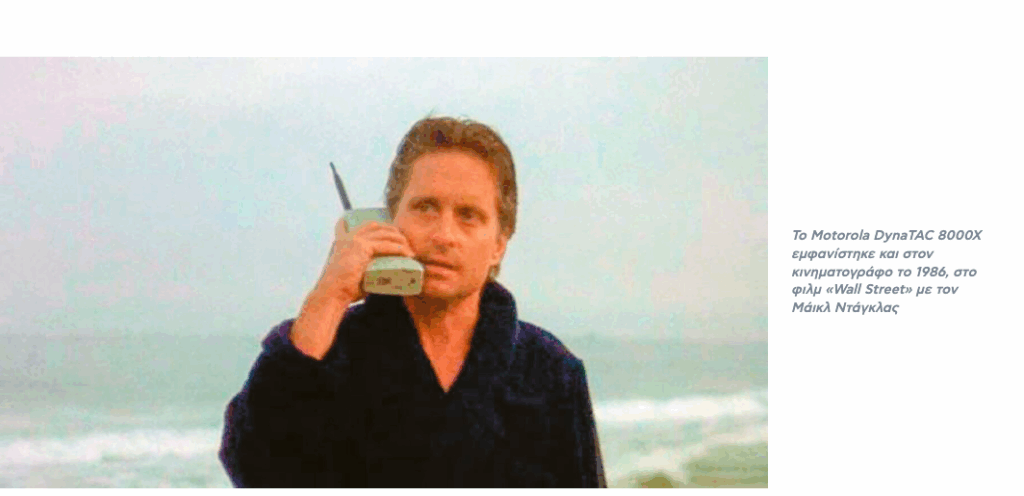
Back then, the Motorola DynaTAC 8000X, launched in 1983 and often referred to as the “brick,” weighed 1.13 kg, was 23 cm long (excluding the antenna), and cost around $4,000. This first device was bulky and nothing like today’s smartphones. It took a decade from that unofficial premiere for the first mobile phone to hit the market, aimed at a limited audience.
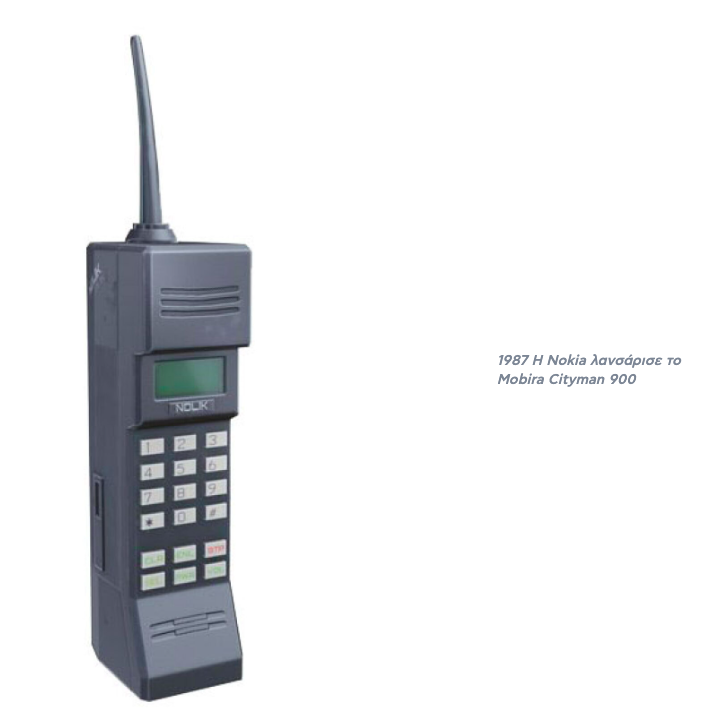
In 1983, Motorola introduced the thinner and lighter DynaTAC 8000X, though it still weighed 1.13 kg, which was popularly nicknamed “the brick.” Its battery allowed for only 35 minutes of talking time, requiring 10 hours to recharge. A few years later, in 1987, Nokia released its own device, the Mobira Cityman 900.

1992: Mass Production Begins
The real breakthrough for mobile phones came in 1992 when the first mass-produced models hit the market, with the Nokia 1011 being the first of its kind. This device weighed under half a kilo, had a monochrome illuminated screen, provided about 1.5 hours of talk time, and offered a user-friendly interface. Other companies, like Swedish Ericsson with the EH 237 and Motorola with the International 3200, made mobile phones accessible to a broader consumer base.
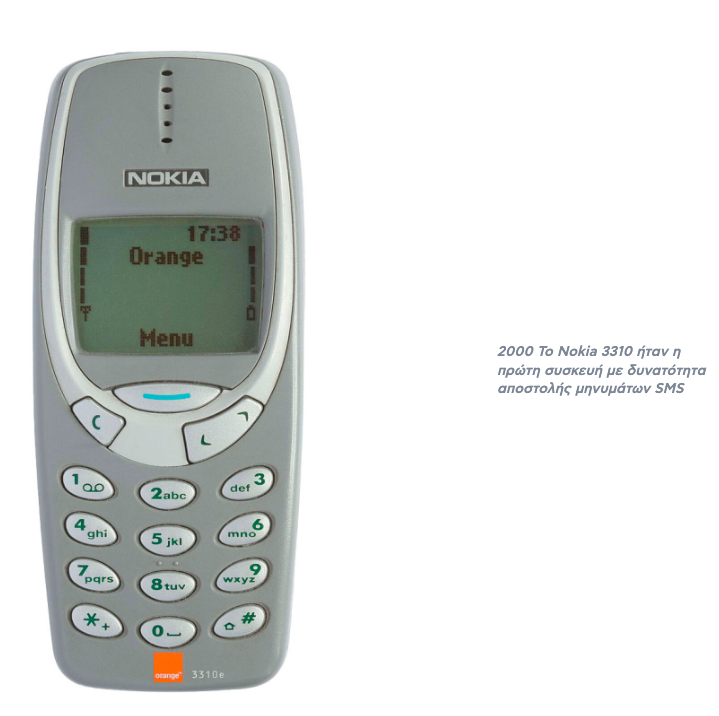
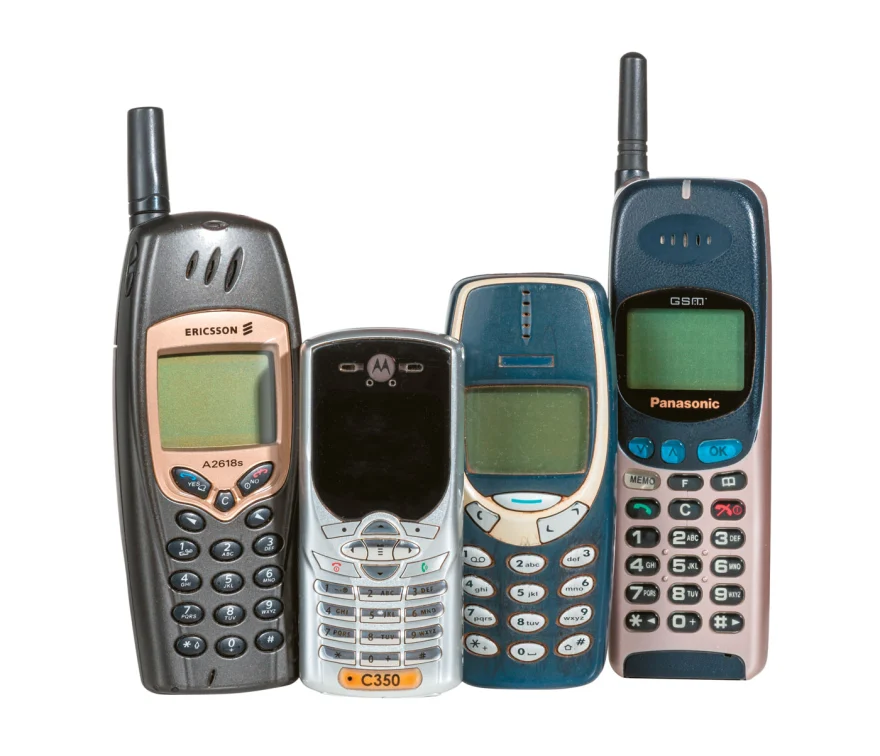
Many popular models emerged afterward, such as the Ericsson GF768 in 1997, which weighed 135 grams, and the Nokia 7110 in 1999. By the dawn of the new millennium, the iconic Nokia 3310, known for introducing SMS messaging, had significantly boosted sales for Nokia.
2007: A New Era of Touch Screens
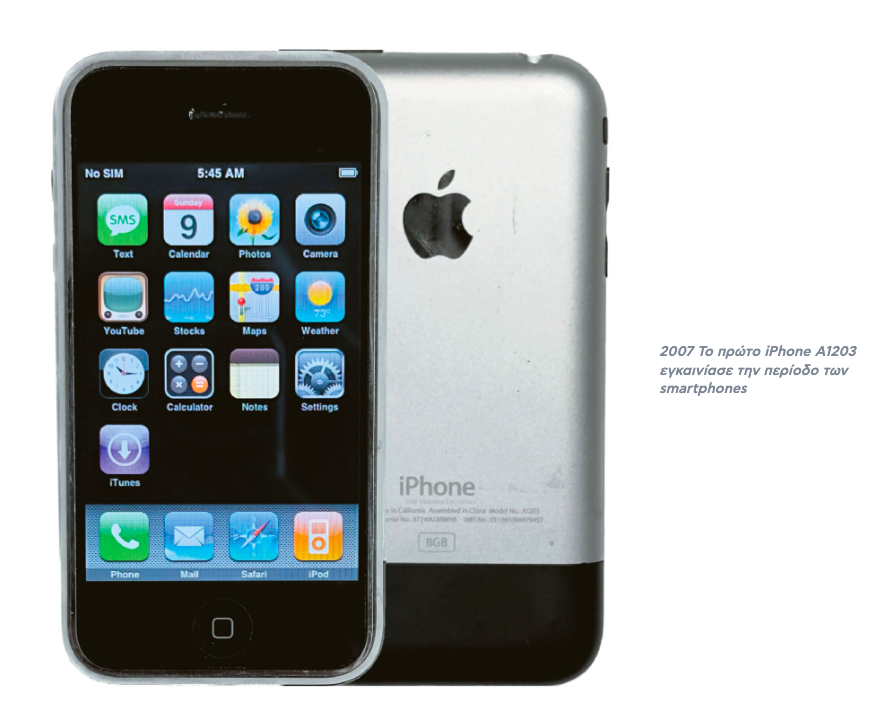
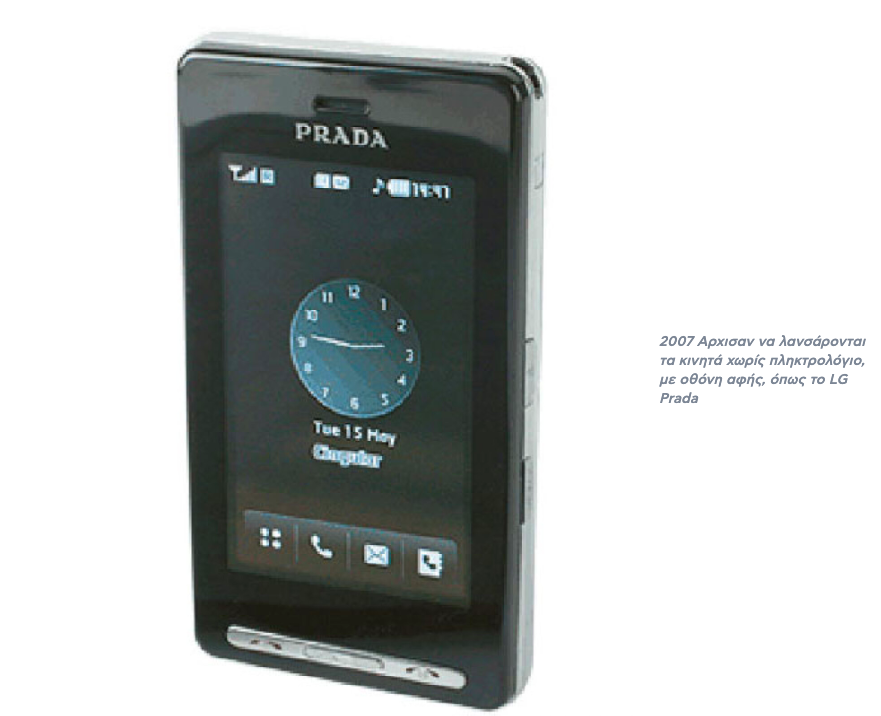
In 2007, mobile phones without keyboards began to emerge, featuring touchscreen technology. The LG Prada, equipped with 8MB internal memory and a 2MP camera, set new standards. Shortly after, Apple released the first iPhone, marking the beginning of the smartphone era. By 2018, the first foldable smartphone with a touchscreen debuted, and brands like Apple and Samsung transformed into industry giants, boasting market capitalizations of $3 trillion and $260.5 billion, respectively.
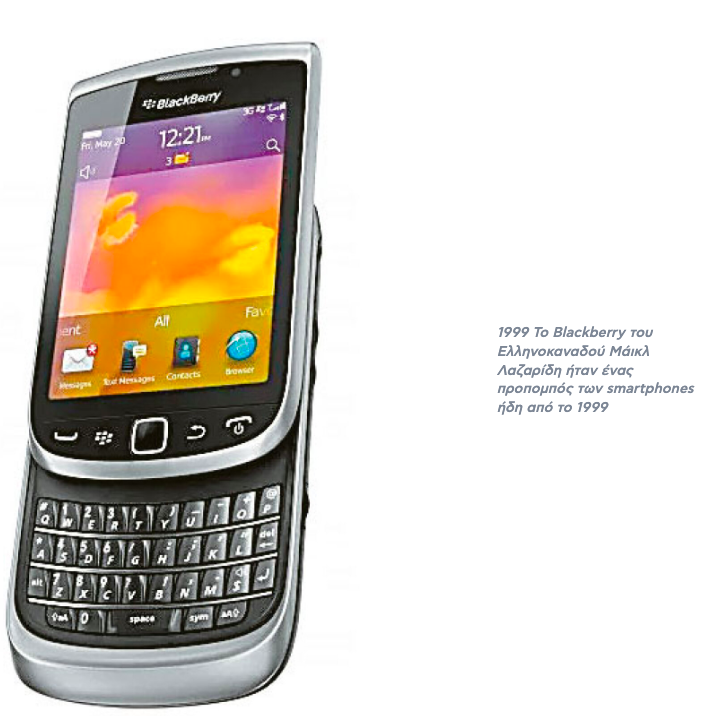
Another significant player in this story is Blackberry, created by Research In Motion and led by Greek-Canadian entrepreneur Michael Lazaridis. It emerged as a precursor to smartphones back in 1999, boasting its own operating system and reaching 85 million subscribers by 2011. However, its adherence to traditional keyboards amid the touchscreen revolution and the dominance of Android and iOS platforms led to its decline post-2016.
1993: Mobile Networks Enter Greece
On June 29, 1993, Greece saw its first mobile phone call made through the then-Telestet network, a subsidiary of Italian STET. Panafon (now Vodafone) followed on July 1, 1993, with OTE (Cosmote) entering the market in January 1998. Initially, mobile phones operated only in Attica and the Saronic Islands, with exorbitant costs: devices ranged from €700 to €1,400 (300,000 drachmas and above), with an activation fee of €85 and a monthly subscription of €40. Within days, the number of subscribers was barely over 1,000.
The market rapidly expanded, surpassing 10 million connections within ten years and exceeding 12 million by 2024, well surpassing both the general and active population figures.
More Phones than People
The mobile telecommunications industry, in conjunction with internet growth, rapidly expanded globally. According to recent reports from organizations like GSMA and ITU (International Telecommunication Union), mobile technologies and services contribute approximately 5.8% to the global GDP, generating $6.5 trillion in added economic value. By 2030, this figure is projected to rise to nearly $11 trillion or 8.4% of GDP, particularly benefiting countries that improve productivity through mobile services and digital technologies, including 5G, IoT, and AI.
Currently, around 10 billion mobile devices are in use worldwide, exceeding the global population of 8 billion by 2 billion. Although mobile devices outnumber people, this doesn’t mean every individual owns one, as access can be limited.
Despite impressive statistics indicative of the mobile industry’s vast penetration, it should be noted that real users may exceed the figures, given that children often use their parents’ phones, multiple devices are common, and many companies own numerous phones.
Digital Inequalities and Gaps
The fact that 68% of the global population is now connected to the internet shows an improvement in digital access. However, significant digital gaps persist in low-income countries, where one-third of the global population (2.6 billion or 32%) remains offline. In high-income countries, 93% of the population uses the internet, compared to only 27% in low-income nations.
Gender and regional disparities also arise in internet access. According to the ITU, 70% of men globally use the internet compared to 65% of women, with the gap widening in poorer countries. Similar trends exist in mobile phone ownership, with 82% of men (aged 10 and older) owning devices versus 77% of women.
There remains a stagnation in bridging the gap between urban and rural areas. Globally, approximately 83% of urban residents use the internet, contrasted with less than half (48%) of the rural population. Of the 2.6 billion individuals offline in 2024, 1.8 billion reside in rural areas.
It’s unsurprising that youth exhibit higher connectivity rates; 79% of individuals aged 15 to 24 years are online, which is 13 percentage points higher than the overall population.
Internet Access Costs and Trends
The cost of internet access is declining, but not universally. In low-income countries, the price of a fixed broadband subscription can equate to nearly one-third of the average monthly income. Globally, four out of five individuals aged ten and older possess a mobile phone, with significant variations between nations. Over 95% of people over ten years old in high-income economies own mobile phones, compared to only 56% in low-income countries.
5G coverage is expected to reach 51% of the global population by 2025, revealing stark inequalities. While 84% of people in high-income countries will be covered, in low-income countries, only 4% will have access to 5G.
Mobile internet prices are decreasing primarily in developed countries, whereas in Africa, costs remain fourteen times higher than in Europe. Therefore, the average monthly broadband traffic per subscription in high-income countries reaches 16.2 GB, approximately eight times more than the 2 GB in low-income nations. This translates to users in developed countries generating more data within four days than users in poorer countries do in an entire month.
The Evolution of Smartphones
Economic data related to this industry is particularly noteworthy. Based on GSMA reports, annual investments in mobile internet connectivity infrastructure averaged $244 billion over the past five years, accounting for spending by end-users on devices.
The largest share, roughly $117 billion, is attributed to consumer spending on smartphones, followed by network operators investing $87 billion in next-generation network upgrades. The remainder pertains to providers of IP transportation and cloud services.
Who Owns Smartphones?
Smartphones dominate the market today, pushing traditional mobile phones aside. Estimates suggest that nearly three-quarters of the population in the top ten developed countries own smartphones, while globally, almost 90% of mobile phones are smartphones, totaling approximately 7.5 billion devices. However, this does not imply that 90% of the world’s people possess smartphones, as many individuals have multiple devices and some companies own thousands.
Currently, only Germany exhibits a smartphone penetration rate exceeding 80%. Remarkably, it’s estimated that 72% of internet users rely exclusively on mobile devices for access.
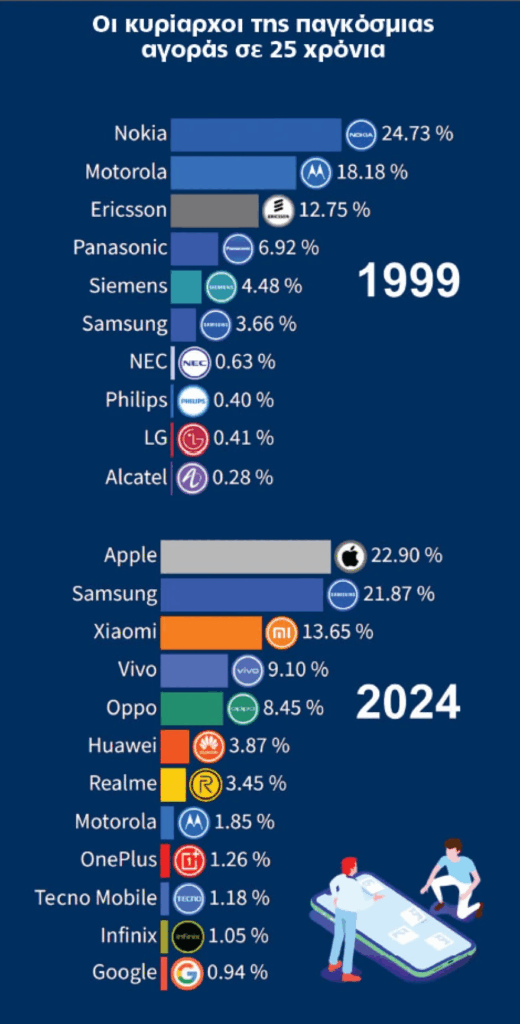
Moreover, the global number of smartphone users has increased by at least 5% annually over the past five years, with over 10.47 billion IoT connections, primarily in China, which leads in smartphone users.
Interestingly, the number of global smartphone users has surged in recent years, rising from approximately 3.67 billion in 2016. Despite this growth, many remain without smartphone access, as about 1.1 billion individuals (roughly 1 in 8) still lack even basic access to electricity.
Ask me anything
Explore related questions




