





Donald Trump may in the midst of Easter have not revisited the issue of tariffs but these especially as it relates to China – the main target from the start – remain in place as normal.
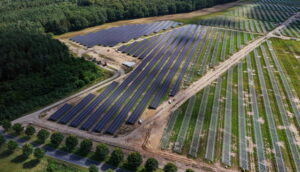
The overall 10% tax to the rest of the world also remains in force until “proven otherwise”. US media citing sources from US audit and trade authorities reveal today that the US President is expecting a very detailed investigation in the coming days in the Oval Office regarding how Beijing has managed to escape the US “vise grip” on economic measures over the past decade. The US President, according to the same sources, even seems to have requested a specialized analysis of one particular Chinese trade sector: photovoltaic panels.
Beijing currently produces and markets as an exportable product more than 70% of this particular product and has established a large network of both production and marketing throughout Asia to overcome over the last 8 years – the trade barriers put up by the US and Europe. Beijing has moved much of its PV panel production to countries such as Thailand, Malaysia, and Vietnam, and from there exports most of the finished product to customers mainly in the US and Europe. In this way, in addition to low production costs and avoiding tariffs, China has also created a fairly dynamic “net” of dependence of these countries on Beijing itself.
According to sources from the US Department of Commerce and the team that has been conducting this investigation in recent months, the US President has openly threatened that if the evidence is damaging to China, he is prepared to impose tariffs that have never been imposed before. Specifically, if the report by the relevant US authorities shows that China, by exclusively controlling the production and export process in certain countries, is exploiting loopholes and threatening this industry in the U,S then photovoltaic panels may have tariffs of more than 3000% by the beginning of next month. The US President may have spoken out many times against clean energy and openly supported “traditional” forms of energy, but he seems intent on hurting Beijing in an industry it dominates globally. It is not known how China will respond to such a US move, but it seems that Beijing has no problem in activating similar countermeasures towards Washington, especially in the area of rare earths and specific products, such as Chinese artificial magnets, in which the US automotive industry, in particular, has significant exposure.
In any case, the US does not seem willing to “relax” the measures that Trump has bundled together and called “Liberation Day,” and for its part, China today appears as “long ready” for this particular economic and trade war with the rival awe on the other side of the Atlantic. The first big losers of this war will be the “third parties”, i.e., the smaller economies dependent on one or the other major pole, for which the consequences will be significant and will manifest themselves relatively soon.
Ask me anything
Explore related questions




