
The government is accelerating the evaluation of public services by citizens, with the platform prepared by the Ministries of Interior and Digital Governance set to be presented at the end of April.
It should be noted that during Prime Minister Kyriakos Mitsotakis‘ visit to the Ministry of the Interior a few weeks ago, it was announced that citizens would soon be able to evaluate public services. It now seems that this will apply both to services where citizens interact face-to-face and to services that do not involve direct contact.
Government sources report to THEMA that after significant interventions already implemented, such as the gov.gr applications for the digitization of the state, the Wallet app, digital tools for tax evasion control, and “112”, the time has come for citizen participation in the evaluation. The goal, these sources indicate, is for evaluation to contribute more to accountability and the cultivation of trust between citizens and the state.
The Formula
According to government officials familiar with the planning, about 4 million citizens registered in the National Communication Registry will participate in the new evaluation system. Based on the new system, public agencies will be divided into those providing face-to-face services, such as KEP (Citizen Service Centers), and those that operate without direct contact, such as municipal cleaning services.
For the so-called “front-line” services requiring face-to-face interaction, the user of each service will receive a special link on their mobile phone, leading to an electronic questionnaire. By answering the questions, they will be able to rate the service and evaluate the service process based on their experience.
For the other services, the plan is to send a questionnaire every six months, likely in May and November, gradually building a database for all evaluated services. Based on this evaluation method, services or processes with low ratings will be identified, and the reasons why citizens assign a low grade to the service will be analyzed, allowing the state to plan targeted improvements. In addition to the central government and local authorities, the evaluation will include digital services.

A Major Satisfaction Survey
Citizen participation in the evaluation is expected to be the largest “satisfaction measurement” (following public opinion survey models) ever conducted for public services. It will also allow for analysis of the results by evaluated service, geographic area (municipality, region, and even postal code), and age group.
New System
According to government sources, the system being implemented represents a significant “paradigm shift” in the evaluation of the public sector, which until now resulted in nearly 98% of public employees being rated as excellent or very adequate. The turning point occurred in 2023 when the new evaluation system was introduced, which is expected to improve this year with citizen participation. According to information, of the 166,350 evaluations submitted, 54,650 employees were initially classified as high performers, but a subsequent review using Artificial Intelligence tools found that more than 39,000 of them no longer meet the high-performance criteria.
Citizen evaluation serves as an additional filter to make a more accurate diagnosis of problematic areas and functions within the public sector. The government is well aware that for years, society has been distrustful of public sector evaluations, and therefore, it sees it as its task to prove it can introduce effective reforms. Government sources also point out measurable results from the interventions already made, the most prominent example being the services of gov.gr.
Digital Tools
More specifically, gov.gr currently offers 2,168 digital services and is regularly updated. Nearly 8.7 million unique users have accessed the central government portal, meaning the vast majority of the population, while documents issued and declarations submitted electronically total 342.7 million. The most popular service is the issuance of a responsible statement, with over 30 million completed digital transactions, followed by the granting of authorization (over 7.2 million) and the digital certification of documents (nearly 8.7 million). The interest and familiarity of citizens with gov.gr are also reflected in the widespread use of the AI assistant, mAIgov, which has answered 2.1 million inquiries to date.
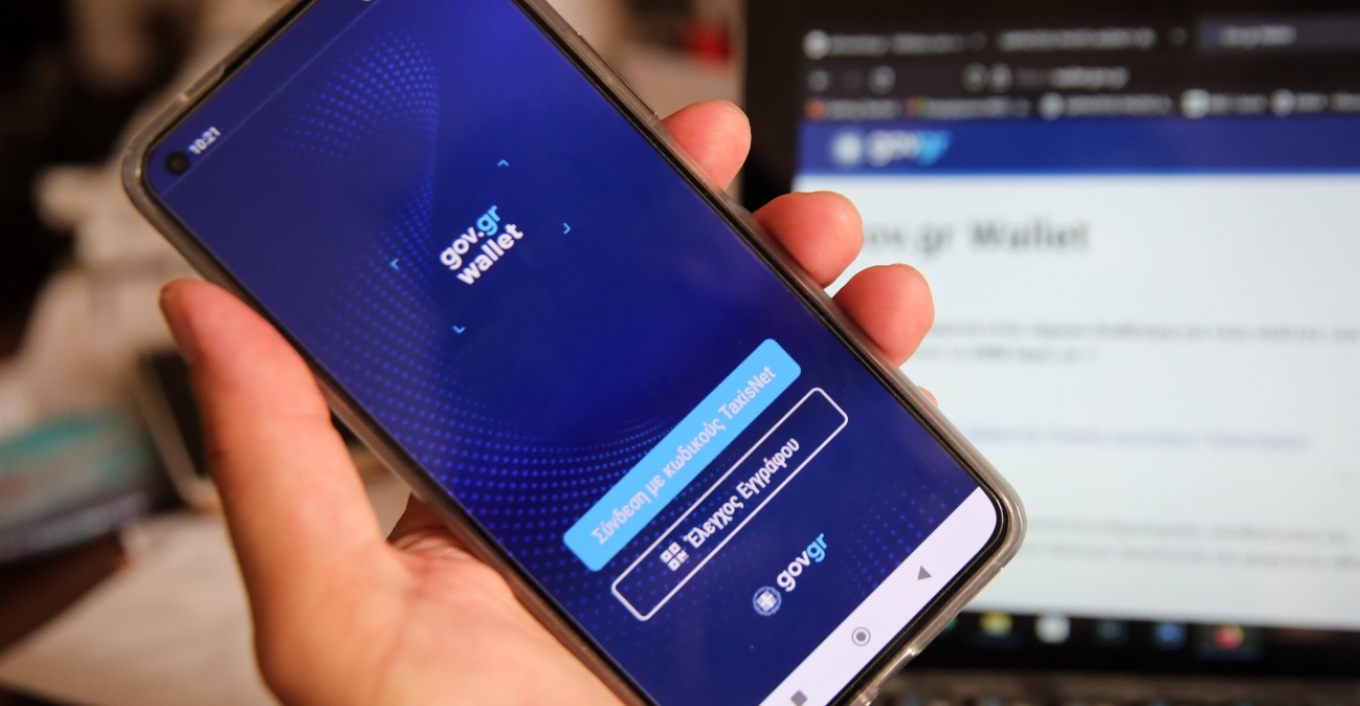
Regarding the Wallet, data shows it has been used for more than 1.4 million digital ticket verifications for entry into stadiums, and the identities stored in citizens’ personal electronic wallets exceed 4.2 million.
Government sources also emphasize that a digital tool offering the ability to communicate via video call, chat, and real-time text is currently being implemented through a website. A contract has also been signed for the development of an app for smartphones, which will be available in 2026. Additionally, the notification system is regularly being improved, and a complementary service is being upgraded where citizens can register to receive messages, calls, or emails for various areas, even if they are not there (e.g., related to their primary residence in Attica or their vacation home on an island).
Ask me anything
Explore related questions