





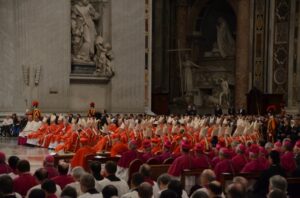
The opening ceremony of the Conclave is to take place on the afternoon of May 7 and 135 cardinals aged up to 80 are expected to take part in the process of electing the new pontiff.
More specifically, 53 are from Europe, 37 from North and South America, 23 from Asia, 18 from Africa, and 4 from Oceania. The vast majority of these high-ranking Catholic clergy who have the right to vote and be elected – i.e,. 110 – were nominated by Pope Francis. Of the current cardinal electors, 22 were chosen by Pope Benedict and 5 by John Paul II.
When the cardinals enter the Sistine Chapel, the phrase in Latin “extra omnes”, meaning “out all”, is to be heard, which marks the official beginning of the process. According to the Roman Catholic Church, until the new Pope is elected, the cardinals are to have no contact whatsoever with the rest of the world. There are two votes per day, and two-thirds of the votes are required before white smoke can come out of the world-famous smokestack in the Sistine Chapel. This is the sign announcing that the new Holy Father of the Roman Catholic Church has been elected.
After each ballot, there is an obligation to destroy the ballots. If a successor to Francis is finally not elected by the 34th ballot, the electors must choose between the two candidates who have garnered the most preferences.
The first conclave, with particularly strict rules for cardinals, was held in the city of Viterbo, just outside Rome, in 1274 AD. The whole procedure, with a ban on leaving the ballot room and limited food supplies, had become necessary because the cardinals had been unable, for 33 months, to elect a new pontiff.
Ask me anything
Explore related questions




