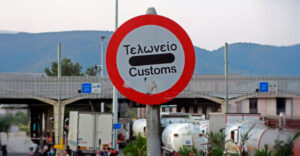
In winter, everything changes at customs. The new National Customs Code brings universal digitalization: signatures are entered digitally, fines are notified electronically, every procedure goes through electronic systems and every movement is recorded and controlled in real time. Controllers and auditees will now communicate only digitally and all customs data will be immediately accessible to the competent authorities.
The Ministry of National Economy and Finance, with a draft law (presented yesterday to the Council of Ministers), completely reformed the Code that has been in force for 23 years, adapting it to European directives and international conventions. Customs authorities gain access to the information systems of other law enforcement agencies, such as the AADE, the EL.AS. and the customs authorities of other states, while strengthening controls for underpricing, fraud, smuggling and tax evasion.
With the new Code, signing in customs procedures is now digital: both inspectors and those being inspected will now sign electronically. Fines will be notified immediately via electronic systems, while the Unified Central Tobacco Registry is expanded, covering electronic cigarettes and heated tobacco products. At the same time, customs authorities gain access to the information systems of other law enforcement agencies, such as the AADE and the EL.AS., further strengthening controls for smuggling and fraud.
In addition to accelerating procedures and strengthening controls, the new draft law introduces strict rules for those who conceal information from customs authorities, targeting the phenomena of fraud and tax evasion. At the same time, it facilitates trade, strengthens green mobility and provides strong incentives to families wishing to return to Greece within the framework of Brain Regain policies.
Among the key interventions, it is planned to modernize the rules for the duty-free import of household goods, both from EU countries and from third countries, simplifying the procedures for those who transfer their habitual residence to Greece.
The conditions for exemption from the registration fee for private cars in families with three and many children are improved, with provision for cases of divorce and custody of minors, in accordance with the new provisions of family law. In dealing with irregularities, stricter penalties are established for underpricing of goods and fictitious transactions, limiting losses from duties and taxes.
The procedures for the sale or free disposal of confiscated vehicles and materials to public bodies such as the Hellenic Police and the Armed Forces are being accelerated. The possibility of expanding the opening hours of customs offices through a digital application is also foreseen, to facilitate exports and imports. At the same time, the registration fee for cars, trucks and buses powered by zero-emission hydrogen fuel cells is being abolished, equating them to purely electric vehicles.
Ask me anything
Explore related questions