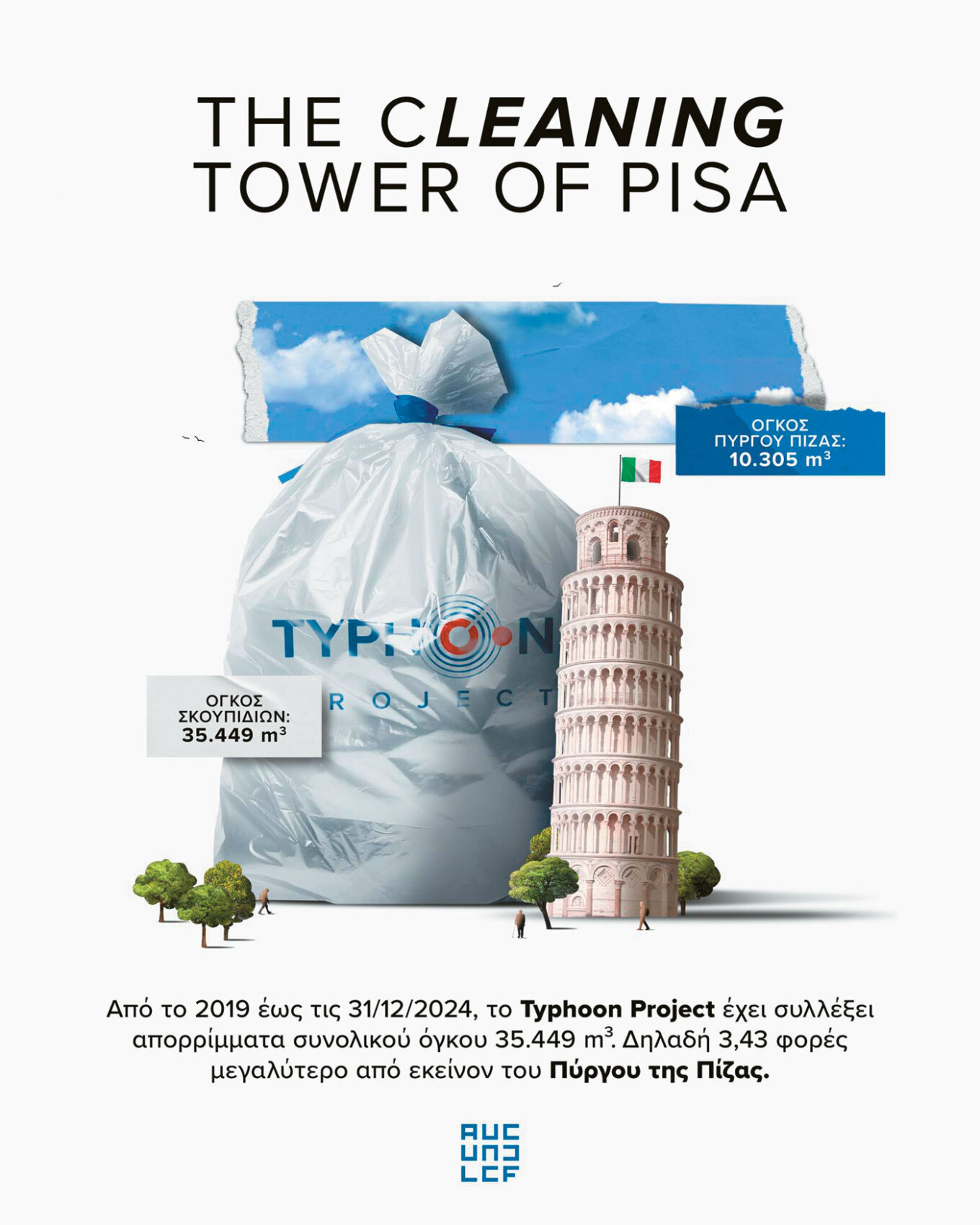
The Athanasios C. Laskaridis Charitable Foundation chose a comparative method to visually convey the astonishing volume of waste removed from Greek coasts during the six-year span of the Typhoon Project. The 35,449 cubic meters of solid waste that had polluted the country’s beaches for decades were compared to iconic monuments worldwide: Big Ben in London, the Leaning Tower of Pisa in northern Italy, and of course, the White Tower of Thessaloniki.
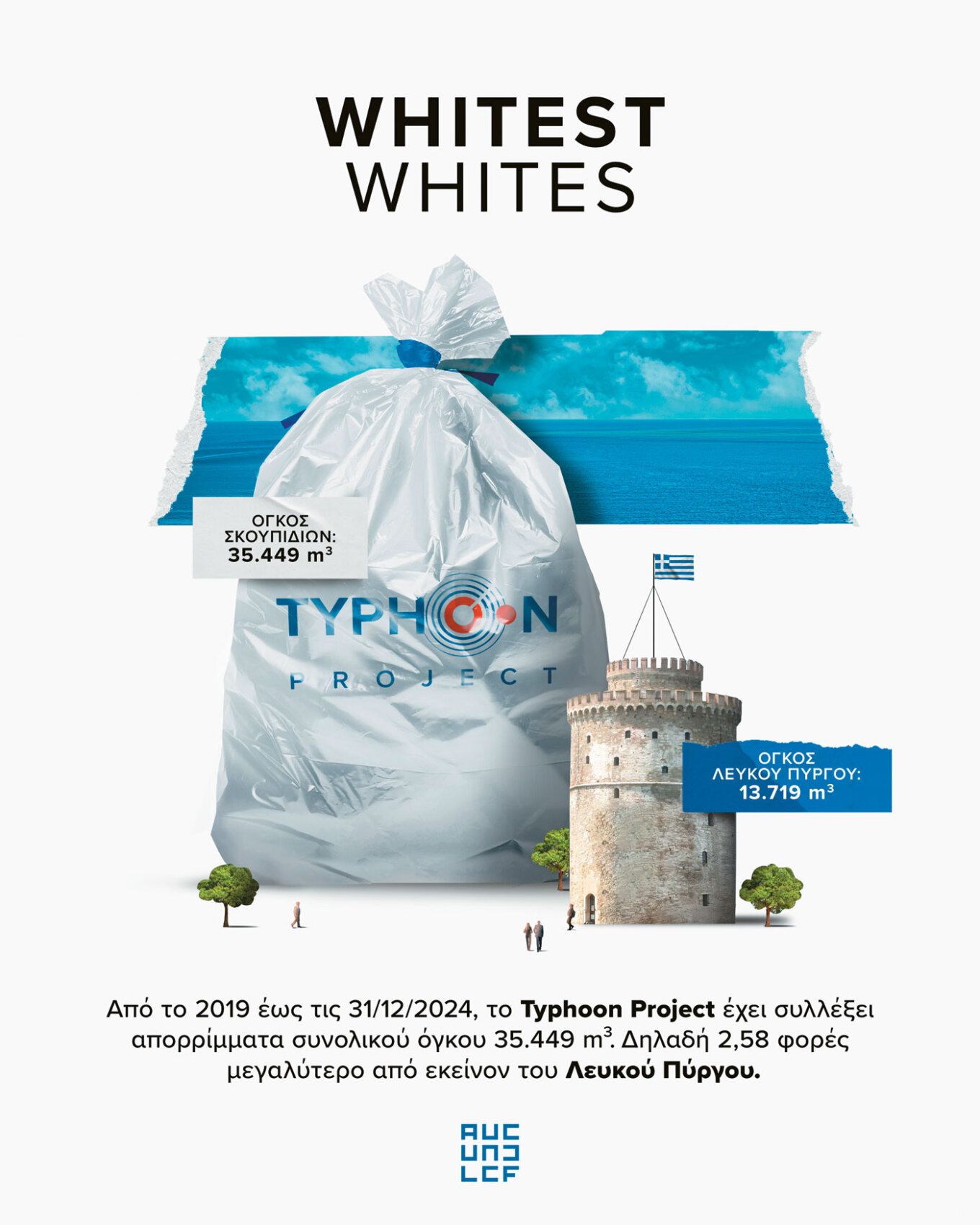
The results of this comparative approach are staggering. Imagine a colossal trash bag filled to the brim with approximately 35,500 m³ of waste – the amount collected by the Typhoon Project teams from 2019 to the end of 2024 (and even more since, now totaling 35,670 m³). That imaginary “Typhoon bag” would be 3.43 times larger in volume than the Leaning Tower of Pisa, contain 7.62 Big Bens, or fit 2.58 White Towers. The extent of pollution along Greek coasts caused by solid waste is truly unimaginable.
Over nearly six years of relentless, intense action, with continuous patrols across Greek waters, the “Typhoon” team has cleaned over 3,748 beaches nationwide. They covered approximately 841,000 meters of coastline, removing 768 tons of waste, with a volume exceeding 35,670 cubic meters.
Perseverance
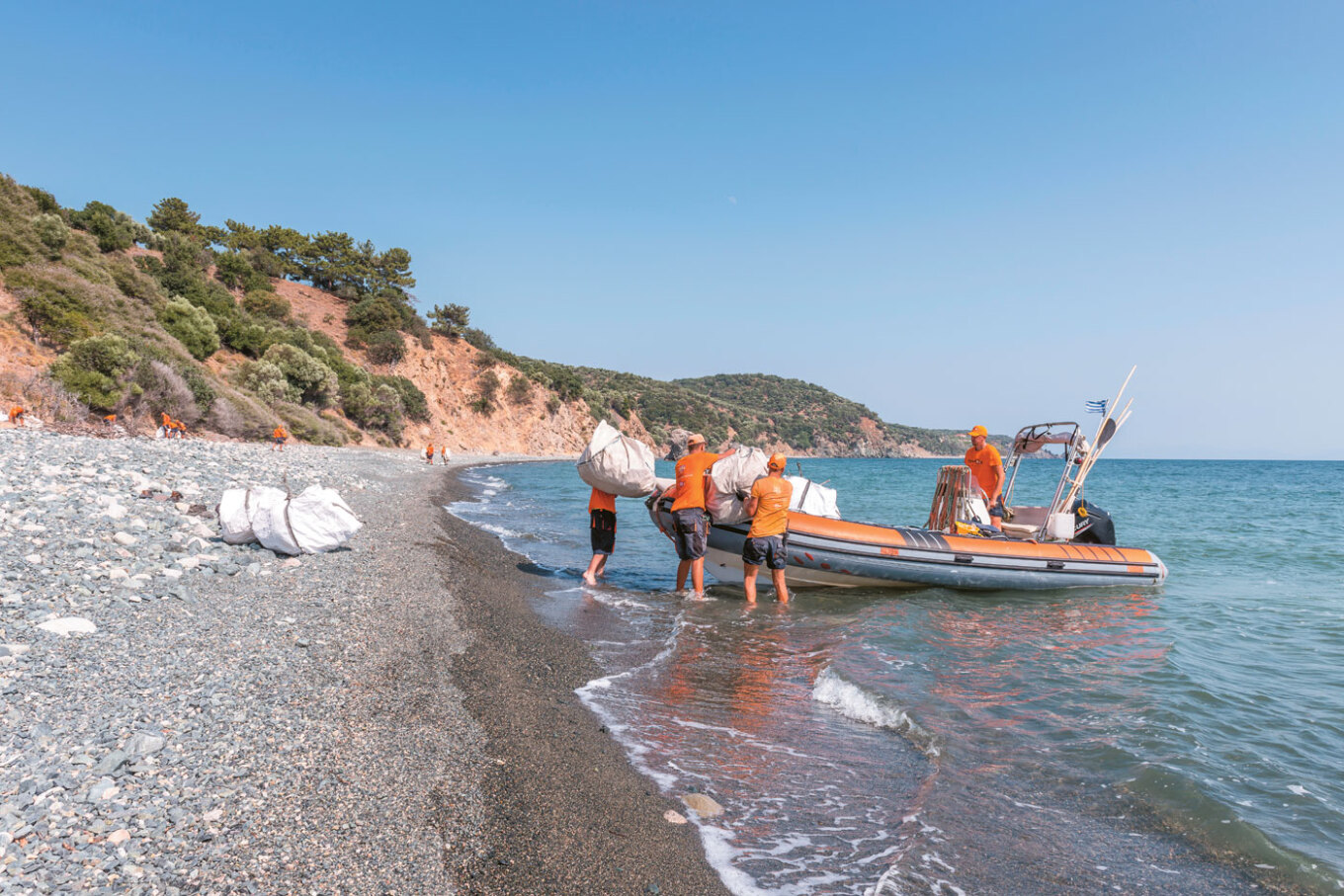
Regarding individual item counts, where measurable, 17,862,000 pieces of waste were collected. These ranged from tiny bits of styrofoam to massive truck tires and ghost nets woven from plastic fibers. Every piece was painstakingly removed by the Typhoon Project team – people working by hand, often in difficult conditions and exposed to the elements. A significant portion of this waste likely originates from land-based sources and poorly managed or abandoned fish farms, a problem that must be addressed centrally by state authorities.
Closing Thoughts
The Typhoon Project’s results provoke mixed emotions: on one hand, the Athanasios C. Laskaridis Charitable Foundation deserves praise for funding and supporting this privately led but environmentally crucial initiative. On the other hand, there is deep concern and sadness: how can we, as Greeks, collectively pollute our own country so recklessly? Especially one of its most valuable natural resources—its beaches and coastline?
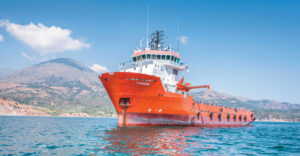
The paradox lies here: for the vast majority of Greeks, it’s common knowledge that marine pollution from plastic waste, styrofoam, nets, and other debris is a serious environmental threat. A single glance at images of beaches before cleanup shows the scale of the problem. For six years now, the “Typhoon” – the signature vessel of the groundbreaking Typhoon Project – has been at the forefront of this difficult battle against marine solid waste, executing the Foundation’s mission with dedication and visible success.
The “Typhoon,” the only vessel in the Mediterranean solely dedicated to coastal cleanup, is a modern 72-meter ship carrying five inflatable boats. With a permanent 35-member crew—true anti-pollution warriors—it tirelessly navigates Greece’s coasts year-round, prioritizing isolated, hard-to-reach beaches where pollution accumulates dangerously. It took four full years of activity to complete the first full cleaning cycle of all island coastlines and parts of the mainland. The findings from that effort highlighted the severe pollution of coastal areas.
The real impact of the Typhoon’s work became evident during the second phase of operations, which began in February 2023. As the same beaches were cleaned again, they showed an average 80% improvement—an encouraging sign for the future.
Success in Numbers
For example, in Crete, beaches cleaned for a second time showed a 78% improvement. In Paros and Thasos, the improvement reached 100%. In the islet of Agios Georgios in the Saronic Gulf, improvement was 83%, despite the massive waste found during the first visit, mostly due to nearby fish farms.
Recently, the Typhoon completed its second cleaning cycle on the Athos Peninsula in Mount Athos, which showed an 88% improvement in coastal waste protection. Meanwhile, the ship continued its mission in Lemnos, a flagship island for the project, where the team previously operated for 122 days—about four months.
Another notable mission was in Magnesia, where the Typhoon stayed for a full seven months to clean flood-affected beaches hit by Storm Daniel.
Project Typhoon: Six Years Cleaning Every Coastline in Greece
Beyond its coastal cleanups, the Typhoon Project has also yielded a treasure trove of valuable data: all waste is weighed, categorized, and logged into a dedicated database maintained by the Athanasios C. Laskaridis Charitable Foundation. This database—among the most comprehensive worldwide—has attracted scientific attention, leading to key collaborations with the Universities of Patras and the Aegean, the Technical University of Crete, and soon, Imperial College London.
Parallel Initiatives
Over its six years of implementation, the Typhoon Project, thanks to the almost heroic efforts of its team, has rightfully claimed an 80% improvement rate in beaches cleaned for the second time. A remarkable feat, considering that the Foundation began the program from scratch.
However, the Foundation continues to care actively for the environment through a wide range of independent but related initiatives.
Notable among these is the “Fishing For Litter” program, now in its sixth year. Foundation staff, working with 48 fishermen across the Aegean and in cooperation with the environmental organization iSea, have removed dozens of tons of benthic waste—garbage settled on the seabed. Without this intervention, these materials would have remained underwater for years, harming marine ecosystems.
At the same time, the Foundation develops educational environmental initiatives, such as the “On the Surface and the Seabed” campaign. Team members visit schools—including Special Education schools—to raise awareness among young students, starting from primary school, about the importance of protecting nature.
From the perspective of the Athanasios C. Laskaridis Charitable Foundation, spreading love for the environment and cultivating ecological consciousness among future Greek citizens—along with the enthusiastic response of the students—makes for the best possible celebration of Typhoon’s sixth anniversary.
Ask me anything
Explore related questions