





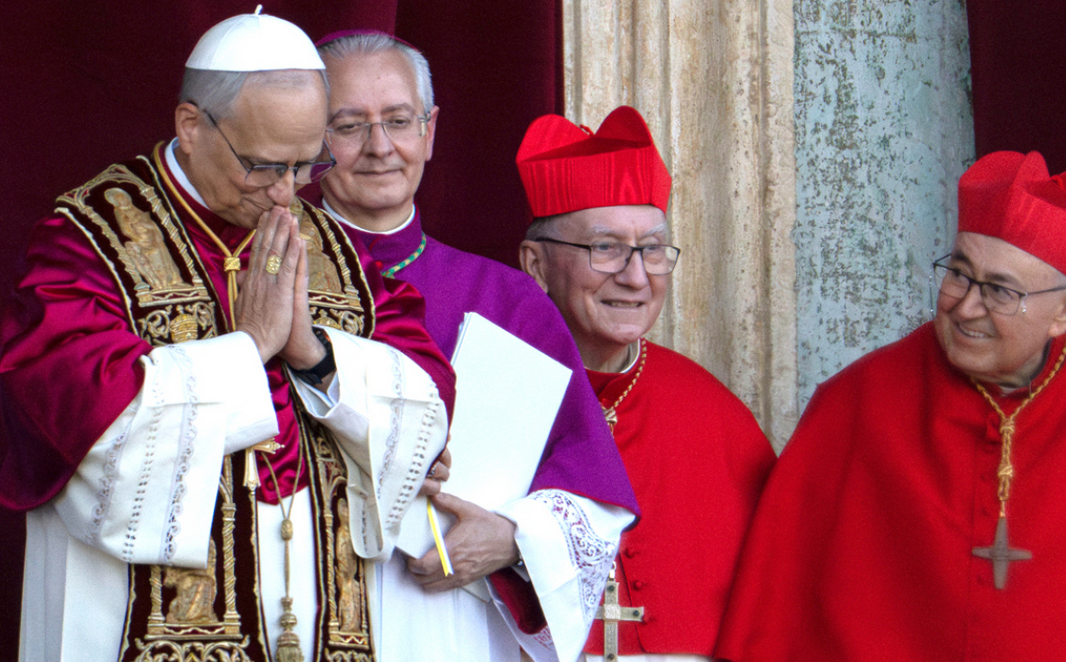
Yesterday’s succession of Pope Francis turned into a world-historic event for the United States of America, as a new Pontiff of US descent was elected to the Holy See for the first time in millennia. Born in Chicago, the 69-year-old formerly known as Robert Francis Presvost spent most of his years serving the Roman Catholic Church in Peru, which spread excitement in both North and South America once his election became known.
Except that the white smoke that engulfed St. Peter’s Square in the Vatican yesterday afternoon, constitutes for many analysts a choice with strong geopolitical criteria. Although the new Pontiff was not among the names on the short list of favorites, yet it seems that his election has confirmed the proverb “Chi entra papa al conclave, esce cardinale – He who enters the conclave as pope, leaves as cardinal”, with Robert Presvost’s selection described by much of the European press as “unexpected”.
Thwarting initial expectations, neither Vatican Secretary Pierroto Parolin nor the widely known Cardinal Louis Antonio Tagle emerged victorious, while predictions that the new Pope would come from Africa or Asia, something that would signal an opening of the Roman Catholicism to the emerging countries of the world, proved unrealistic. The “globalized” version of Catholicism was defeated by the election of the first American pope in history, a choice “though not without potential tensions in the Trump era,” according to Euronews.
However, for some analysts, the outcome of the vote, which was attended by 133 cardinals from 70 different countries, is probably seen as a gesture of appeasement to US President Donald Trump, if not a form of tacit acquiescence to his global imperium. The fact, moreover, that the election was completed after just four ballots and in two days, making it one of the shortest conclaves in modern history, is another indication of the electors’ determination to fall in line with the new world order, if not in sync with the shift to a more conservative version of the West.
In practice, moreover, the argument that the Cardinals would reject a Pope from the United States because of their too much global influence was also refuted. In practice, however, the opposite has rather happened. “It is a great honor to realize that he is the first American Pope. What a thrill and what a great honor for our country. I look forward to meeting Pope Leo XIV. It will be a very important moment!”
The “Planetary Leader” concluded.
At the same time, as reported by the Washington Post, it appeared from the result that “some critics of (Pope) Francis – especially in the United States and Europe – want something quite different: a pope who will align the church with right-wing politics in the West.” “At the same time, some voices on the left are portraying the possible choice of a Francis supporter as a blow against MAGA,” the publication continues, even given that a social media account with the new pontiff’s full name is reported to have commented negatively on the statements of the country’s Vice President, Jay Di Vance saying he was wrong. “Jesus is not asking us to evaluate our love for others,” Pope Leo IV is reported to have said in the past.
Reports, however, want the new pontiff to have voted in the Republican primaries in Illinois in 2012, 2014 and 2016 according to voter registration records, bringing him even closer ideologically to the current US administration. According to the same information, the new pontiff has also voted in four general elections, most recently last December.
In any case, the US media, most of the former US Presidents, government officials and representatives of civil society greeted the result of the vote with joy and emotion, after 252 European Popes and 8 of Middle Eastern descent.
All the more so when Leo IV’ is the first pope of US origin to henceforth lead a church with some 1.4 billion members worldwide. But his power will transcend the religious community as Leo assumes a role of enormous diplomatic and social influence as many analysts have retrospectively considered, although they previously thought it unlikely that the new pope would be of American descent.
For the Bloomberg news network, “a pope who comes from the US makes it seem as the trade war is producing tangible results,” as it pointed out, highlighting the geopolitical dimension of the election, at a time when the key criterion for the new pontiff’s nomination was, according to the Atlantic Council think tank, the composition of the new conclave. Specifically, this year about 32% of the Cardinals in the conclave came from countries in the bottom half of the world’s gross domestic product (GDP) per capita, a notable increase from about 22% in 2013. Under Francis’ tenure, the profile of the “average Cardinal elector” shifted toward nations with lower GDP per capita by 12 percentage points. However, the majority of electors come from middle-income countries in the lower half of the European bar, reflecting in part the geographic concentration of the world’s 1.4 billion Catholics. “This shift among cardinal electors reflects a broader trend: the growth of the Catholic Church, and therefore its future, increasingly lies in emerging economies,” the Atlantic Council argues, concluding that “Pope Leo IV will need to continue to adapt to the new demographic reality of the Church.”
Ask me anything
Explore related questions




