The amendment passed by the government last week reintroduces construction activity – with or without the bonuses of the NBC – into the urban map, both vindicating those who began building and giving a second chance to constructions deemed illegal by the courts, under the condition of paying an environmental fee.
In contrast, over 2,500 building permits that did not commence work by December 11, 2024 – the date the Council of State’s summary decision on the unconstitutional provisions of the NBC was issued – fall under revision. For these, the State offers fast-track, free revision procedures (to remove additional square meters), and refunds for expenses on taxes and fees, though this is considered minimal compared to the benefits of the bonuses in terms of both added construction and property value.
As property owners note, it’s one thing to get a few hundred euros back in taxes and fees for revised permits and another to lose the top floor of a building in Alimos or Glyfada due to the removal of bonuses – a loss that could be worth 1 to 2 million euros.
The Compensation
The amount of the new economic compensation set by the new NBC regulation to address the “build vs. court ruling” debate will be calculated based on the additional square meters (bonuses) of a building. This will be specified in a law provision by the Ministry of Environment and Energy through a Presidential Decree, which has been prepared and is expected to be submitted to the Council of State for review soon (possibly within the month).
The same Presidential Decree will define the concept of commencement of works (by December 11, 2024), which is not clarified by the voted amendment that vaguely defines necessary intervention as excavation.
According to sources, the Ministry has included expanded special provisions in the Presidential Decree to allow as many activities as possible to be certified as proof of commencement. For example, test trenches in the event of archaeological concerns do not constitute excavation for the building but do for the archaeological service and are proposed to be included under the same framework, as well as demolitions of structures even if no new construction has begun.
The goal, reportedly communicated to the Supreme Court, is for the Presidential Decree to be approved quickly – even by summer – a highly optimistic projection given the usual pace of such reviews. However, the government insists that “we are not proceeding blindly, nor proposing three to get two, since groundwork has been done with the Council of State,” though they emphasize that thorough evaluation of the provisions will determine the final outcome.
Conclusion
Therefore, it will take a few more months to be safely confirmed and endorsed by the Council of State whether provisions – for example, the one reviving building permits challenged in court – can receive more favorable treatment and be deemed lawful in exchange for the payment of the environmental equivalent (a fee for projects with environmental impact).
Presidential Decree
The Ministry of Environment exempts from economic compensation obligations the major strategic investments in private and public properties institutionalized through Special Plans for Spatial Development of Public or Private Properties (ESCHASE and ESCHADA), as well as Integrated Development Plans (SOA), such as the Hellinikon investment. These investments had their own urban planning – before the 2020–2021 enactment of the NBC’s combined incentives – and thus did not factor in the additional building volume added later as a state bonus.
The Ministry’s amendment sets a new course for these projects, as it does not exempt them from the NBC provision procedures through a simple legislative act (which would be easily challenged), but instead calls for a Presidential Decree to be reviewed by the Council of State – expected to receive favorable consideration since it does not constitute a horizontal regulation (which the court has ruled out in its recent plenary decision on the NBC), provided it is scientifically substantiated based on needs, carrying capacity of the area, etc.
Green “Exchange”
With the amendment, the political leadership of the Ministry aims to broaden the pool of salvaged building permits, based on the hardship faced by citizens and investors who legally obtained permits that were later ruled unlawful, and based on legal certainty and state continuity principles.
The NBC regulation comes at a particularly critical time for the construction sector, which has slumped due to significant uncertainty in recent months. It foresees even the completion of buildings at advanced or unfinished stages. The proposed model provides that citizens or developers whose permits were canceled or are entangled in legal disputes can continue construction upon paying a financial compensation, the so-called “environmental equivalent”, into a special account of the Deposits and Loans Fund on behalf of the relevant municipality or local community.
These funds will be used for environmental interventions in public spaces (revamps, demolitions of illegal buildings, sidewalks, green areas, etc.) within a new plan (Special Urban Upgrade Plan – ESPIAP), which will allow the continuation of building permits – whether the structural frame of a property has been completed or not, provided there is approval from the Central Urban Planning Issues and Disputes Council (KESYPOTHA) and the Central Architectural Council (KESA) of the Ministry in case a relevant request is submitted and examined within one month.
Besides the permits under litigation (canceled or under appeal at the Council of State), estimated at around 200, the environmental equivalent will also legalize properties included in funding tools such as the Recovery Fund, NSRF, etc.
The environmental equivalent has, in recent years, been a theoretically elegant version of offsetting the impacts of planning violations on the environment, but was never implemented. Under the new NBC framework, history repeats with a two-year horizon to apply the environmental offset and proceed with the studies that will specify the measures per area (ESPIAP).
Incentives
The new NBC regulation comes just four months after the landmark Council of State plenary ruling deeming the widespread application of NBC incentives unconstitutional. The new regulation now restricts incentives solely to zones defined in local urban plans based on the characteristics of each settlement.
The amendment provides that until the Presidential Decree is issued, penalties for canceled permits or those canceled regarding the NBC’s benefits are suspended, and the prohibition of legal transactions does not apply.
Buildings started before 12/11/2024
Permits under which construction began before 12/11/2024 and where construction work can be proven to have been carried out will continue normally without revision or financial burden. They are also allowed to revise the permit, if desired, without financial charges (taxes, fees, contributions, deductions).
Permits before 12/11/2024 without construction work started
These do not lose the right to build but lose the bonuses. The State offers fast-track, free revision procedures (to remove the additional square meters), and refund of expenses for taxes and fees.
Permits that were canceled
Citizens or developers whose building permits were canceled or are under legal proceedings may continue construction upon payment of the so-called “environmental equivalent.”
Funding tools
With the environmental equivalent, properties included in funding mechanisms such as the Recovery Fund, NSRF, etc., will also be “legalized.”
Hellinikon
The Ministry of Environment exempts major strategic investments in private and public properties, institutionalized with Special Plans for Spatial Development of Public or Private Properties (ESCHASE and ESCHADA), as well as Integrated Development Plans (SOA), such as the Hellinikon project, from the obligation of paying economic compensation.
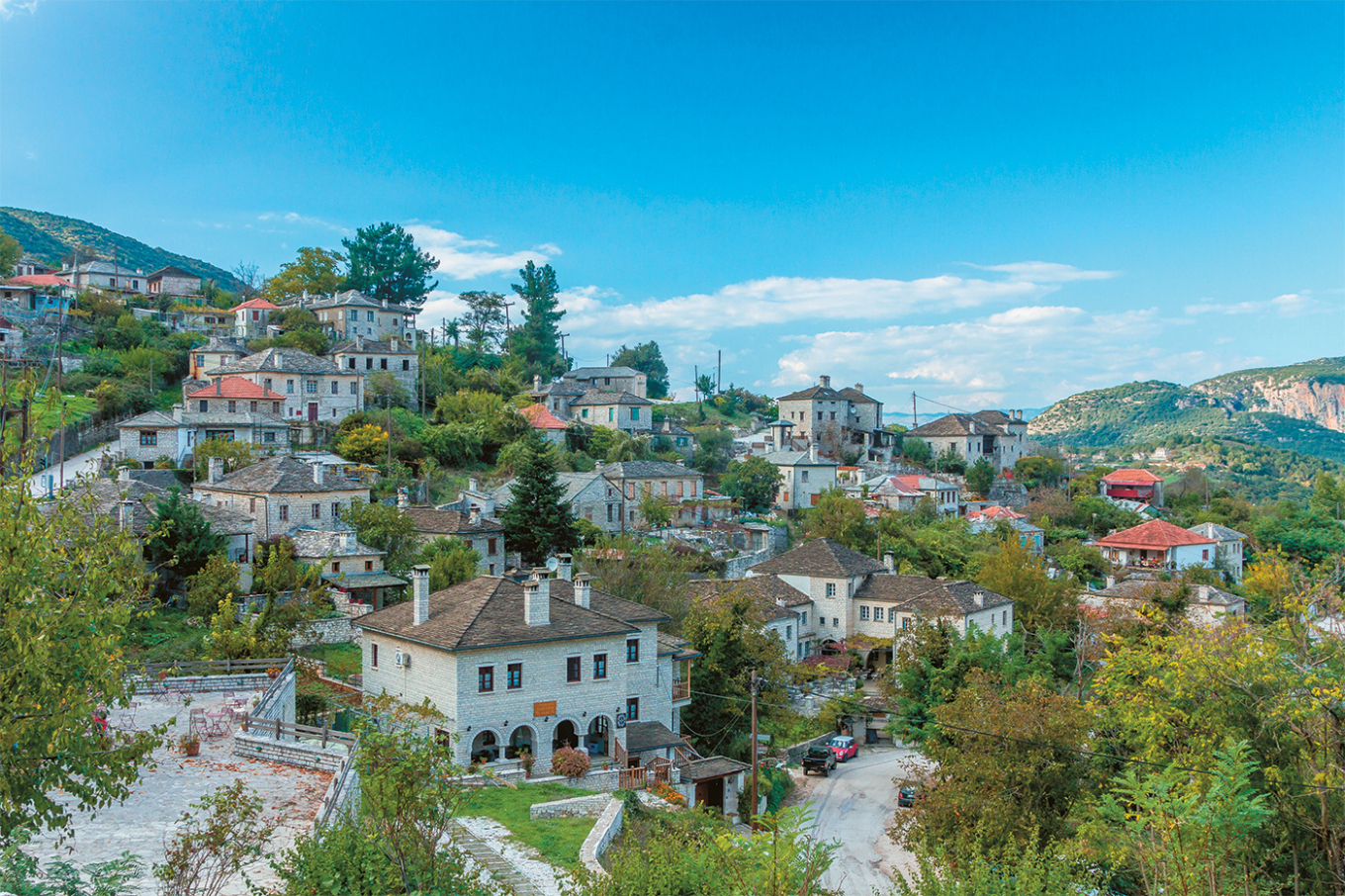
The SOS in the construction of 10,000 settlements with fewer than 2,000 inhabitants
Ten questions and answers about the upcoming changes and the type of intervention the State is planning
At least 10,000 small settlements across the country appear to be affected by the promotion of the new Presidential Decree on the delineation of settlements with populations under 2,000. Despite political announcements about forthcoming legislative measures, and the fact that the consequences will become visible at the end of the urban planning process — that is, in 2 to 3 years from now — concern remains among property owners and engineers.
The regulation, aimed at complying with decisions of the Council of State (StE), is in the spotlight and continues to provoke reactions in local communities, municipalities, and even among “blue” (ruling party) MPs, who speak of suffocating restrictions with serious impacts on small property ownership. In fact, intensive “massaging” was required last week in Parliament from the political leadership of the Ministry of Environment and Energy (YPEN) to quell objections.
The main objection concerns the reduction of settlement boundaries, resulting in many plots now being designated as out-of-plan, drastically limiting building potential.
This change is believed to freeze urban planning actions, suspend investments, and decrease property values, although the government has committed to a new regulation to set things right.
In fact, the Prime Minister recently took a clear stance on the matter to ease concerns, stating that for remote areas of the settlements, the government is initiating legislative regulation in the spirit of the StE decision, which deemed the delineations by prefects as not scientifically sound. “The regulation will treat these areas more favorably than out-of-plan construction, but without fully assimilating them into in-plan zones.” He emphasized that all rights of property owners in peri-settlement zones geographically and organically connected to small settlements will be safeguarded.
The Ministry of Environment defends the new framework, stressing that it is about compliance with jurisprudence and not a political choice. However, in many regions of the country, such as Crete, people are not convinced of the administration’s good intentions, believing that the YPEN regulation risks excluding 80% of currently compliant and buildable plots from settlement boundaries.
A recent letter from the Eastern Crete Regional Department of the Technical Chamber of Greece (TEE) to Mr. Kyriakos Mitsotakis and Environment and Energy Minister Stavros Papastavrou (perhaps somewhat exaggeratedly) stated that the expected loss in commercial value for property owners nationwide could exceed €100 billion. Last year, it is estimated that 8,500 building permits were issued in these settlements, representing 18% of total construction activity.
Let’s take a look through ten questions and answers at everything citizens and engineers need to know about the puzzle of small settlements spread throughout the country, the upcoming changes, and the type of intervention planned by the State.
1/ What is the problem with the settlements?
The Ministry of Environment and Energy undertook the redelineation of settlements with populations under 2,000 to align with decisions of the Council of State, which had annulled the boundaries defined by prefectural decisions in the 1980s, often granted generously. The supreme administrative court ruled that prefects do not have the authority to determine settlement boundaries, annulling such boundaries from 2017 to 2022 in Rethymno, Pelion, and Paros, thus casting doubt on all post-1983 established settlement boundaries in the country.
2/ What did the StE ruling say?
According to the established jurisprudence of the Council of State, settlement delineation must be preceded by general urban planning, which must have been reviewed by the court through a Presidential Decree. In this context, the court annulled expansions of settlements created through arbitrary decisions by prefects or other bodies — not banning the expansions themselves, but requiring sufficient justification for each new urban development.
3/ Why didn’t the ministry provide solutions for small property owners?
Each small settlement typically consisted of three zones: the cohesive part (pre- or post-1923), which formed the central core; the scattered part; and the remaining area, generally sparsely built. New rules set by the Council of State define that the sparsely built parts will be considered out-of-plan areas — i.e., outside the settlement boundaries. YPEN attempted to protect citizens by defining a “Zone C” within these settlements, accommodating areas built through various prefectural decisions. Ultimately, this plan was overturned by the Council of State, which returned the draft Presidential Decree, urging the withdrawal of the specific article.
4/ What is the current risk posed by these decisions?
By adapting the Presidential Decree to the Council of State’s recommendations, YPEN proceeded with a new delineation of settlements, which puts small plots of 300 or 400 sq.m. that were within these settlements and buildable at risk of falling outside settlement boundaries and being reclassified as agricultural land.
5/ Is this decision final for property owners?
No, it is not. The reason is that the State, recognizing the potential devaluation of property caused by the boundary changes, is preparing to introduce new legislation that will, to a large extent, protect citizens’ property assets.
6/ What will the controversial regulation foresee, and when will it be enacted?
YPEN’s new delineation regulations serve as a tool for planners currently drafting Local and Special Urban Plans across 80% of Greek territory. These are expected to be completed in the next two to three years, provided the necessary structures in the Council of State proceed to speed up the review of 227 Presidential Decrees for each local urban plan and 18 Special Urban Plans. The new legislative initiative will allow the Local Urban Plans to define Special Land Use Control Zones (ΠΕΧ) following special planning, scientific methodology, and consultation with municipalities.
7/ What areas will be considered ΠΕΧ?
According to available information, ΠΕΧ will include non-urbanized and future-to-be-urbanized areas outside the plans and settlement boundaries, located around the settlements. These will be subject to special land use restrictions and building terms. Within the ΠΕΧ, the Local Urban Plan will define the new Peri-Settlement Zones (ΠΟΖ). A basic condition, however, will be their approval by the Council of State as part of the urban planning process.
8/ What will be allowed in the Peri-Settlement Zones?
The Peri-Settlement Zones will extend the boundaries of the settlements up to an estimated distance of 500 meters. These areas will form distinct units based on their physical and urban characteristics and act as intermediate zones between the in-boundary settlement area and the out-of-plan area.
9/ What plot requirements will they serve?
In these zones, plot requirements and building terms may be defined that are more favorable than those of out-of-plan areas but less favorable than those within settlements. For example, building may be allowed on plots of up to 2,000 sq.m., whereas today, at least 4,000 sq.m. are required in out-of-plan areas.
10/ Does the current legal framework apply until the new regulation is implemented?
The Ministry of Environment and Energy has stated that the new framework will come into force upon completion of the urban planning process. Until then, the current legal framework applies, meaning a building permit can be issued based on the existing boundaries set by the prefect — even if the recent Presidential Decree (now published in the Government Gazette) excludes them from the settlement.
However, every citizen must take into account that there is no legal certainty in these cases, for obvious reasons, since in the event of future legal challenge, the Council of State is certain not to overturn its previous decisions.
Ask me anything
Explore related questions