From the beginning of the Israeli operation “Gideon’s Chariots”, it was clear and officially stated that Israel would intensify not just its bombings but also the blockade of the Palestinian enclave. Humanitarian aid—already a mere “drop in the ocean” for months—has now become virtually nonexistent.
Critics accuse Israel of turning hunger and famine into a tool of multifaceted pressure. Israel, on the other hand, continuously releases videos showing trucks of aid being seized by armed Hamas fighters—fighters who, despite being hit hard after the “Black Saturday” terror attacks in Israel, have not been defeated.
Caught in the middle of this unthinkable humanitarian crisis, especially for the 21st century, are Gaza’s civilians. They are not only dying from relentless military strikes since October 2023 but are now also struggling to survive due to the total lack of food and water.
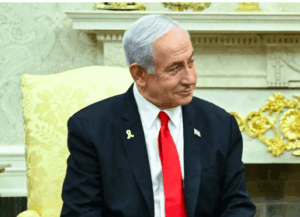
If we momentarily set aside the human tragedy—which is difficult if we still consider ourselves human—and focus on geopolitics, we see a detailed and calculated plan being executed by Benjamin Netanyahu with multiple intended recipients.
Despite Netanyahu’s two official visits to Washington, Israel’s diplomatic position has worsened, especially compared to the final stretch of Biden’s presidency. Netanyahu’s personal relationship with Trump has soured, and Israel has gained nothing tangible from the openly pro-Israel former president—quite the opposite.
Trump bypassed Israel right before his tour of the Arabian Peninsula. Through unofficial channels, he reportedly said he didn’t like being overlooked. He did not visit Israel—something easy and expected—and instead embraced a plan by Saudi Arabia and Turkey regarding Syria, even meeting with the interim Syrian president, al-Saraa, a former jihadist.
Trump sees himself as a dealmaker, but these deals often disrupt already fragile, now non-existent, balances. Following his second failed visit to Washington, Netanyahu seems to have made up his mind on how to proceed with the crisis. The renaming of the operation from “Iron Swords” to “Gideon’s Chariots” wasn’t symbolic—it was highly strategic.
For Israel, this operation also serves as a clear message to those who currently or previously opposed them: “There is no solution to the Middle East without us.” This message is directed not only at Europe but also at the United States.
Netanyahu will not allow the situation to spiral beyond his control or the security boundaries established by the Israeli state since its founding in 1947. He continues to apply pressure on Gaza, provoking international reactions while setting the stage for a future debate that he intends to control.
From Netanyahu’s perspective, ending the operations in Gaza today is far easier than it was a year ago. Israel has decimated not only Hamas’s leadership but also that of Hezbollah in Lebanon, and is eyeing Iran through Syria. If this brutal pressure on Gaza civilians brings about an urgent re-engagement—however flawed or hypocritical—Israel could impose a final settlement if its terms are met.
In politics, diplomacy, and of course in life itself, what’s legal is not always ethical. For Israel, the end justifies the means.
Ask me anything
Explore related questions