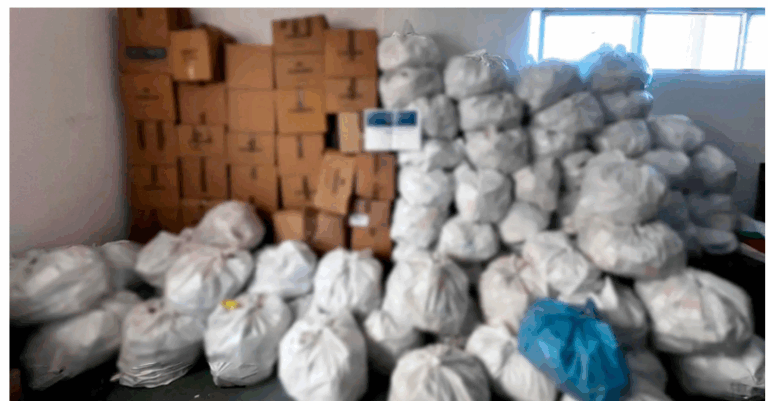
The uncovering of one of Greece’s most significant healthcare fraud schemes by the Organized Crime Directorate, involving fake prescriptions and illicit reimbursements through EOPYF (EOPYY), highlights critical vulnerabilities within the national health system. This case not only exposes systemic weaknesses but also underscores the urgent need for reinforced oversight, technological modernization, and strategic reforms to safeguard public resources and ensure the integrity of healthcare provision.
Operational Modus Operandi and Criminal Network Dynamics
Since 2017, a well-organized criminal network comprising pharmacists, physicians, and healthcare employees has exploited systemic loopholes with surgical precision. Their modus operandi involved issuing false prescriptions—often for drugs and psychotropic substances—falsifying signatures, and leveraging existing pharmacy infrastructure to execute fictitious prescriptions. Their network extended across Attica and Corinthia, with specific roles assigned to each member, including pharmacy owners, employees, and medical practitioners, thus establishing a sophisticated illicit operation.
The network exploited the AMKA (social security number) system, often using the identities of uninsured individuals or those who had undergone unrelated health procedures (e.g., COVID-19 tests) to mask their fraudulent activities. Their tactics included virtual prescription execution and signature forgery, which effectively deceived both the national reimbursement agency (EOPYY) and oversight authorities.
Strategic and Systemic Vulnerabilities
This case reveals several critical vulnerabilities:
1. Inadequate System Safeguards: The reliance on manual oversight and limited technological integration allowed for the forgery and falsification of prescriptions without real-time validation. The absence of robust digital verification mechanisms facilitated the scheme’s prolonged operation.
2. Insufficient Oversight of Prescription Practices: Despite existing controls, the scheme exploited gaps in monitoring and compliance, particularly in high-volume pharmacies and among practitioners operating in regions with less oversight.
3. Weak Inter-agency Coordination: While the investigation involved EOPYY, the Financial Police, and ELAS, the case underscores the need for integrated, real-time data sharing among health, financial, and law enforcement agencies to prevent and rapidly respond to such schemes.
Policy and Reform Recommendations
Given the scale of this fraud—over 33,962 false prescriptions and damages exceeding €1.2 million—the following strategic measures are imperative:
– Digital Transformation of Prescription Processes: Rapid implementation of an integrated, secure electronic prescription system with real-time validation capabilities is crucial. This would include mandatory digital signatures, biometric verification, and cross-referenced prescription databases.
– Enhanced Oversight and Data Analytics: Deployment of advanced data analytics and AI-driven monitoring tools can flag anomalous prescription patterns indicative of fraud, enabling proactive intervention.
– Strengthening Legal Frameworks: Updating legal provisions to facilitate swift prosecution and impose stricter penalties for healthcare fraud, alongside clearer protocols for inter-agency cooperation.
– Public Awareness and Insured Person Engagement: Education campaigns urging insured individuals to activate secure prescription alerts, monitor their health records via the HIF platform, and promptly report suspicious prescriptions or activities.
Implications for the Greek Healthcare System
This case serves as a stark reminder that healthcare integrity is foundational for system sustainability. Persistent fraud not only drains public resources but also compromises patient safety and trust. It underscores the urgency for Greece to accelerate its digital health transformation, modernize oversight mechanisms, and foster a culture of compliance and transparency.
The Greek government and health authorities must view this scandal as a catalyst for comprehensive reforms—integrating technological innovation, legal tightening, and inter-agency coordination—to fortify the health system against future vulnerabilities, ensuring equitable and efficient healthcare delivery aligned with European best practices.
Ask me anything
Explore related questions