Shocking images leaked to media outlets and social media show the horror experienced by women in so-called “obedience shelters” in Saudi Arabia, where they are subjected to torture, beatings, and rape.
According to the British Guardian, these are state-run institutions where women—often minors—are isolated without trial and with no prospect of release except with the approval of a male relative.
According to dozens of testimonies, what happens inside amounts to psychological and physical torture, aimed at breaking any resistance and subjugating the victims.
Despite official denials from the Saudi government claiming that women can “leave at any time,” human rights organizations reveal that, in practice, the consent of a male guardian is required—even if that guardian is the abuser. Many women end up in Dar al-Reaya after reporting sexual abuse at home, only to be forced into “reconciliation” with their abusers in order to be released.
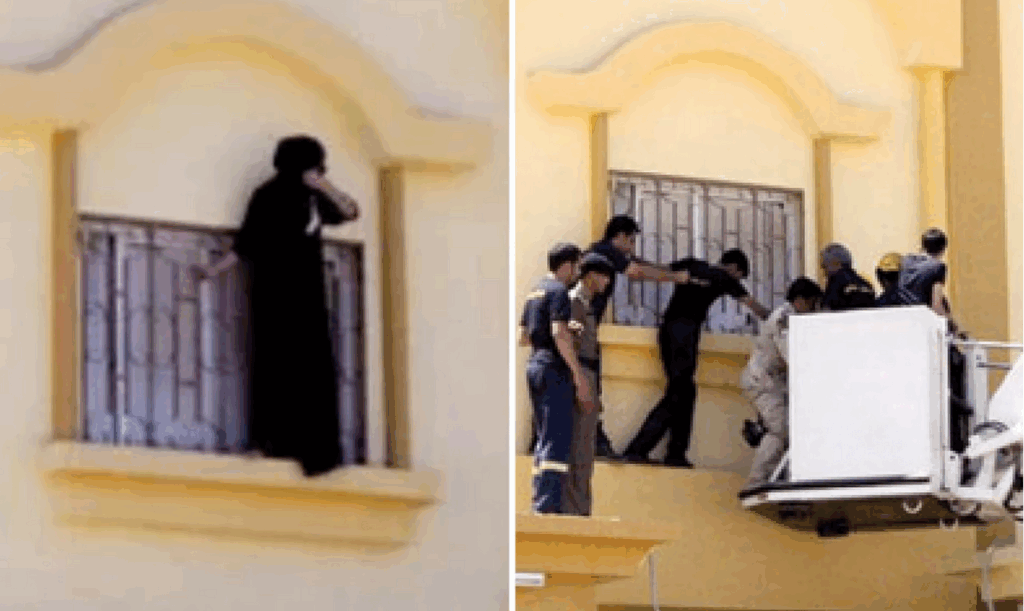
A shocking video published by the Daily Mail brings renewed attention to the systematic abuse of women inside these secret “reform” facilities. In the video, police officers and guards are seen relentlessly beating women who were peacefully protesting at the “Social Education Home for Girls” in the city of Khamis Mushait, in the Asir province.
Activist Dr. Maryam Aldossari, based in London, explains: “Every girl in Saudi Arabia knows about Dar al-Reaya and what happens inside. It’s like hell. They will stay there until they accept the rules.” Testimonies describe frequent whippings, mandatory religious indoctrination, isolation from the outside world, harassment by guards, and humiliating procedures such as virginity tests.
Sarah Al-Yahia, who has launched a campaign to shut down the centers, recalls how from the age of 13, her father would threaten to send her there if she didn’t comply with his sexual demands. “If you report abuse, the family sends you to these institutions to save its ‘reputation’,” she says. “It’s a tool of control. No matter what you say, you are always wrong.”
Amina, 25, sought refuge at a center in the city of Buraydah after being beaten by her father. She describes the facility as “abandoned, cold, and inhumane.” When she tried to defend herself, the staff called her father. He demanded—and wrote in a “contract”—that his daughter would not leave the house without a chaperone, would not refuse orders, and would obey completely. Amina, frightened, signed. Soon after, the abuse resumed at home, and she was forced to flee the country.
Another woman, Shams, remembers that when she was 16, a former inmate visited her school to give a “morality lesson.” The woman told them she had been arrested by the religious police for having a relationship with a boy. After becoming pregnant, her family disowned her and sent her to Dar al-Reaya. “She said that if a woman ruins her reputation, she is finished forever.”
The testimonies don’t end there. Women who refused to pray were publicly whipped. Others who spoke about sexual harassment were put in solitary confinement or denied food. Some report being forced to eat their own vomit as punishment. There have also been reports of suicides: in 2015, an inmate was found hanged in her room, with a note that read, “I decided to die to escape from hell.”
The state has maintained these “shelters” since the 1960s, housing girls aged 7 to 30. Often, when no guardian can be found to “take them back,” they are transferred to so-called “host structures,” where once again, they are not allowed to leave without male consent.
Ask me anything
Explore related questions