





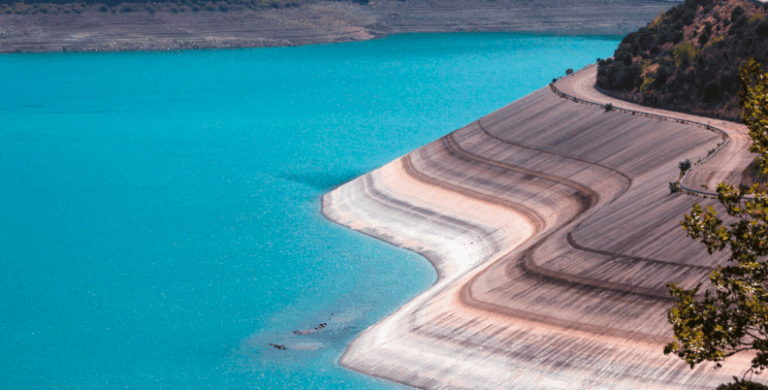
The nightmare looming over Greece is its excessive “thirst” from tourism and agriculture which threaten to transform the country into a desert at a rapid pace. The paradox is that each year, around 5 out of the 9.5 billion cubic meters of water consumed nationally are lost through leaks from the old and poorly maintained network of 7,000 kilometers of pipelines.
Research by the World Resources Institute and a report by Deloitte simply confirm what scientists have been loudly warning about increasingly over the years: Greece ranks 19th globally in the risk of drought as its needs continue to grow while water reserves diminish. In this context, approximately 49% of the country’s land area, according to the latest published report in GeoHazards, is considered highly vulnerable to desertification, partly due to human activity.
Scenarios for Desertification of Half of Greece: 50% of Water Is Lost Before It Reaches the Tap
This last point is critical. As climate change accelerates due to human intervention, water reserves deplete at an equal or greater rate. Greece presents a complex case: the eastern part receives as much rainfall as Alexandria in Egypt (notorious for drought), while the western part receives as much as Paris (known for high rainfall). Of course, this does not mean the entire Mediterranean region is unaffected; Greece is also heavily impacted by the broader regional issues.
Tourism Demands Water
As surface water and reservoir reserves fall below alarming levels, a Deloitte report prepared for the Greek government on water management indicates that Greece doubled its water withdrawals for urban use between 2001 and 2022.
Specifically, over this two-decade period, withdrawals increased by 139%, mainly driven by intense tourism, rising per capita consumption, and significant losses in distribution networks—up to 50%. The problem is especially severe in tourist-heavy areas such as the Cyclades, where consumption spikes during summer months amid limited water resources.
Scenarios for Desertification of Half of Greece: 50% of Water Is Lost Before It Reaches the Tap
According to data from Professor Lazaros Florido-Benítez of the University of Málaga, tourists in Catalonia consume an average of 163 liters of water daily, while in luxury hotels, the consumption reaches 240 liters—compared to 160 liters used by a Barcelona resident. Similarly, on the island of Sifnos, tourists consume 2 to 3 times more water than locals, mainly due to more frequent showers, linen and towel washing, and pool use.
The key questions posed by mayors of islands like Sifnos, Paros, Naxos, and others are: why should their tourism businesses and visitors heavily burden the limited water sources of their islands? Why must all houses and hotels have pools when the sea is so close? Are pools necessary on islands with stunning beaches? Or why should someone on a 4-acre plot build a 200-square-meter house and create a 3.5-acre water-loving garden?
How Much Are Crops “Dying of Thirst”?
Irrigation is Greece’s biggest threat from drought, as agriculture consumes over 80% of the country’s total freshwater use. Traditional irrigation methods, such as flooding, have low efficiency and high water losses.
According to studies by Deloitte and WRI, Greece uses the highest volume of water per hectare of irrigated land in the European Union, far exceeding other Mediterranean countries with similar climates. Interestingly, while agricultural exploitation has decreased in recent years, water withdrawals for irrigation have increased or remained high. This is attributed to rising temperatures, which increase water needs per crop, and outdated irrigation networks often over 20 years old, suffering from severe water losses and low efficiency.
Another issue is the cultivation of water-intensive crops like cotton, corn, and vegetables—especially in arid regions—exerting further pressure on water resources. Agricultural policies supporting such crops may expand irrigated areas, amplifying stress on water supplies.
Greece as a Desert
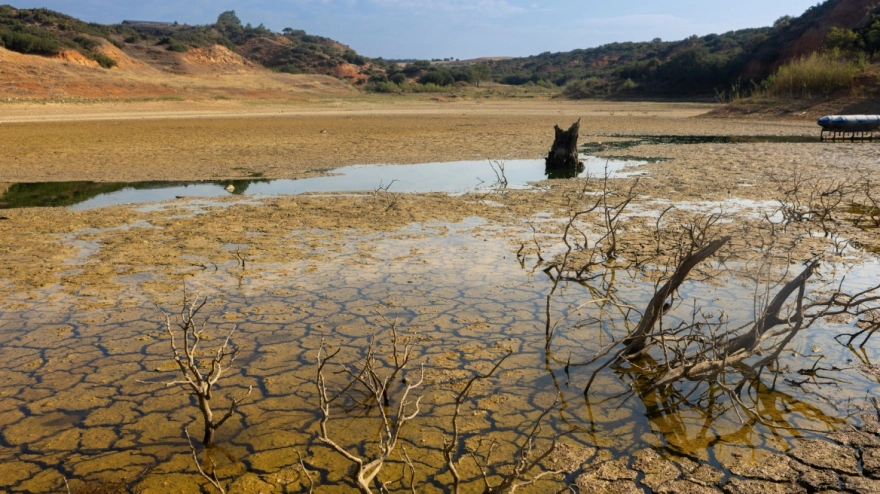
Greece has faced an increasing water crisis in recent years, driven by poor resource management and accelerated climate change. Scientific forecasts and recent data paint a worrying picture: fewer rainfall events, longer drought periods, and rising temperatures deplete natural water stocks.
Scenarios for Desertification of Half of Greece: 50% of Water Is Lost Before It Reaches the Tap
Soil erosion in Greece amounts to about four tons per hectare annually—twice the European average—accelerating land degradation. Rainfall has decreased by 10-20% over recent decades, especially in the southern parts and the islands. Meanwhile, average temperatures have risen by roughly 1.5°C since the mid-20th century, speeding up evaporation from soils and reservoirs, further reducing water availability.
Climate change also adversely affects underground aquifers. Over-extraction—particularly for irrigation—and seawater intrusion in coastal areas cause salinization and threaten freshwater reserves. Regions such as Crete, Thessaly, Peloponnese, and the Aegean islands are already under water stress, with local authorities resorting to emergency measures like desalination and water transportation via tankers.
The most recent report—published last year in GeoHazards—assessed Greece’s vulnerability to desertification using the Environmental Sensitive Areas Index (ESAI). It found that about 30% of Greece is already degraded, with an additional 49% considered susceptible to desertification.
The report concludes that desertification results not only from natural factors but is exacerbated by human activities such as intensive agriculture, over-extraction of water, deforestation, and poor land management. Areas at highest risk include Crete, Lesbos, Eastern Central Greece, Peloponnese, and parts of Thessaly and Thrace.
Leaks and Losses
While Greece faces mounting water management challenges, one of the most severe yet less highlighted problems is water losses in distribution networks. Official data shows that in many regions, up to 50% of drinking water never reaches end-users, lost through leaks, failures, or aging infrastructure.
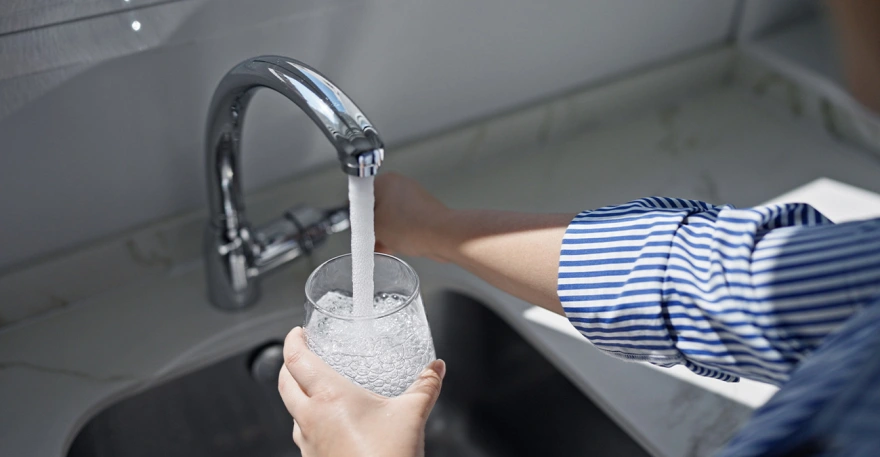
These losses are not limited to remote mountain villages or degraded urban areas. Even in large cities and tourist hotspots like Athens, Thessaloniki, Rhodes, and Corfu, losses range from 30% to 45%, with some small municipalities reaching even higher rates. In Attica, EYDAP reports about 15% of water being lost due to leaks, aiming to reduce this to 8-9% by 2029.
Most water supply networks in Greece were built in the 1960s and 1970s without modern standards. The combination of aging pipes, lax oversight, and limited investment in maintenance has resulted in a system with significant losses and frequent failures. The network extends over 7,000 km and urgently requires replacement.
Hydropower and Water Scarcity
As climate change worsens both supply and demand, Greece ranks 19th worldwide in drought risk. Reduced rainfall and increased water use for irrigation and general purposes are key factors, according to a study by the World Resources Institute and Deloitte. This report, conducted for the Greek government, highlights the country’s serious water resource challenges.
It notes that Greece’s water withdrawals for urban use doubled (+139%) between 2001 and 2022. This surge is mainly due to tourism, rising per capita consumption, and significant losses in distribution networks—up to 50%. The problem is especially acute in tourist regions like the Cyclades, where water demand peaks in summer amid limited supplies. Simultaneously, surface water availability has declined; groundwater extraction increased by 80% from 2000 to 2022, reaching 6,221 million cubic meters annually, while surface water use decreased by 40%. This imbalance strains underground aquifers and raises the risk of seawater intrusion, particularly in intensive groundwater extraction zones.
The situation worsens with declining reservoir levels in hydropower plants operated by DEI (Public Power Corporation). Despite recent increased rainfall, storage levels remain historically low, threatening both water security and electricity costs.
Solutions for the Islands
Facing the threat of nearly half the country turning into a desert and confronting water shortages, the Greek government is seeking solutions. Emergency plans include water transfers from the Acheloos River via tankers to Athens, but more permanent measures are being pursued for sensitive areas. For islands, establishing desalination units and adopting strategic water management practices are essential.

The government, in cooperation with relevant ministries, has launched a series of measures to enhance water security and combat drought in islands, including the recent allocation of €3.5 million for 33 projects across 21 island regional units. Additional initiatives involve detailed planning for islands with recorded water needs, such as Gavdos, Crete, Oinousses, Pátmos, Ios, Psara, Corfu, the Diapontia Islands, Leros, Amorgos, Anafi, Nisyros, Heraklion, Skiathos, Kythnos, Astypalaia, Naxos, Agios Efstratios, Lesbos, Lipsi, and Tinos.
Funding also supports measures for 13 other islands facing similar water scarcity issues, primarily focusing on establishing or upgrading desalination facilities. Projects include modernizing pipelines, installing “smart” meters, and automating control systems to reduce water leaks, conserve resources, and improve energy efficiency.
Over 80 projects—funded through the Public Investment Program and Recovery Fund—aim to strengthen water security on islands. These encompass small dams, storage tanks, new wells, and improvements to energy self-sufficiency in pumping and desalination units.
Ask me anything
Explore related questions




