





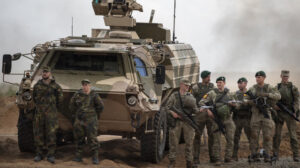
Germany in 2025 is changing. Under the leadership of Chancellor Friedrich Merz, the country is undergoing the most radical reorientation of its military policy since the end of World War II. Merz’s goal is clear: to turn the Bundeswehr into “the strongest conventional military force in Europe.”
This statement, as noted in an article by The Economist, is not merely symbolic. It reflects Berlin’s new self-confidence and its intention to assume a leadership role in European security at a time when Russia is once again threatening the continent and the United States is no longer seen as a guaranteed defender of European defense.
From Demilitarization to Extroversion
The most striking evidence of this shift was the military ceremony on May 22 in Vilnius. For the first time since 1945, German armored units were permanently stationed abroad, forming the “Lithuania” Brigade as part of Berlin’s NATO commitment.
The symbolic weight of this move is immense. For decades, German politicians avoided such actions, mindful of World War II memories and a deeply ingrained societal stance on military restraint. But today, the facts are changing.
Building the “European Shield”
Berlin’s pivot comes with significant investments. Merz and the Defense Ministry have pledged to dramatically increase the defense budget in order to renew the arsenal, boost readiness, and fill personnel gaps.
At the same time, the industrial sector is being strengthened: new orders for Leopard tanks, missile systems, and electronic defense systems are activating German defense manufacturers. At the core of this strategy lies the desire for strategic autonomy—not only for Germany, but for all of Europe.
The Challenges of the New Strategy
However, transforming the Bundeswehr is no easy task. Military infrastructure remains outdated, staffing shortages are widespread, and public support is not a given.
German society remains divided. Some welcome Merz’s decisiveness and believe the country must shoulder greater responsibility. Others fear that expanding the military’s role could stir tensions, especially with the historical burden of the past still fresh.
A New Berlin in a New Europe
What’s clear is that Germany is not merely aiming for defensive sufficiency. It seeks a strategic role, power, and influence within Europe’s security architecture. And if Merz’s plan succeeds, Berlin will not only be able to defend itself but also lead Europe both politically and militarily.
Germany’s new military might is no longer a ghost of the past—it’s the foundation of a different geopolitical reality unfolding before our eyes.
Ask me anything
Explore related questions




