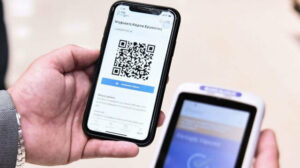
In line with the logic of enhancing the efficiency and accountability of public servants, the government is going a step further after the release of the results of the evaluation by citizens, as well as the internal evaluation conducted with AI tools. Thus, according to cross-referenced information of “THEMA”, the decision has been made by the Ministry of Interior, in cooperation with the Maximou Mansion, to implement the digital job card throughout the public sector from 2026.
Given the growing expansion of digital job card implementation in many private sector industries, Interior Ministry staff believe it can easily be applied to public services. The challenge for the design of the digital card for civil servants is, on the one hand, the strict adherence to the time schedules regarding the implementation of the government project and, on the other hand, the strengthening of professionalism in the public sector, on the model of operation of multinationals and other companies. It should be noted that the digital work card is applied in many independent authorities, such as the AADE, but also in Legal Entities under Private Law, which on the one hand ensures the observance of working hours and on the other hand protects employees from the employer’s arbitrary regime.
With the new digital card, civil servants will confirm their presence in person when arriving and leaving their service using modern technology, while all their movements in and out of their service accommodation will be recorded. To this end, management will be able to monitor both the extent of overtime work and the compliance of officials with their statutory working hours, which some of them do not observe. On the contrary, the long-standing existence of the existing system in which civil servants punch a card when entering their workplace, as well as when leaving it, has over time exercised the… creativity of a section of civil servants, who have resorted to imaginative solutions.
The “loopholes”
It was the… ingenuity of a portion of civil servants who managed to identify “loopholes” in the existing system over the years that mobilized the Interior Ministry to seek alternatives to ensure that working hours were not circumvented.
After all, it is common knowledge that there are cases when civil servants punch their cards on arrival and subsequently leave the building, only to return at the end of their working hours. Another category of officials has been found to enter their office in order to leave in the middle of their working hours, interspersing personal appointments, family commitments or even shopping and shopping between their compulsory working hours. There are also the few cases of officials who punch their cards by proxy, i.e. they have left a colleague at their feet who has been entrusted with their working card to punch it together with their own without being present in person at their place of work.
Because of course we are human and needs arise, the public sector has long provided for the statutory option of staggered hours for coming to and leaving work, namely:
■ Arrival time at 07.00 and departure time at 15.00.
■ Time of arrival at 07.30 and time of departure at 15.30.
■ Arrival time at 08.00 and departure time at 16.00.
■ Arrival time at 08.30 and departure time at 16.30.
■ Arrival time at 09.00 and departure time at 17.00.
Reward for punctuality
It is a given that the “ingenuity” of some cunning people, facilitated in many cases by the tolerance of their superiors, is rather ineffective in the age of AI and in a public service attempting to make the transition to the next day. At the same time, there are different speeds in the individual departments of the State. There are agencies that have an electronic time tracking system or a card (clock) system, but there are also agencies that maintain a mixed system (electronic and handwritten mainly due to different buildings), and there are also agencies left that maintain a handwritten system with signatures only. Most of the institutions, due to their dispersed buildings, cannot centrally control electronically their time-keeping and in many cases the central service is not aware or informed of the time-keeping of services that are either regional or located in other buildings. In many services, the submission and monitoring of staff leaves is done by paperwork and not by a special information system.
So given the encouraging results from the implementation of the digital card in the private sector, where high compliance by businesses was recorded and declared overtime has now appeared, the Ministry of Interior is going a step further. Relevant officials stress that punctual civil servants have only to gain from the implementation of the digital card, both from any overtime and from the end of a perverse practice against them by other colleagues. At the same time, as competent sources clarify, the transition to a digital system for controlling working hours in the public sector will be accompanied by the necessary provisions in the Public Employees Code, but also by those for the protection of personal data, taking another step towards the digital file of the public servant.
Evaluation and targeting
The implementation of measures to monitor the working hours of civil servants is the next step after the introduction of target setting, on the basis of which the internal evaluation for 2024 was carried out. The data released by the government in the middle of last week is particularly revealing, and the new evaluation framework with measurable targets has significantly reduced the logic of all civil servants coming out excellent when they were simply being evaluated by their supervisors. The comparative figures between 2019 and 2024, i.e. before and after target setting, are revealing. In particular, over 143,000 high-performing employees were identified in 2019. Based on the criteria applied, in 2024 these are just over 15,000. Similarly, 89% of supervisors were highly competent, while in 2024 the percentage drops to 37%. Presumably, we are talking about the same people participating in the evaluation, but under completely different conditions. In 2019 only 237 (!) low performing employees were identified, while in 2024 this number exceeds 2,000. On the other hand, in 2024, almost €30 million in productivity bonuses were paid to 19,500 qualified and efficient civil servants who catch and exceed the targets set.
Interior Ministry officials, meanwhile, explain that the implementation of the target setting has measurable results for citizens as well. For example, in social security, pending cases for the award of supplementary pensions have been reduced by 75%, while 90% of citizens’ requests were processed through tickets of the Single Call Centre (1555) and e-mails via gov.gr. In the OTAs, citizens generally receive a response within 20 days from the day of filing a request and the target for 2025 is to reduce the response time further.
At the same time, the Ministry of Interior has taken over the new Public Human Resources Disciplinary Council, which will be composed only of full-time and full-time officials of the State Legal Council, while tightening the disciplinary framework. Finally, in November, the axiologisi.ypes.gov.gr platform is expected to reopen for the second wave of the large-scale public opinion poll, to which almost 65,000 citizens already responded in May, providing a sufficient sample.
Ask me anything
Explore related questions