





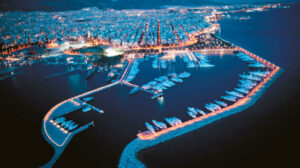
The temperature flirts with the red… The sun melts the railings, the sails fill with the blue meltemia winds, and from the salons of the mega yachts to the simple decks of motorboats, everyone has a common destination: Greece. Or at least, they want to. Because the country that should be the heart of yachting in the Mediterranean is today merely… the neck of the bottle!
And as visitors increase — whether Greeks rediscovering their passion for boats or foreigners who now consistently prefer the Greek seas, returning every year for their cruises in the Aegean, Ionian, and Mediterranean — the situation in ports and marinas becomes ever more suffocating. In Attica, the problem has surpassed the limits of inconvenience: it has become a strategic deficit.
And those who want to dock must have… a connection in Koroni, though even that doesn’t save them from the constantly rising mooring fees! In other words, the famous Athenian Riviera risks turning from a maritime oasis into a maritime deadlock, unless soon there is a comprehensive and structured plan, especially since the Marina of Agios Kosmas is preparing to close to begin renovation works.
“Greece has now become a yachting destination, and vessels arrive en masse from abroad. There is suffocation. People are looking to dock even in Nafplio or the islands to be served. And the worst is that there is no plan,” says Mr. Konstantinos Sakellariadis of EKKA Yachts to “THEMA”, describing the reality with honesty and concern.
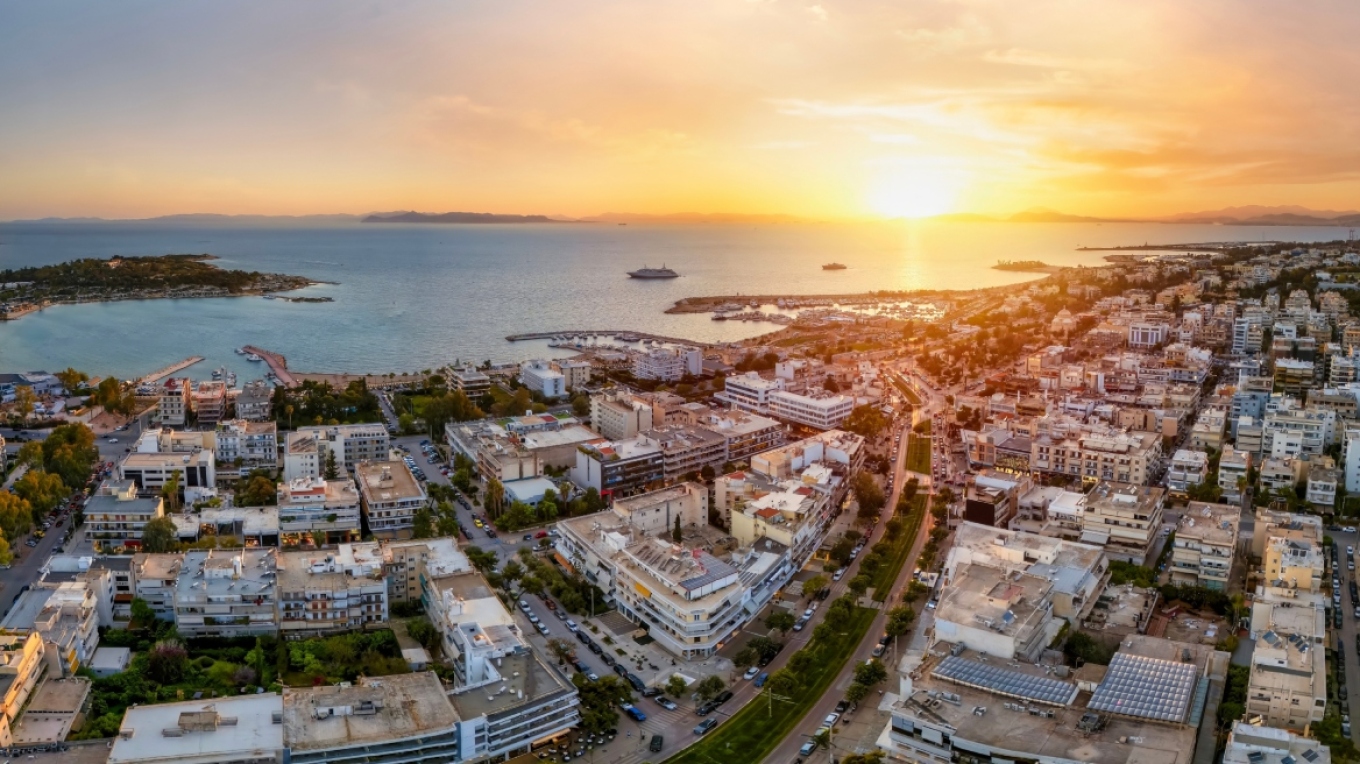
One might think: problems of wealthy yacht owners. In reality, however, the loss is for the Greek market, the Greek economy, and consequently the Greek taxpayer. Because everyone agrees that on one hand, yachting is the most lucrative source of tourism revenue and could be the solution to the headaches of our country, which, while seeing the volume of tourist flows increasing and breaking one record after another, collects less per capita, showing that the profile of the average foreign tourist in the country is changing.
On the other hand, it could grow the ecosystem of businesses and the production and trade chain of recreational boats in the country, forming an economic activity that can leave added value in the economy. As a naval architect said to “THEMA” who wishes to remain anonymous: “Greece may never produce cars, but it can produce boats and ships, and indeed qualitative and competitive ones.”
The numbers shout
In Attica, which holds the lead with 4,570 marina berths and 3,021 winter storage berths, the available spots are permanently overcrowded. The result? Vessels anchor off the coast, drop anchor in bays, and their passengers disembark with inflatable boats to the shore. Some try to find refuge in Lavrio, Aegina, or even Nafplio – at a cost, inconvenience, and lost added value for the capital’s economy.
“In Attica, it is estimated that both private and professional vessels wish to moor, which are about 2,500 more than the berths in marinas. It is positive that there is this demand due to the added value. But it cannot be covered by the existing berths. New berths must be created,” says the president of the Hellenic Marinas Association, Stavros Katsikadis, to “THEMA.” And he continues: “This year, we expect high traffic, especially for large recreational vessels that will pass through Athens for refueling and tourism purposes. The permanent vessels depart from the marinas from mid-June until early September, almost for three months. This frees up berths for transients.”
As he pointed out, the permanent vessels throughout Greece are 20,000, with lengths from 6-7 meters and above. Half of them wish to be in Attica, which only has 6,000 berths.

The problem, as it seems, will intensify in the next season since works are already scheduled for the upcoming winter at the Marinas of Agios Kosmas and Alimos.
“Small boats should be served at small boatyards or land storage areas,” says Mr. Katsikadis. According to him, a solution should be sought in Eastern Attica for the creation of new marinas. “There are development opportunities there,” he says characteristically. “Also, the solution of temporary floating docks has been voted since last year, the provision has been approved, however, the Joint Ministerial Decision that would allow marinas a temporary solution for small and medium-sized boats during summer and autumn is still pending. Unfortunately, this has been delayed considerably.”
The berths
The problem of course concerns the entire country. Today, 104 tourist ports operate (marinas, shelters, anchorages, and hotel ports) with about 16,500 berths, while another 3,000 berths are managed by Port Authorities and Port Zones. Out of 61 designated marinas, however, only 39 are operational, as shown by a recent study by EKPA professor Giorgos Vaggelas and University of Piraeus professor Thanos Pallis for the Hellenic Marinas Association.
In comparison, countries like Poland (!) with less than half the coastline have more than 130,000 berths. Croatia and Turkey consistently surpass us, as do Montenegro, Slovenia, and Italy, which are the country’s main competitors in this market.
And yet, Greece is already one of the most popular yachting destinations in the Mediterranean and demand is steadily increasing, with the Cyclades and Attica accounting for more than 50% of the total vessel traffic in the country.
It should be noted that today in Greece the total fleet of vessels exceeds 170,000, of which 20,000 are motorboats with inboard engines and sailing yachts.
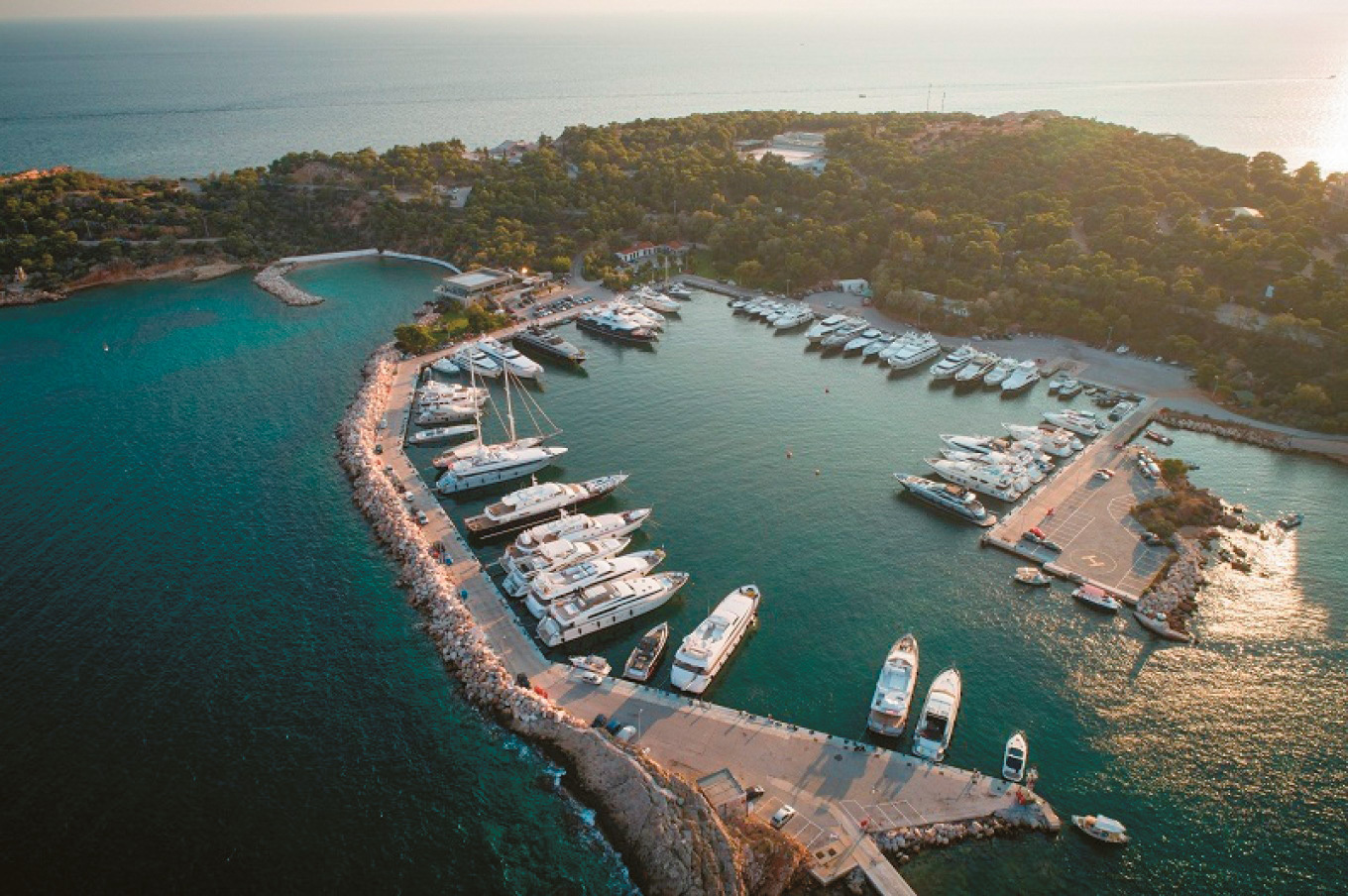
A lost treasure for the economy
And yet, behind the lack of infrastructure lies a lost opportunity. According to data from the Hellenic Marinas Association, every 100 berths create 6 direct and 100 indirect jobs. For every 1 euro in fees, 5-10 euros are spent on supplies, fuel, maintenance, etc. The average tourist spending of maritime visitors is five times that of hotel tourism.
According to the study by professors Vaggelas and Pallis, with the current facilities alone, public revenues exceed 100 million euros per year – and this without including the economic activity of the surrounding areas.
“In recent years I would say we are living a golden age,” says the CEO of Riginos Yachts, Giorgos Riginos. “On the one hand, Greeks returned and are returning to the market, from which most had departed during the crisis years, proceeding to build and purchase recreational vessels; on the other hand, foreigners have rediscovered our country thanks to the existing stability, so not only do they visit it through short cruises chartering tourist vessels, but also those who own yachts prefer to use Greece as a base for their own vessels,” he explains.
Indeed, the decade 2000-2008 was a golden age for Greek boat owners. After the crisis, the market froze, but in recent years it is heating up again. Not massively, but qualitatively: fewer, larger boats. Greeks from abroad and high-net-worth individuals return to private yachts, seeing the country as a stable home port. However, the limits have probably been exceeded for this growth path to continue, warns Mr. Riginos.
For his part, experienced professional in the yachting field and owner of All4yachtcharter company, Thrasyvoulos Kanaris, focuses on six factors that today devalue an activity that can bring multiple benefits to the economy. Speaking of complete disorganization of the marina sector in Attica and the entire country, he highlights: the absence of any strategic plan for new marinas, the privatization of major marinas and their closure for renovation, the “deterring,” as he says, “investment environment” and yacht investments that freeze because there are no berths, the shift toward ultra-luxury yachts (mega yachts) excluding mid-sized vessels, the prohibitive prices that have skyrocketed costs, and finally, the abandonment of professional tourist boat operators by the State.
Translation: “Agios Kosmas Marina Closes”
“All major marinas in Attica have been privatized, such as the marinas of Alimos and Vouliagmeni. To be modern, they must be renovated and adapted to accommodate larger vessels. Traditionally, marinas were built for smaller boats, like everywhere in the world, because when they were originally constructed, large tourist yachts did not exist. Any marina that gets privatized is subsequently renovated and must close for a period of time. Now, the Agios Kosmas Marina is closing — it has already removed all boats. The Alimos Marina is also gradually closing to allow for phased construction of new piers, which is causing issues there as well. Fortunately, the Vouliagmeni Marina has opened, but it is geared toward mega yachts over 40 meters and is extremely expensive, with fees exceeding €5,000–€6,000 per month for such vessels. Therefore, it does not meet the needs of the average boat owner,” says Mr. Kanaris, and continues:
“The Athenian Riviera is being created without any plan for new marinas — only for renovating the existing ones. What should happen is the development of a master plan to establish new marinas in the arc from Elefsina to Sounio, without, of course, damaging the coastline or the environment. But the potential exists — for example, in the Gulf of Elefsina. There were previous discussions to create a large shelter there, primarily for sailing vessels. It’s a closed gulf and could host a large marina.”
“Even on the beach between SEF and Flisvos, where no one swims, a modern marina could be developed. But no one dares,” notes Mr. Sakellariadis, highlighting the lack of planning.
Marina Shortage Causing Economic Strain
The shortage of marina berths is already causing significant financial problems for companies operating tourist vessels. According to Mr. Kanaris, mooring costs increase steadily by 20%–30% each year. At the same time, investments in the sector are being held back because companies have nowhere to berth their boats.
“No marina accepts professional vessels anymore. The exclusion of professional tourist boats from organized marinas creates suffocating conditions for the sector,” says Antonis Stellatos, president of the Union of Greek Tourist Boat Owners. He adds that currently there are about 5,800–6,000 professional tourist boats in Greece, employing approximately 4,500 seafarers and 8,000 seasonal workers (chefs, crew, staff). These boats should benefit from favorable conditions, such as professional privileges or differentiated pricing.
There Is Investment Interest
There is an urgent need to develop new infrastructure to meet both domestic demand and incoming tourism, especially for superyachts and mega yachts. That’s why, as professionals in the field stress, a central plan is essential. The investment interest is clear, as seen through the Hellenic Republic Asset Development Fund’s (HRADF) privatization of several marinas.
The main categories of interested investors include:
- Construction Groups: Large Greek construction firms, often in collaboration with experienced marina operators. Their interest usually lies in projects with significant construction requirements, fitting their core activities.
- Marina Operators: Both local operators managing 2–3 marinas and large international investment groups with networks in multiple countries are active in this space, looking to expand.
- Hotel Groups: Major domestic and international players interested primarily in marinas with strong hospitality components onshore (e.g., villas, hotels), such as TEMES in Pylos and AGC/Astir in Vouliagmeni. Some also aim to develop port infrastructure as part of resort developments, though these often face licensing challenges (e.g., Blue Iris in Mykonos, where the marina project was rejected by the Council of State).
Time for a Maritime Strategy
If Greece wants to seriously claim the title of the “Riviera of the Eastern Mediterranean,” it needs a cohesive plan — not only to solve Attica’s marina congestion but also to leverage yachting as a tool for high-end tourism development. This could mean higher revenues, more jobs, and less environmental degradation.
The sun and sea are a given. The question is whether we will finally learn how to tie them together.
Ask me anything
Explore related questions




