Markets had largely underestimated the geopolitical risk in recent months and now fears are being expressed of a wider regional conflict with all that this implies for the global economy and markets.
Investors are rushing to reduce investment risk and are turning to safe investment havens, while there is strong concern about rising oil and gas prices due to uncertainty in the Persian Gulf, as economies are also threatened by the closure of the Strait of Hormuz through which 20% of the world’s oil passes.
Although the analysts‘ estimate is for a price of $100+/barrel, black gold prices could reach $120/barrel, leading to a resurgence of inflationary pressures in such an event.
Military escalation in the Middle East has caused oil prices to rise to $77 per barrel this week (from $82 at this time last year), a 20% increase from two weeks ago.
The duration and intensity of the new war between Israel and Iran will determine the extent of the damage to the Greek economy in a potential new energy crisis.
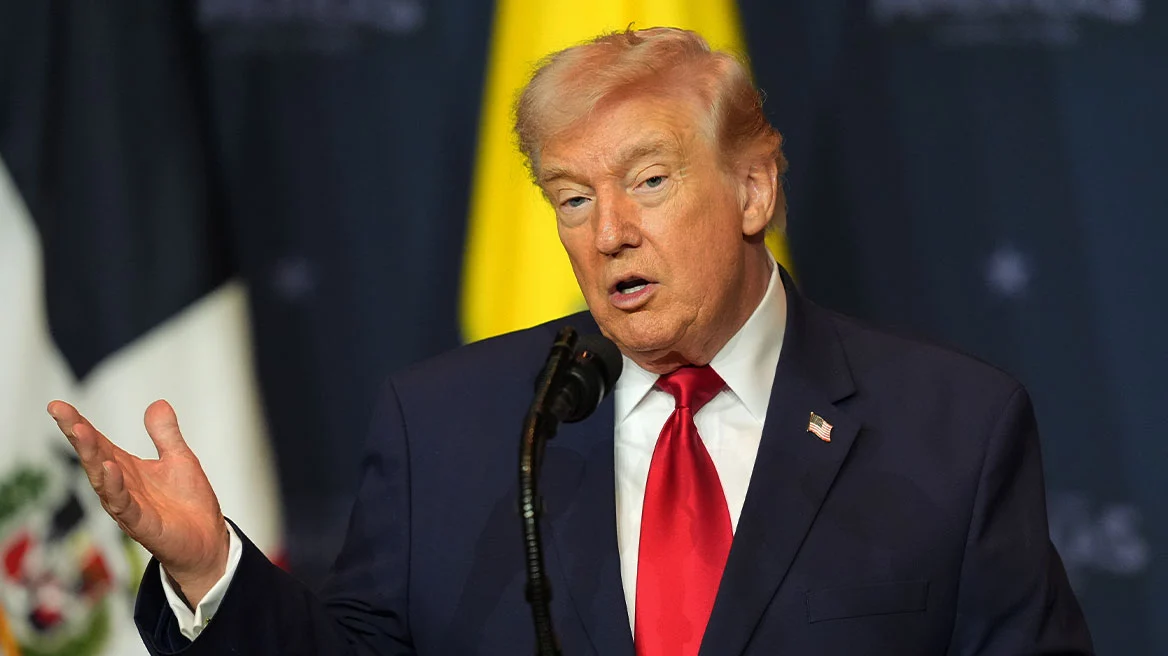
Minister of National Economy Kyriakos Pierrakakis was quick to point out that the Middle East flare-up does not affect the planning of the TIF. But he pointed out that if the Strait of Hormuz is closed it will be an extremely negative impact.
Optima Bank estimates that every $10 per barrel increase in the price of oil could lead to a 0.4% decrease in Greece’s GDP, while every $10 per MWh increase in the price of natural gas could cause a 0.3% decrease in GDP.
The Greek economy
The Greek economy has a strong growth story. The Greek economy has at least for the next few years a “free corridor” for growth in conditions of fiscal stability, provided there is no further escalation in the Middle East or other unforeseen negative developments in the troubled geopolitical environment. The Greek economy will be one of the first to grow in the EU in 2025 as well.
The crisis finds Greece’s finances with 43 billion euros in cash reserves. In 2024, for the first time since 2019, a turnaround in the general government outcome was recorded from a deficit of 1.4% of GDP in 2023 to a surplus of 1.3% of GDP. The general government’s primary outcome was a surplus of 4.8% of GDP, significantly exceeding the Budget forecast. This performance is a historical milestone for fiscal data for at least the last thirty years.
At the same time, compared to the rest of the European Union (EU), Greece achieved the largest reduction in its debt-to-GDP ratio, by 10.3 percentage points to 153.6% of GDP.
Budget execution is also on track. The state budget “recorded” a primary surplus of 5.3 billion in the five-month period, with tax revenues up 1.773 billion or 7% against the target and spending down 2.7%.
Estimates at the Ministry of National Economy estimate that the 2025 budget will close with a surplus of more than 4% of GDP , higher than 10 billion.
Bonds
Greek bonds have been particularly resilient, lately, when there is a global sell-off in bond markets.
Greece was a leading player in the bond market, analysts stressed to Bloomberg, when Greek bonds rallied last month while global markets were rattled by concerns over ballooning deficits.
The spread has fallen to 73p while at the start of the year it was at levels of 85 and 90p. Right now the Greek Republic is borrowing cheaper than even Italy and about as much as France. In the US, the 10-year government bond pays 4.38%, while the Greek equivalent pays just 3.317%.
With 43 billion euros in cash reserves and having covered 7.45 billion euros of the country’s total 8 billion euros of annual borrowing needs, the financial staff is not “burning” to go to the markets, which is strengthening Greek bonds.
US bank JP Morgan remains a “bull” for Greek bonds, calling them a top investment choice and noting that Greek assets have strong defenses and “weapons” against international developments thanks to the strong macroeconomic performance and also strong outlook, limited financing needs for the rest of 2025, which means that the country can “watch” from a distance what is happening in the international landscape, as well as the stable political scene.
Stock Market – Banks
The crisis has hit the Greek stock market after a seven-month rally (+30% for GDR and +60% for banks), and the retreat so far due to the conflict is characterized as controlled. As several international firms point out, despite the rise, the C.A. remains attractive and valuations are at a significant discount to international markets.
JP Morgan includes Greece and the Greek stock market in the list of countries that present great investment opportunities, if one gives weight to the ratio of market capitalization to Greece’s Gross Domestic Product (GDP). Based on the estimate of a GDP of 240 billion euros in 2025, the stock market capitalization of 125 billion euros corresponds to just over 50% of GDP.
It is now clear that investor reflexes are becoming more sensitive and volatility will return.
Greek banks, previously the Achilles heel of the market, are now shielded and according to Eurobank Equities notes that despite a rally of over 40% since the beginning of the year, their valuations remain undemanding. While acknowledging the heightened geopolitical risks, it sees scope for further upside in earnings upgrades.
Banks’ organic profitability remains at highly satisfactory levels, as strong credit expansion and positive trends in fee and commission income offset the negative impact on net interest income due to the lower interest rate environment.
According to Alpha Finance’s estimates, banks have additional capital headroom of around Euro4 billion for future moves, while bank managements now appear more willing to consider acquisition moves to boost profitability.
Ask me anything
Explore related questions