Updated: Iran’s Foreign Minister Abbas Araghchi met with President Vladimir Putin in Moscow, delivering a letter from Supreme Leader Ayatollah Khamenei. While the content of the letter remains undisclosed, Tehran reportedly requested increased Russian support following U.S. airstrikes on Iranian nuclear facilities, which Putin condemned as “unprovoked aggression.” Concurrently, Israeli forces launched new airstrikes targeting access routes to Iran’s Fordow nuclear site. Iranian media reported an attack on a U.S. base in Syria, though responsibility remains unclear. These developments unfold amid growing concerns about escalation, with Iranian officials warning the conflict could last up to two years, and expressing public pressure for retaliation against Israel and the U.S.
Updated: NATO Secretary General Mark Rutte, speaking ahead of the Alliance’s summit, emphasized that Iran must not be allowed to develop nuclear weapons, recalling that NATO allies have long agreed on this position. He stressed the importance of Tehran fulfilling its obligations under the Nuclear Non-Proliferation Treaty (NPT).
He also noted that NATO’s new defense investment plan—set at 5% of GDP—will strengthen security and deterrence. According to Rutte, Russia remains the most significant threat to the Alliance’s collective defense.
Updated: On June 23, Iranian media reported that Israel struck the Fordow nuclear facility amid a flurry of regional escalation. Explosions were also reported in Tehran, with the Iranian Red Crescent citing a possible Israeli strike near one of its buildings. In response, Iran launched 6–7 missiles targeting strategic infrastructure in southern Israel, damaging a key power plant in Ashdod.
Meanwhile, Iran’s Foreign Minister Abbas Araghchi delivered a letter from Supreme Leader Ayatollah Khamenei to President Vladimir Putin in Moscow, urging stronger Russian support against Israel and the U.S. As tensions rose, Khamenei issued a statement declaring that “punishment against Israel will continue,” while Donald Trump praised the “monumental damage” inflicted by U.S. strikes on Iranian nuclear facilities.
In Brussels, Italian Foreign Minister Antonio Tajani revealed that he urged Araghchi to refrain from retaliating against U.S. bases and to resume diplomatic dialogue, offering Rome as a venue. Tajani emphasized Iran’s right to peaceful nuclear research but warned against military use. He also cautioned Tehran against closing the Strait of Hormuz, noting the potential global economic fallout. Meanwhile, Kremlin spokesperson Dmitry Peskov confirmed that despite the U.S. strikes, the Russia–U.S. dialogue would proceed independently of Moscow’s strategic partnership with Tehran. Peskov reaffirmed the importance of maintaining diplomatic channels with both Washington and Tehran amid mounting instability.
Updated: On Monday, Kremlin spokesperson Dmitry Peskov described the recent U.S. strikes on Iran as unprecedented and warned of serious negative and unpredictable consequences. Speaking to reporters, he emphasized that “no one yet fully understands the fallout from these strikes,” which he deemed without precedent. He reiterated Russia’s longstanding position that all countries have the right to develop peaceful nuclear energy, operate nuclear facilities, and build a civilian nuclear industry.
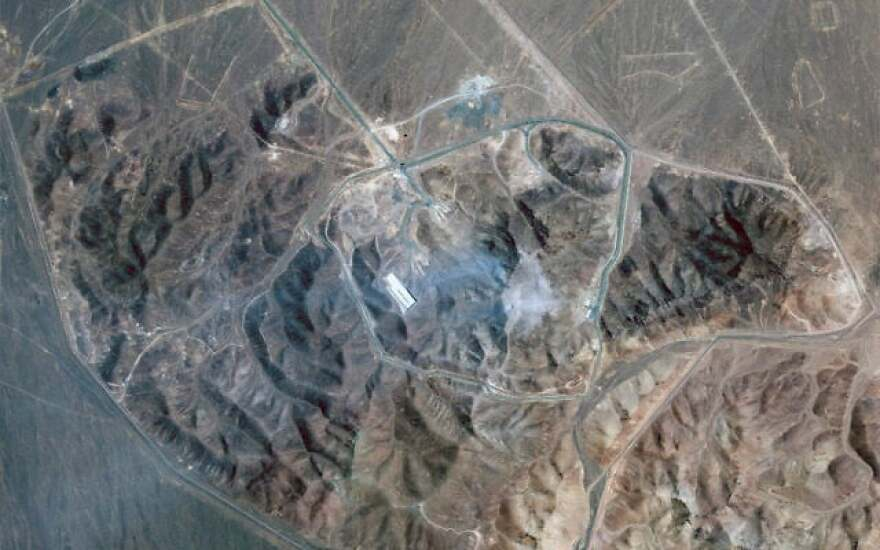
Meanwhile, the Israeli military stated that its strikes near Iran’s Fordow nuclear facility were aimed at disrupting access routes to the site. At the same time, Iranian media reported an attack on a U.S. military base in Hasakah, northeastern Syria, though details on the perpetrator remain unclear. In a separate development, Israeli authorities announced the arrest of a 28-year-old Haifa resident, Dmitry Cohen, suspected of spying for Iran. According to investigators, Cohen gathered intelligence on Israeli civilians and transmitted it to an Iranian handler using an encrypted phone, allegedly receiving cryptocurrency payments totaling several thousand dollars.
Updated: IAEA Demands Access to Iranian Nuclear Facilities Amid Uncertainty Over Uranium Stockpiles
The Director General of the International Atomic Energy Agency (IAEA), Rafael Grossi, has called on Iran to allow inspectors access to its nuclear facilities, particularly the Fordow enrichment plant, following recent military strikes by Israel and the U.S. Grossi emphasized the urgent need to verify the status of approximately 400 kg of uranium enriched to 60%, citing possible movement of nuclear material to unmonitored locations. The IAEA has not yet been able to assess the full extent of the damage caused by bunker-busting munitions used in recent strikes.
Grossi confirmed that Tehran notified the agency on June 13—coinciding with the Israeli airstrikes—that it had taken “special protective measures” to safeguard nuclear material and equipment. However, new satellite imagery suggests that parts of Iran’s enriched uranium stock may have been relocated before the attacks. While Grossi described visible craters at Fordow and suspected tunnel strikes at Isfahan, he stressed that the centrifuge systems’ sensitivity to shock makes damage assessment difficult without direct inspection.
Meanwhile, Iran has turned to Russia for increased diplomatic and strategic support. Iranian Foreign Minister Abbas Araghchi delivered a letter from Supreme Leader Ayatollah Khamenei to President Vladimir Putin, asking for enhanced backing amid ongoing Western pressure. Although Putin condemned Israeli attacks, he has yet to respond to the U.S. bombings. Tehran, reportedly dissatisfied with the current level of Russian engagement, seeks a firmer stance from Moscow as tensions with the U.S. and Israel reach dangerous new levels.
Escalation in the Middle East: Israeli Strikes Deepen Conflict with Iran
Tensions between Israel and Iran have escalated dramatically as Israeli forces launched a series of targeted strikes across Tehran, reportedly hitting a nuclear facility in Fordow and key Revolutionary Guard installations. According to Iranian media, a strategic power station in Ashdod, Israel, was damaged earlier by an Iranian missile attack, while Iranian state TV confirmed strong explosions in northern Tehran. Israeli military officials (IDF) claim the attacks resulted in significant losses among Revolutionary Guard personnel.
In a parallel diplomatic push, Iran’s Foreign Minister delivered a letter from Supreme Leader Ayatollah Ali Khamenei to Russian President Vladimir Putin, urging a firmer stance in support of Tehran against the U.S. and Israel. During their meeting, Putin denounced the Israeli and U.S. actions as “unprovoked aggression.” At the same time, Washington is pressuring Beijing to dissuade Iran from potentially blocking the Strait of Hormuz—a critical chokepoint for global oil transit.
The UK, while aligning with the U.S. on non-proliferation goals, has signaled reluctance to participate in military operations. Analysts note that only a direct threat to British interests or a NATO invocation could alter this stance. Meanwhile, Iran’s supreme leader vowed that “punishment against Israel continues,” and Donald Trump reiterated the U.S. inflicted “monumental damage” on Iran’s nuclear infrastructure, calling for regime change in Tehran.
Smoke, Missiles, and Power Outages: Tensions Escalate in Tehran as Iran-Israel Conflict Intensifies
Thick plumes of smoke were seen rising from multiple locations across Tehran following a series of Israeli airstrikes, according to an AFP journalist on the ground. While it remains unclear which specific buildings were hit, Iranian media report widespread power outages in northern Tehran, attributed to damage from the strikes. The Israeli Defense Forces (IDF) confirmed it had launched precision attacks on military targets in the Iranian capital, further escalating the hostilities.
Simultaneously, Iran launched a barrage of six to seven ballistic missiles toward Israel within a 40-minute timeframe. One of the missiles struck near a power plant in Ashdod, causing localized electricity disruptions. The IDF confirmed the attacks but reported no casualties. Despite initial estimates suggesting up to 15 missiles were involved, updated intelligence suggests a lower number with impacts mostly in open areas.
As military operations intensify, diplomatic ripples are spreading across Europe. Greece’s Foreign Minister proposed a five-point EU action plan to address the spiraling Middle East crisis. Meanwhile, the EU’s High Representative warned against any Iranian move to close the Strait of Hormuz, calling it “extremely dangerous.” Spain, on its part, has called for the suspension of the EU-Israel Association Agreement, citing human rights concerns, while Iranian generals threaten decisive retaliation against both Israel and the United States.
Ask me anything
Explore related questions