





In a historic verdict that sends powerful shockwaves through the US political and institutional landscape, the Supreme Court yesterday gave the green light to Donald Trump’s administration to implement its policies even when they are legally challenged, limiting the power of lower courts to block them nationwide.
By a 6-3 vote, the conservative majority placed strict limits on the practice of federal judges issuing temporary nationwide orders suspending the enforcement of presidential orders. The decision, though prompted by Trump’s order to abolish birthright citizenship, did not decide the merits of the case, leaving room for new legal challenges.
Powerful weapon in Trump’s hands
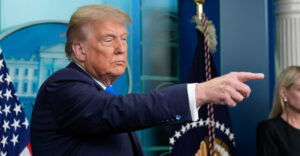
As CNN comments, this is one of Trump‘s most decisive institutional victories, as it allows him to make deep cuts and controversial changes without the immediate brake of the judiciary. “This is a terrific decision, and we are completely satisfied,” he said solemnly from the White House, echoing his complaints against “excessive” nationwide blockades, which were often used by his opponents on issues such as immigration policy and transgender people’s participation in the armed forces.
Of significant interest is the fact that the rationale for the decision bears the signature of Amy Conway Barrett, who has in the past been criticized even by Trump himself, but now gives him an invaluable tool for expanding executive power.
Strong reaction from liberal judges
At the same time, the three liberal justices of the Supreme Court reacted strongly, complaining that the verdict leads to an institutional aberration and weakens constitutional checks and balances. Sonia Sotomayor accused the panel of “playing the Trump game” by allowing even “blatantly unconstitutional policies” to be implemented through legal tricks. “This is an open invitation to the government to circumvent the Constitution,” she said, while reading aloud excerpts of her dissent – a practice rare by the standards of the Supreme Court.
Even more resounding was Ketangi Brown Jackson’s warning, “Executive arbitrariness will flourish. And from there, the step to an unchecked executive and the collapse of our constitutional democracy is short.”
“Window” for collective redress
Despite the restriction on nationwide bans, the Supreme Court left open the possibility of judicial protection through class actions. In these, plaintiffs can seek to have a policy suspended on behalf of a broader group of affected citizens.
That’s exactly what pro-immigrant groups and pregnant women in Maryland have done, filing a new class action lawsuit asking for a suspension of the presidential mandate for all children born or to be born after February 19, 2025.
The ACLU, which is involved in a separate court battle against the same mandate, also filed a new class action lawsuit. “This is a way to protect this fundamental right,” Cecilia Wang told CNN.
Battle in the lower courts
Judge Barrett made it clear that in special cases where there is an imminent risk of harm, a nationwide stay order is still possible. This argument is already being utilized by states like California, which are seeking new legal intervention.
California’s attorney general, Rob Botha, stressed that free movement between states makes any local interpretation of the right of citizenship inapplicable, while Attorney General Pam Bodie appeared confident that the Supreme Court will ultimately uphold Trump’s order on the merits.
The final battle is expected to come to a head in the fall, as the legal thriller over citizenship rights will remain at the forefront of political debate.
Ask me anything
Explore related questions




