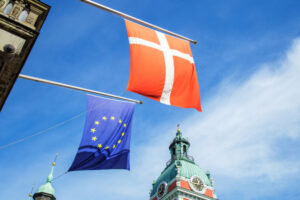
Denmark takes over the presidency of the EU today with the security of the continent as its priority, and in particular the implementation of the increase in defence spending decided at the recent NATO meeting.
“It is clearly stated that security is an absolute priority,” Danish Prime Minister Mete Frederiksen said in an interview with the newspaper Politiken published on Sunday. “Now we have a new goal for NATO, which has been adopted. Once the NATO goal is set, the basics depend on EU policy,” she added.
NATO member countries formalized in late June their commitment to invest 5 percent of their GDP in security and defense by 2035, with at least 3.5 percent going to military spending. Spain called the target “absurd” and called for flexibility.
Denmark wants to go ahead with a European plan unveiled in March to boost the defence capabilities of EU countries through simplified procedures and loans made available to states to enable them to finance investment in the European defence industry.
The security situation in Europe “is unstable and, because it is unstable, it is also dangerous. If we look at the history of Europe, we know that a conflict tends to spread. There are many tensions today and that in itself can cause more,” Frederiksen assessed.
Denmark is one of the countries that are particularly supportive of Ukraine. As prime minister since 2019, Frederiksen has significantly increased the Scandinavian country’s defense spending, with the figure currently exceeding 3% of GDP.
In its program for a “Secure Europe”, the Danish presidency also puts tackling irregular migration high on its priorities, promising “new and innovative solutions”.
A proponent of a strict immigration policy, Denmark intends to move on two fronts: processing asylum claims outside the EU and limiting the scope of European Court of Human Rights (ECHR) rulings.
Denmark approved 860 asylum applications in 2024, almost 13 times fewer than in 2015, while Frederiksen defends processing applications outside the country.
Two years ago, her government suspended plans to transfer asylum seekers outside Europe, possibly to Rwanda, to have their claim processed there, in an attempt to reach a joint solution with the EU to organize that transfer.
On another front, Denmark along with Italy and seven other countries have called for the European Convention on Human Rights on migration to be reviewed, as they believe it sometimes protects “the wrong people“.
Ask me anything
Explore related questions