





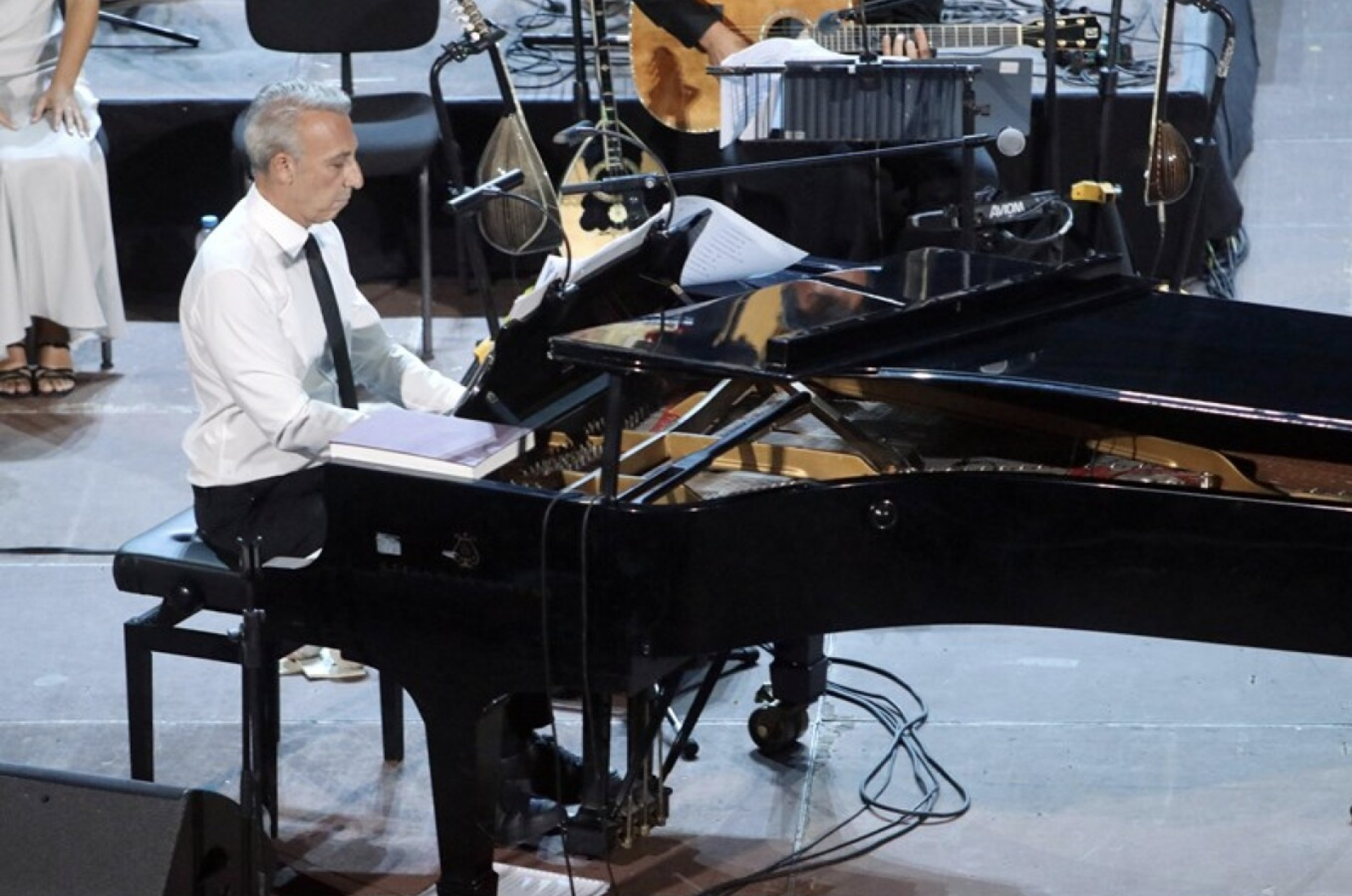
For the second consecutive summer, Minos Matsas returns to the stage of the Herodion to share his interpretations of well-known musical traditions from Greece and around the world. The new cycle of his musical performance, titled “Rebetika II + Fado, Tango & Blues: The Songs of the World”, will be hosted at the Roman Odeon on September 16.
These are musical traditions from various corners of the globe that, despite their differences, express the same human experiences and emotions—pain, poverty, love, separation, nostalgia, loneliness, passion, and hope—highlighting the universal power of music as a language.
Rebetiko was born out of a socio-political reality and gave voice to people seeking escape from hardship and suffering. Similarly, Portugal’s fado emerged from a country under 40 years of dictatorship; Argentina’s tango was shaped by waves of immigrants who created a unique dance form; and the blues of the American South became a cry against slavery and social injustice. Each tradition, though culturally and historically distinct, shares a common, universal musical language.
Minos Matsas has created a musical journey through time and space, bringing to life the figures of Vamvakaris, Tsitsanis, and Papaioannou, while passing through the underground joints of Athens, the banks of the Mississippi, the streets of Lisbon, and the brothels of Buenos Aires—accompanied by the spirits of Robert Johnson, Amália Rodrigues, and Carlos Gardel. He is joined on this journey by 15 soloists, both Greek and international, and singers Kostas Triantafyllidis, Dimitra Moraiti, Lina Cardoso Rodrigues, Debora Russ, and Eric B. Turner.
His connection to rebetiko is deeply rooted in his family’s history. His grandfather and namesake, director of the historic Odeon-Parlophone label, played a pivotal role in the promotion of the genre. In challenging times and against social prejudice, he boldly recorded and released the first songs by Markos Vamvakaris and later supported the work of other major rebetiko composers.
He also wrote lyrics for timeless songs. Minos Matsas is known for his daring rearrangements of pieces like “Eisai esi o anthropos mou”, “Minore tis Avgis”, and “Antonis o Varkaris o Seretis”, for which his grandfather had written the lyrics.
Today, Minos Matsas—with an eye toward the future—approaches these songs in a new and different way. He deconstructs and reimagines them, adds new musical elements, and builds a bridge between the sounds of then and now.
Ask me anything
Explore related questions




