





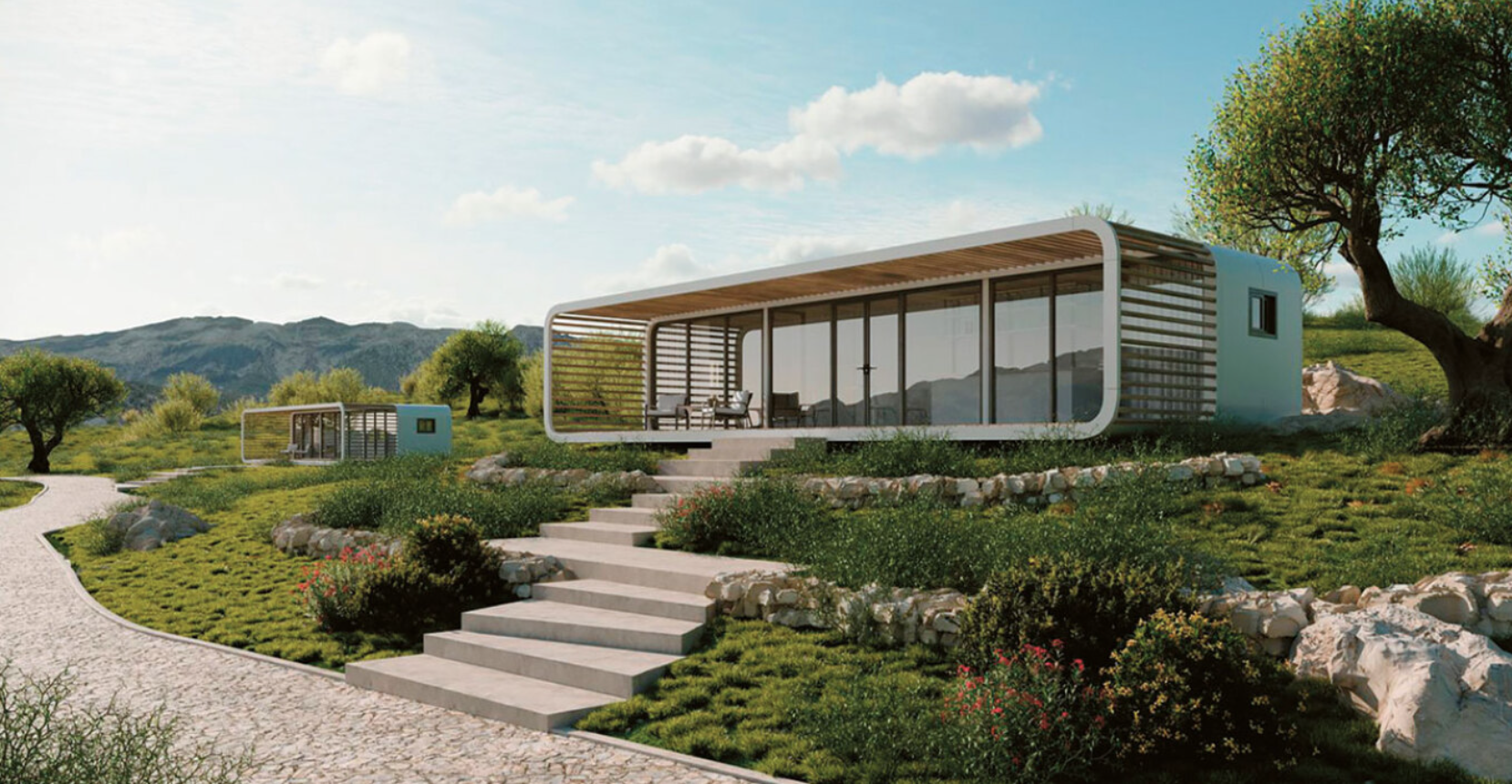
At first glance, these futuristic constructions might make you feel as if you’ve stepped into a sci-fi movie set. We’re talking about capsule houses—clearly evoking images of the future, though in reality, they’re part of the present.
These compact architectural gems are not just conceptual models for how housing might look decades from now—they are a reality. They offer a minimalist lifestyle with no compromises on comfort, suitable for living, working, or vacationing.
In recent years, capsule houses have been implemented in various countries and more recently in Greece, where business initiatives are already underway. These are not simply prefab micro-homes but a different life philosophy, expressed through high-quality construction, modern materials, innovation, and sustainability.
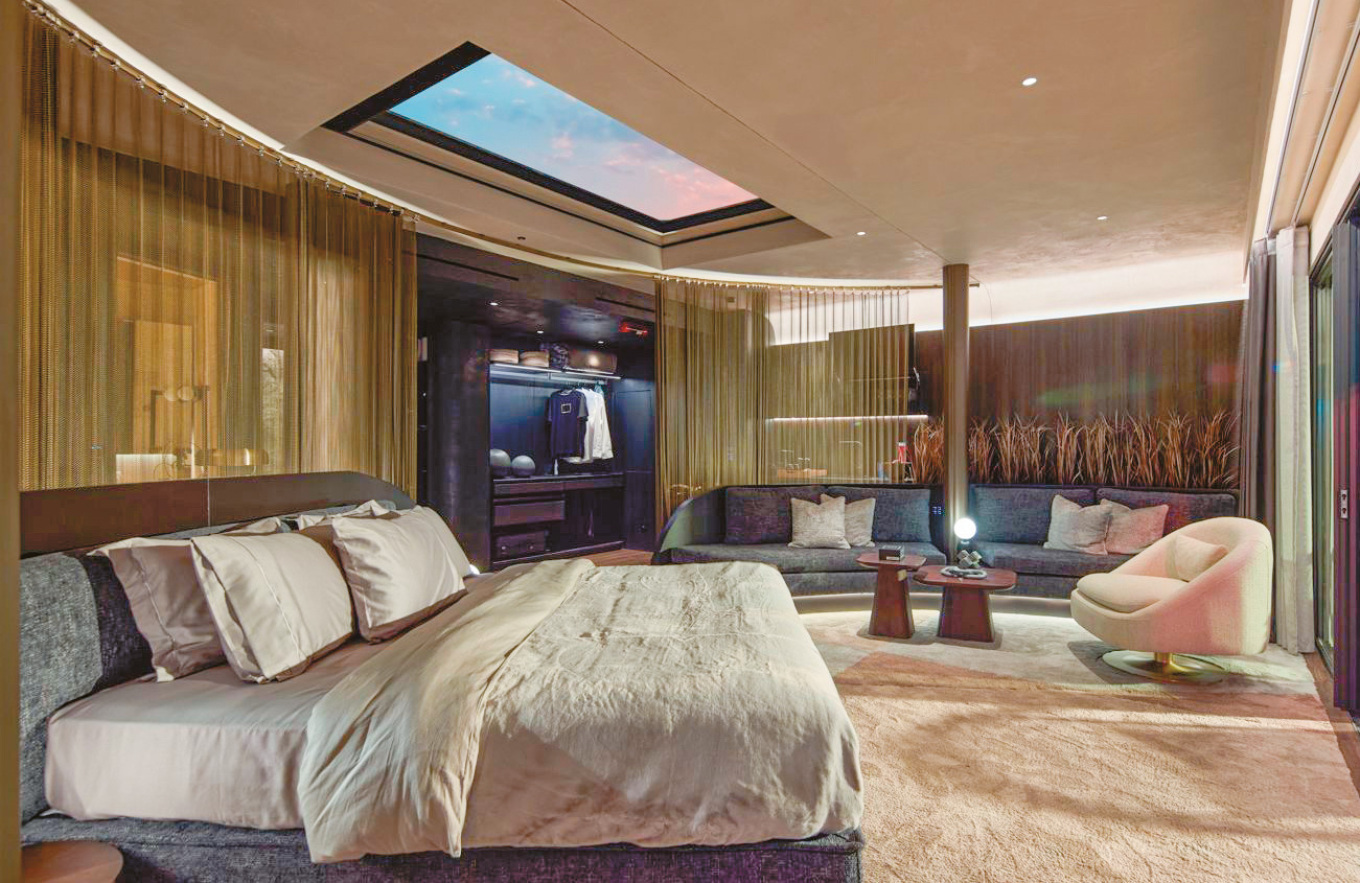
Capsule houses have started to gain traction as an effective response to the rising housing needs caused by rapid urbanization in developed Western societies. They are being used not just for residential purposes but also for tourism and business.
Whether this trend will evolve into a new lifestyle movement depends largely on the target groups and prevailing societal models. In a world that still celebrates opulent, oversized homes, the question remains: is there room for compact capsule living that offers five-star hotel-style comfort?
Abroad, capsule homes are praised for their space efficiency without sacrificing comfort, their environmentally friendly design, and smart technology features like energy-efficient lighting, advanced heating/cooling systems, and modular structure—allowing relocation, assembly, and customization.
Affordable Option
Their biggest draw, however, is affordability. In a time of urban micro-living, capsule houses offer an alternative when rents in major cities like New York, London, or Tokyo surpass $3,000/month for studio apartments. Capsule houses can be 30–50% cheaper. That makes them ideal for small families, students, professionals, and digital nomads—fully equipped, centrally located, and ready to live in. Prices range from around $30,000 (18 m²) to $100,000 (47 m²), depending on equipment and amenities.

Some are integrated into mixed-use complexes. For example, a 2023 study in Berlin showed a 25% drop in vacant housing where capsule homes were introduced compared to traditional rentals. The tourism industry has also embraced them for boutique hotels and glamping. In Barcelona, Tokyo, and other popular destinations, capsule guesthouses attract young budget travelers. One example is Capsule Hotel Lucerne in Switzerland, offering high-tech comfort for 60 CHF (€64) per night in a central location.
Business Use
Their portability makes them suitable for seasonal demand. In 2024, for instance, 100 capsule homes were installed in Costa Rica in just two weeks to accommodate visitors of a music festival.
They are also used as emergency housing during natural disasters—like the 500 capsule houses deployed by NGOs in Turkey after the 2023 earthquakes. Industries such as oil extraction use them to house workers in remote areas. They also serve as showrooms, startup incubators, university workspaces, and even mobile art studios, such as in Paris.
In Greece
Though still emerging, capsule houses have recently entered the Greek market. Over the past two years, interest has grown significantly, with sales and installations taking place across the country and many more orders pending. Depending on the project, full delivery and installation takes 4 to 6 months.
Prices vary by company and model, ranging from €25,000 for smaller, simpler units to €228,000 for larger, premium models.

One Living Capsules
Kostas Gagos, founder of Costas Gagos Architecture & Design based in Larissa, has long explored the idea of small, flexible, smart homes. “Today, I’m proud to have completed the first prototypes, showcased them to the public, and begun production,” he told Proto Thema.
His company launched the ONE Living Capsules brand, which he emphasizes is fully designed and built in Greece—100% Greek-made. “Similar modular solutions have existed abroad for years, but we were the first to introduce this innovation here as something modern and groundbreaking,” he explains.
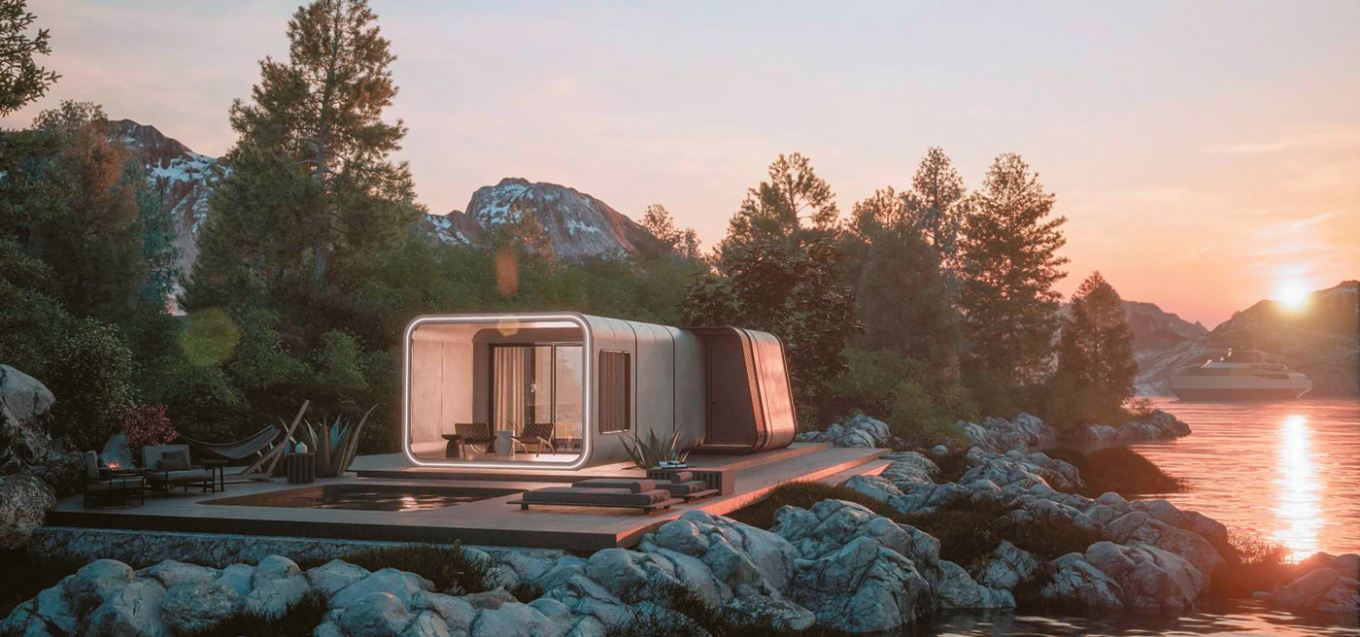
Originally intended for hotel resorts, these units are designed as self-contained suites with private amenities—pools, lounges, fire pits—all forming a cohesive luxury experience.
The idea gained unexpected momentum, with private individuals ordering them for garden guesthouses or personal use, and businesses requesting customized versions for showrooms, workspaces, or commercial uses. Gagos describes them as flexible, modular, and adaptable to residential or professional needs.
Presentation & Public Reception
The ONE Living Capsules were introduced to the public at the Xenia exhibitions in 2023 and 2024. Since then, interest has surged nationwide and even from abroad, with people traveling to Larissa to see them firsthand. The first installations are scheduled for Crete, Thessaly, the Peloponnese, and other areas.
Most current demand is for tourism purposes, though private housing and professional use are also growing segments.
Construction Quality
Special attention is paid to construction quality. The units use high-grade materials and modern prefabrication methods to ensure durability, thermal performance, and comfort. The main frame is made from fire-resistant painted metal for stability and safety under tough conditions. The walls use rowmat board—a waterproof, eco-friendly, high-strength, thermally insulating dry construction material.
They come fully smart-equipped, with mechanical systems, heating/cooling, air ventilation with a heat exchanger for fresh air, and energy-efficient water heating via heat pumps. High-end fixed furnishings, movable furniture, and a fully outfitted bathroom complete the setup, making each capsule a ready-to-use, functional, and comfortable living space.
Models and Prices
Six models have been designed so far, ranging from 26 m² to 60 m². All units are delivered fully furnished and equipped. Prices start at €75,000 + VAT for the smallest model (One 26) and go up to €184,000 + VAT for the largest (One 60).
“One of the biggest advantages is the speed of installation—each unit can be set up and ready for use in under 3 hours,” says Gagos.
He highlights key strengths like fast construction, immediate usability, and easy relocation. With current orders in place, he believes it’s only a matter of time before ONE Living units are widespread across Greece, offering a new way of living that blends functionality, design, and innovation.
Permits and Legal Requirements
Installation of ONE Living Capsules requires a building permit that complies with local zoning and architectural regulations. While the units are prefabricated and mobile, permanent installations must follow standard construction codes.
Ask me anything
Explore related questions




