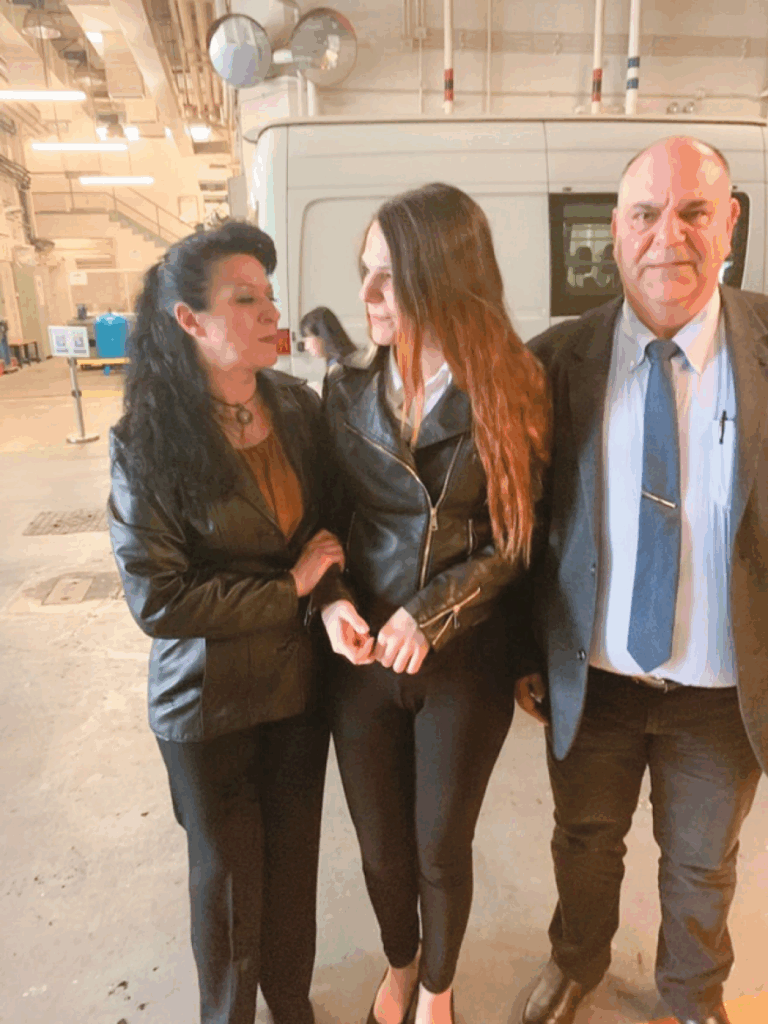
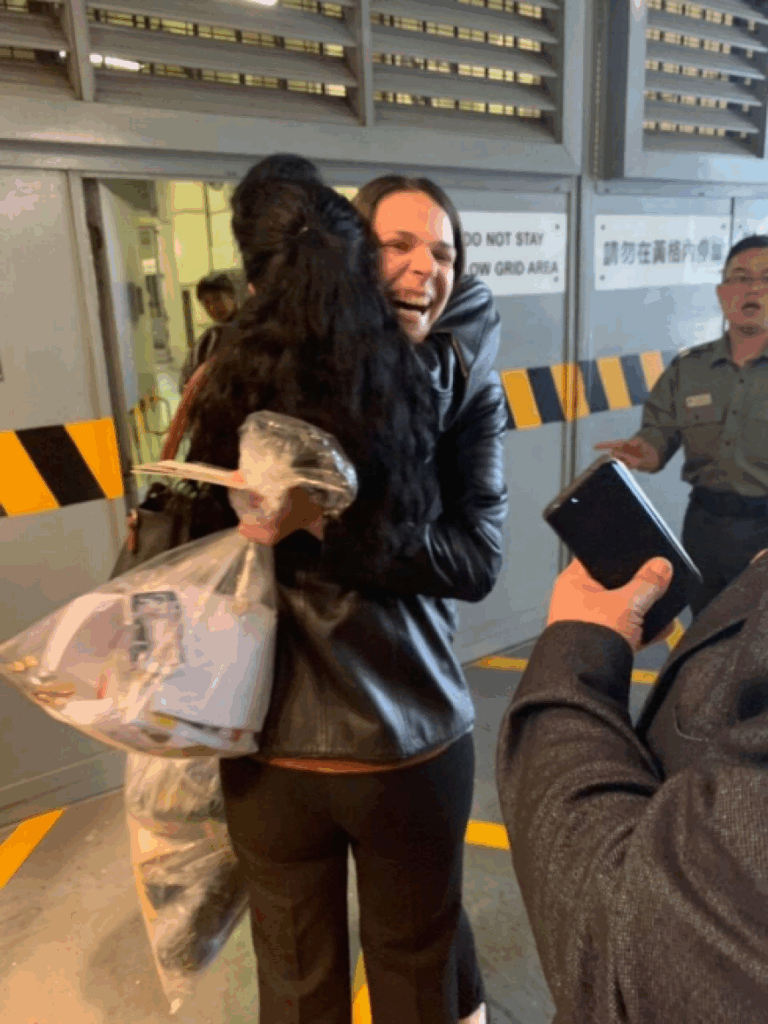
Sakis Kehagioglou: The whole truth about the high-profile case of the model caught with 2.6 kilos of cocaine in Hong Kong
The riveting narrative of the incredible adventure of a young Greek woman, from her arrest to her double acquittal, first in China and then in Greece, by her lawyer and distinguished Greek criminal lawyer Sakis Kechagioglou
Newsroom
Δείτε περισσότερα άρθρα μας στα αποτελέσματα αναζήτησης
Before I agree to take on a criminal case, one of the most important conditions for me is knowing the truth. The truth as the accused knows it — not what their relatives or friends believe. I need to hear it directly from the person charged. Did they actually do what they’re accused of? And if they did, how exactly did it happen? What role did they play? Was it their idea, or were they coerced or manipulated by someone else? Did they know what they were doing was illegal, or did they believe they were acting within the law?
Did they understand the consequences of their actions — or not? That’s why, the first time I spoke to Eirini — even before I visited her in prison in Hong Kong — I asked her one simple but crucial question: What’s the truth? Her answer was firm and direct: “Mr. Kehagioglou, I’m innocent. Please believe me!” And I replied, setting the stakes for the first time: “I believe you. The question is, will the judges?”
My phone kept ringing insistently that morning. Around noon, I received a message from Eirini’s father, a police officer in Mytilene. He asked me to call him immediately, no matter the hour, as he urgently wanted me to take on his daughter’s case. She had just been arrested at Hong Kong airport with 2.6 kilos of cocaine. That same morning, while heading to the courthouse in Thessaloniki for another case, I had seen a headline about a Greek woman being arrested in China for smuggling 2.6 kilos of cocaine — but my attention was entirely focused on the trial I was handling that day.
When the court took a recess to deliberate on a motion I had filed, I called her father.
He couldn’t tell me much — he knew almost nothing. Fellow officers had told him that the woman the Hong Kong airport authorities were parading in black boots, a red skirt, a white top, and a black police hood was, in fact, his daughter, Eirini. In Hong Kong terms, the quantity of cocaine was considered significant. That — combined with her striking appearance — instantly made her the “model” in the media, and the case drew attention in both Greece and China.
When her father visited me at my office a few days later, he confessed he knew none of the details of what had happened to his daughter. He didn’t even know how she ended up on another continent. He entrusted me with her case — and her fate.
The Black Hood
Eirini Melissaropoulou was born in Mytilene on January 22, 1998. She still lives there today, in the Chrysomallousa neighborhood, with her parents and younger brother, Nikola-Taxiarchis. From the age of 3 to 7, she attended a private preschool due to her parents’ work schedules. Her father is a police officer in Mytilene, and her mother is a nurse. From age 7 to 12, she went to the private primary school “Platon” in Mytilene. During that time, she also took piano lessons privately, as well as English and German at a language center. She was active in sports too.
After finishing primary school, she became interested in computers and pursued that for several years. She graduated top of her class from the 1st Junior High School of Mytilene and continued at the local vocational high school (EPAL). Her biggest dream was to become a flight attendant — to travel the world and experience life beyond her island.
After graduating and taking her national exams, she worked various jobs: at a gas station, in clothing stores, in cafés, and at supermarkets. She longed to leave the island and “find her future,” as she used to say. She decided to enroll at a vocational institute (IEK) in Athens, hoping to find her path from there. But her dreams came crashing down when, out of nowhere, she found herself in Hong Kong — detained and facing serious charges. She waited 16 months patiently for her trial.
When she returned to Mytilene, she fought hard to rebuild her life and reintegrate into society. Through determination and perseverance, she managed to get back on her feet. Today, Eirini works as a border patrol police officer in Mytilene and lives a quiet, dignified life.
Eirini was arrested on November 23, 2017, during a third routine customs check at Hong Kong International Airport. She was charged with possession and trafficking of 2.6 kilos of cocaine. Two other screenings had taken place earlier at the same airport. According to police estimates, the street value of the drugs exceeded €300,000.
The image of her in the black hood — covering her face entirely — was broadcast nonstop by TV networks in both Greece and China. She was compared to a jihadist terrorist. The footage of her being escorted through the airport by police, surrounded by cameras and journalists, stunned viewers back home. A female officer was photographed holding up the just-discovered 2.6 kilos of cocaine in her left hand and Eirini’s travel backpack in her right — as if the suspect were some kind of trophy in what was considered a major bust by Southeast Asian standards. The story shocked Greece.
From the moment I took on Eirini’s case, I wasn’t particularly struck by the amount of cocaine found in her bag. Having handled countless drug cases over the years, I’ve come to see that the size of the quantity is a relative — and legally non-binding — factor in determining guilt or innocence. If I were to judge a client’s involvement solely by the quantity of drugs involved, then I’d have to turn down cases involving hundreds of kilos or even tons. But that’s not how justice works.
About 25 years ago, Kehagioglou handled a major drug case involving five tons of cocaine on a ship off Cape Verde. That experience shaped how he approached future cases—including the case of 2.6 kg of cocaine allegedly found in Eirini Melissaropoulou’s backpack at Hong Kong airport.
In most Asian countries (e.g., China, Indonesia, Thailand, Philippines), drug trafficking is punished very harshly, even with the death penalty. However, Hong Kong, though part of China since 1997, operates under the “one country, two systems” policy, maintaining its own legal system. Thus, the maximum sentence Eirini faced if found guilty was 27–30 years in prison, not death.
Kehagioglou chose a legal defense based on creating reasonable doubt. According to the law, if even a single doubt remained in the judges’ minds about whether she knew she was carrying drugs, she could be acquitted.
Eirini’s story began when she traveled with a friend from Mytilene (Greece) to Ethiopia. She claimed that friends of that man offered her a chance to attend a model casting in Hong Kong. She agreed, impressed by the opportunity. Her friend was supposed to meet her the next day in Hong Kong—but never showed up. After her arrest, he vanished completely.
When customs officers found 2.6 kg of cocaine in her backpack, Eirini burst into tears and said she was going to a casting. She asked to call her friend. He answered once, told her not to worry, and then his number was disconnected forever.
Eirini refused to sign a confession, despite intense pressure. This proved crucial later. During her time in juvenile prison, she suffered emotionally. In letters to her parents, she wrote about her despair, her daily prayers, and how she felt she had shamed her country.
Kehagioglou notes that she didn’t know he had refused any payment for his services, understanding the financial hardship her family faced. Other lawyers and civil servants in Greece came together in support.
Life in prison resembled the military: strict schedules, school, cleanliness inspections. Eirini excelled, scoring 4/5 (top marks) in conduct, which sparked jealousy among fellow inmates. Despite this, she remained strong—not because of religious devotion alone, but because she had learned a hard truth: sometimes, the greatest danger comes from those closest to you.
In the end, Eirini was acquitted, spared from a decades-long sentence. She returned to Greece to her family. Kehagioglou credits, among others, Father John Wotherspoon, a Catholic priest who visited her and gave her phone cards to call her family, helping her endure the psychological toll of her ordeal.
Eirini’s Letters from Prison
Eirini wrote letters to her parents almost every day. She wrote them early in the morning, during breaks, and before going to bed. The next day, she would give them to a staff member to be sent to Greece. Some letters survived, though others were partly destroyed by the tears of her family. Through her writing, it was clear that she was trying to make peace with her parents and ask for their forgiveness.
Letter Excerpt – March 22, 2018:
“I didn’t write for a few days because there were some fights, thefts, and arguments among the inmates. The teachers were very strict with us. They told us to polish our shoes very well if we wanted to get a top grade (a 5). I did just that and got the top score four times.
They checked all our things one by one to find out who had stolen something. They didn’t look at my face, only at my number. They even showed my shoes to the others, saying they should shine their shoes like I did. I felt like I was floating. I hope I make you proud.
No one criticizes me. I keep everything in perfect order, and no one can find fault with me. I feel a bit proud of myself…”
Letter Excerpt – May 5, 2018:
“Before, I didn’t even know how to use an iron. Now, I get compliments almost every day from the staff. That makes me work even harder. I’m a little proud of myself.
Yesterday, I delivered over 200 pairs of uniforms. So today was a bit easier. Last night it rained heavily, and the night wasn’t very good.”
Her Life in Prison
In prison, there was no time for friendships. The work was nonstop from morning to night. Inmates were moved to different cells and beds regularly—probably to prevent them from forming close bonds. So Eirini often started a letter in one cell and finished it in another. But despite the changes, everything looked the same: dull colors, emotionless faces, and identical uniforms.
Some prisoners had accepted that they would be there for life. Others, like Eirini, hoped to be found innocent. You might get to know some people a little better, have a short conversation, but mostly, you had to deal with each person’s habits or quirks—and protect your boundaries.
Eirini wrote that many fellow inmates didn’t like her and didn’t want her around. She believed it was because of her appearance—her height, her facial features, her age, and her different background. Most of the others were young and local.
Letter – May 15, 2018:
“After work at the laundry, I sat down shaking from exhaustion—but I was happy. I had hoped someone would visit, but no one came. Still, I woke up happy, for no reason.
Later we had military-style commands to end the day. When we had to stand at attention and change into pajamas, I didn’t make much noise. Yang Mei, who sleeps next to me and works with me on uniforms, got annoyed and looked at me angrily.
I smiled and asked what was wrong. She turned to another girl who helps with the laundry and asked why I was so cheerful. Yang Mei laughed like she was mocking me. I feel like even she looks at me with hate now.
But I know—I can feel it—I won’t be here much longer. They don’t understand my smiles. They think I’m going to break down just because they don’t talk to me anymore.
But I just feel like laughing. Laughing is my only form of fighting back. I’m waiting to hear the news on my little broken radio. I’ll shine my shoes soon and read a bit of my book. My toothache is slowly getting better, and I keep praying every day.
It’s almost 10 at night. I’ve polished my shoes, and now I’ll read a bit before bed. I’ll be with you soon—I promise. Goodnight, sweet dreams, rest well, and have a good morning.”
Reflections on Her Letters
With Eirini’s permission, her letters were shared in a book. But in truth, her letters were written more for herself—a kind of diary expressing her emotional world. Even her relationships with fellow inmates were described with the confusion that comes from being in prison.
Friendships, as she described them, were like those formed in elementary school—simple, emotional, and full of misunderstandings. She often used words like “nice” or “mean” to describe people. Through her experience, she learned that what she once believed was “good” had led her to her worst nightmares.
Letter – May 14, 2018:
“Right now, I’m lying in my bed, number 2B in cell 8, and everything is as you know it, except that a new girl arrived. In a bit, after I finish this letter, I’ll shine my shoes a bit. Today it was 34°C, and tomorrow it’ll be the same. It might even get hotter. It’s already 9 PM. Half an hour ago, I flushed a huge brown cockroach down the toilet. Cockroaches have become part of my life.
As soon as we go to class, we usually find around ten of them—some half-dead, others roaming the tables, desks, and toilets. I’m living a nightmare. I wish for a miracle, my dear Archangel [Taxiarchis, a common Greek saint]. As the days for court approach and the moment when I must declare myself guilty or innocent, my mind feels like a volcano ready to explode. Answers are scarce and unclear. I’m scared.
I now shudder at the hours that slip away at the end of each day. I am miserable and trapped far away from you. Today I nearly fainted from the 34°C heat inside the laundry room. My words are jumbled and unable to form proper sentences. My breaths are heavy. I was stubborn, but I pushed through and finished ironing eight boxes of clothes. And I was happy—even if I didn’t show it. Here, if they see you happy, they try to make you sad.
The emotions I feel now are so few I could count them on my fingers. I’ve changed. I’m growing up.”
Letter – May 16, 2018:
“Today is Wednesday, May 16, 2018. From the morning I sensed the day had something in store. Outside it’s 34°C again. At 4:30 PM they called me to the office—without telling me why. When I got there, I received a letter from my lawyer, Mr. Sakis. Sixteen pages in total. On the first page, he had written an introduction and the phrase: ‘Return date: June 4, 9:30 AM at court.’
He asked me not to reveal his advice or the evidence he hoped I’d find useful. He explained what would happen if I plead guilty or innocent, and also what could happen if I lose the trial even after pleading innocent.
He detailed the files I must bring to the upcoming hearing to hand to the lawyer, who will submit them to court. These files are submitted before the inmate (that’s what they call us—‘cells’) is brought before the high court.
Most importantly, I will plead innocent. I know the lawyer is highly respected and wouldn’t gamble with my life. From the moment Mr. Kehagioglou announced my innocence, he literally took my life into his hands. He wouldn’t take that risk if he wasn’t sure. That’s what counts for us. And now my strength, courage, and patience are paying off. Six more months. It’s now 8:30 PM, and they brought us back to our cells early today.
I often hear news about Greece and Russia. Who wants to change the name of Macedonia? When I saw this in the paper, I flared up. On the 29th or 30th of this month, I’ll call you. Mr. Kehagioglou said this time we’ll talk for more than 10 minutes. How did he manage that?”
Letter – June 1, 2018:
“My body has weakened. The worst part is, I have a hearing tomorrow—today is Sunday. I didn’t shine my shoes today because I won’t need them Monday. I preferred to study and keep praying to our Archangel.
This morning we had a full clean-up in my cell. Sundays are deep-cleaning days. The class supervisor looked at me as I was filling buckets and said: ‘Eirini, today is your last day here… Tomorrow you go home.’ Not only did I drop the bucket, but I nearly collapsed.
After we went to shower, the inspection lady called me to turn in my belongings and ID. Tomorrow, I’ll also receive the documents. The supervisor told me I’d be going back to my parents. I said, ‘Maybe, but not yet.’ She replied, ‘You may never come back,’ and I again said, ‘Maybe.’
Twenty minutes later, a senior officer came in with a star badge. She approached me with a smile and said, ‘Tomorrow you have a hearing.’ I said, ‘Yes.’ Then she said, ‘You may go home.’ I answered, ‘I’ll be back. It’s not my time yet.’ She smiled and said again, ‘Maybe you won’t come back.’
I’ve decided not to get my hopes up when they hint that I’ll return home. I’m relying on Mr. Sakis doing his best. The next hearing is on July 9—unless I’m mistaken. But I’m sure that if something happens, it will be before July 9. After the hearing, instead of returning to cell 8B, I’ll go to the hospital wing for psychological and health reasons. All girls go there now after hearings. The good thing is it has air-conditioning—so I won’t be drowning in sweat.”
Letter – June 5, 2018:
“Today is Tuesday, and I’m writing from the hospital wing, alone in my cell. As you probably know, yesterday was my hearing. I’ll return again on July 9, in five weeks, to declare if I’m guilty or innocent.
In the morning I couldn’t eat. I rushed to grab my things. They handcuffed me and checked the cuffs to make sure they were secure, then we left for West Kowloon.
I waited half an hour, then joined eight other women heading to court. We rode in a 20-seat bus—but the rest of the seats were full of male prisoners with masks on, flanked by police. I sat in the front next to a Black woman. After 40 minutes, we arrived. The traffic was horrible.
We were all dizzy from the sound of the chains rattling in our ears. Once we arrived, they strip-searched us again and took us to a holding room like the one from the previous time. After about 15 minutes, they moved us to another room where we could speak with our lawyers. Some women received their documents there.
After 30 minutes, they took us back. I hadn’t seen anyone yet. The others were smoking—less than usual. My stomach was aching again.
I was with the girl from Tanzania I told you about last time. She got tricked by her ex and another middleman, brought here at 24 with 1.5 kg of pure cocaine. She pleaded guilty because she was afraid to fight for her innocence, even though she could have. I also heard about a Venezuelan girl, Raiki Youzef. She pleaded not guilty but lost and got 16 years. She now wants to appeal, saying she has more evidence to present.
The Tanzanian girl was named Kiu Kiu. I also met a woman named Natasha from Africa, around 20 years old. She told me a horrifying story: she gave birth alone in a restaurant toilet, strangled her baby, and threw it in the street. Someone thought it was a dead dog and tossed it in the trash. A homeless woman later found it, thinking it was a toy. In the morning she called the police—it was the baby.
I’ve lived to hear murderers of their own children tell their stories—not stories, but realities. My God, help me. Archangel, help me!”
Legal Commentary by Lawyer Sakis Kehagioglou:
“Defense attorneys are like cardiologists, trying to restart a heart after a heart attack. Our presence, our knowledge, our experience, and our technique is the CPR.
In this case, my client declared herself innocent, and I must honor and support that. I want to make clear this isn’t about turning a guilty person into an innocent one. My goal is to build strong arguments in support of her claim of innocence.
Had she declared herself guilty, the sentence would have been significantly reduced—possibly to 11–14 years, or even 8–11 with good behavior. Her conduct while in custody was excellent.
This was our greatest dilemma—mine and that of the barrister representing her in court: if we failed to prove her innocence, she would spend many more years in prison.”
Epilogue
I can still hear the words of a dear friend ringing in my ears: “God is not on earth, but He sends His people.” Was I one of His messengers for Irini? Were the jurors who acquitted her divinely inspired? Did the Archangel respond to her faith and the prayers of her and her parents?
It’s not really fitting for a lawyer, a defender, to invoke the divine or the supernatural. Of course, I’d like to take full credit for the victories. But is that truly the case? I don’t have an answer—and I won’t, for as long as I live. I hope I’ll receive it when the time is right…
There is, however, one thing I know well. I’ve said it publicly before, and I’ll say it again now: My late father, Theodoros, used to say that “shrouds have no pockets,” and he’d add that the only things we take with us are our good deeds and the respect of our fellow human beings. I don’t know how the Lord will judge me. My hope doesn’t lie in what I’ve done or continue to do—but in His mercy alone.
One thing I do know is this: when my time comes, I will be sent off with the blessings and love of those who were acquitted and freed, to whose life and liberty I was able to contribute—even just a little. Among them, Irini will hold a special place.