





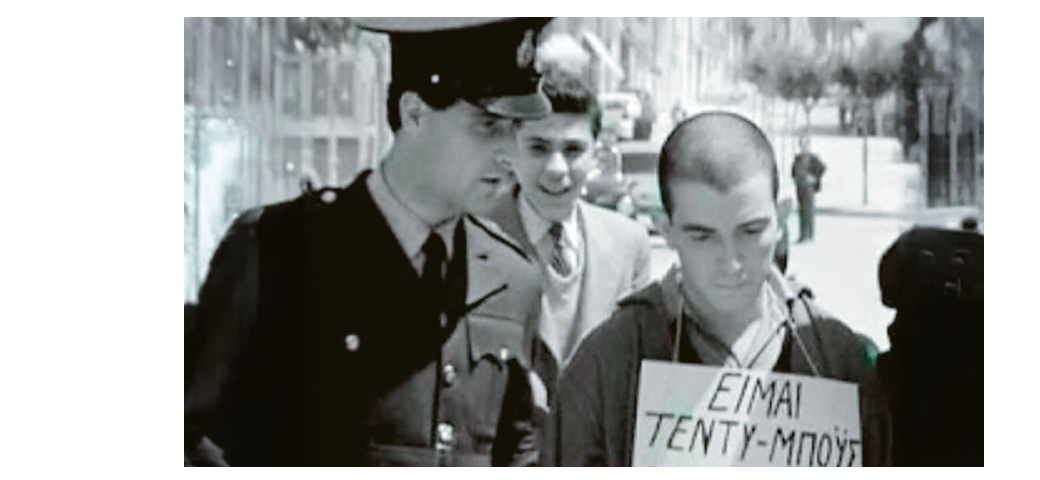
1950s: Teddy Boys and Law 4000
During a time when puritan values dominated, acts like throwing yogurt were seen as serious misbehavior. Young troublemakers who engaged in acts such as splashing adults with yogurt or stealing cars were labeled “teddy boys.” From 1958, they were punished under Law 4000. The police would shave their heads, cut the turn-ups from their trousers, and hang a sign around their neck listing their offense—such as: “I am a teddy boy. I threw yogurt at my teacher.” They were then paraded through the streets of Athens to serve as an example.
The term “teddy boy” was borrowed from the UK, where it described a subculture among working-class youth in the 1950s, associated with disruptive behavior, especially in London.
1960s: Pool Halls and Spin-the-Bottle
Pool halls became places associated with petty crime. Teenagers would gather to play cards, pinball, table football, and billiards. Gambling was illegal, and these venues were seen as spaces of moral decline. For teenage girls, unsupervised parties with dim lighting, alcohol, smoking, games like spin-the-bottle, and sexual exploration were also viewed as morally questionable, even if not criminal. Lack of information about contraception often led to unintended pregnancies. Having a child out of wedlock resulted in stigma, and many girls turned to abortion, which was still illegal until 1986.

1970s: Political Activism
During the dictatorship, youth delinquency took on a political dimension. Politicized students skipped school to participate in protests. Anti-junta activity was illegal, and teenagers involved were treated as threats to public order and national security, facing potential imprisonment. Religious instruction and discipline were reinforced as tools of control. The Korydallos Reformatory played a key role in shaping behavior. After the restoration of democracy (Metapolitefsi), the term “delinquency” replaced “criminality” when referring to minors, to avoid stigmatizing them as criminals.
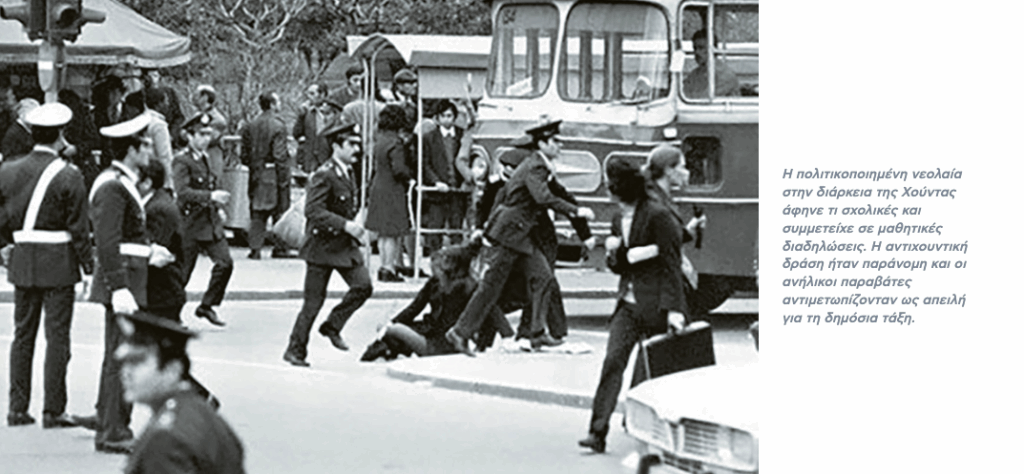
1980s: Hooliganism and Graffiti
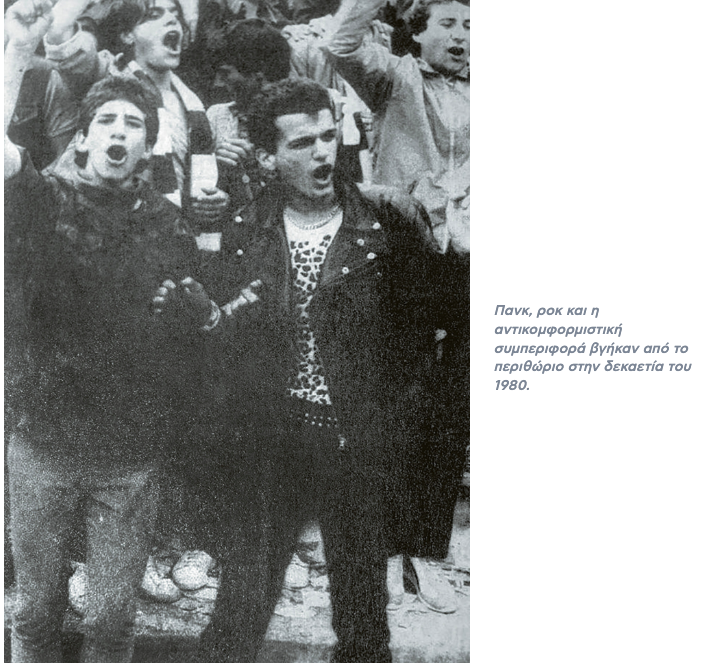
As punk and rock music gained popularity, non-conformist behavior moved into the mainstream. Youths adopted “street culture,” influenced by movements in the U.S., and began expressing themselves through graffiti. Some took it further with vandalism and property damage. At the same time, young people began organizing around sports teams, particularly football. Fanaticism led to supporter violence, known then as “hooliganism,” which became a matter for police intervention.
1990s: Drugs and Gangs
Driving without a license became one of the most common offenses among minors. While shoplifting remained a minor issue, armed robbery was not yet widespread. This began to change with immigration from the Balkans, the rise in drug use, and the formation of youth gangs. Children as young as 7 to 12 started appearing in police reports, often connected with begging—known in Greece as “children at traffic lights.”
2000s: Bullying and Vandalism
Violence among minors, always present, began to be seen more clearly as a form of delinquency. What was once described as “a fight” became known as bullying. Initially, the focus was on school behavior, including verbal and physical attacks on classmates. Acts of vandalism at schools became common, targeting classrooms and equipment like computers, basketball hoops, and windows—and even extended to universities.
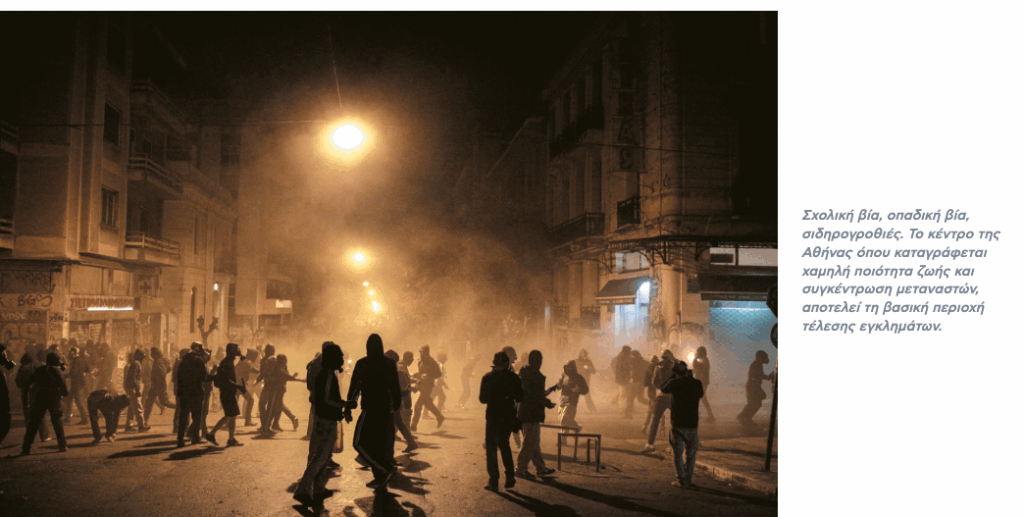
2010s: Violence in Public Spaces
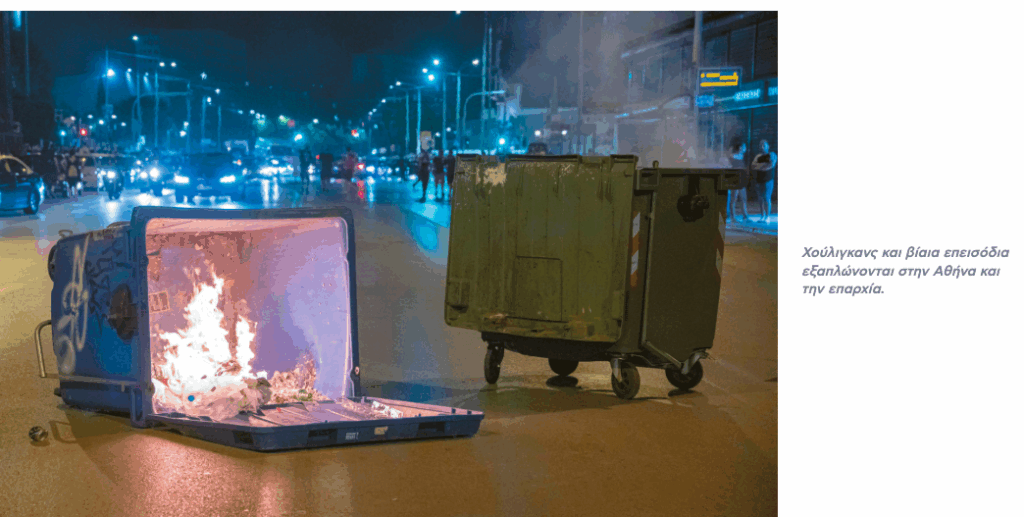
The rise of the internet and social media, combined with the financial crisis, led to a sharp increase in youth delinquency. Violence became more visible. School fights, fan-related violence, brass knuckles, drug use at younger ages, robberies, and thefts became more frequent. The center of Athens, marked by lower living standards and a concentration of immigrants, became a key area for such crimes. Data shows that the 15–17 age group is the most active among young offenders.

2020s: Cyberbullying and Knives
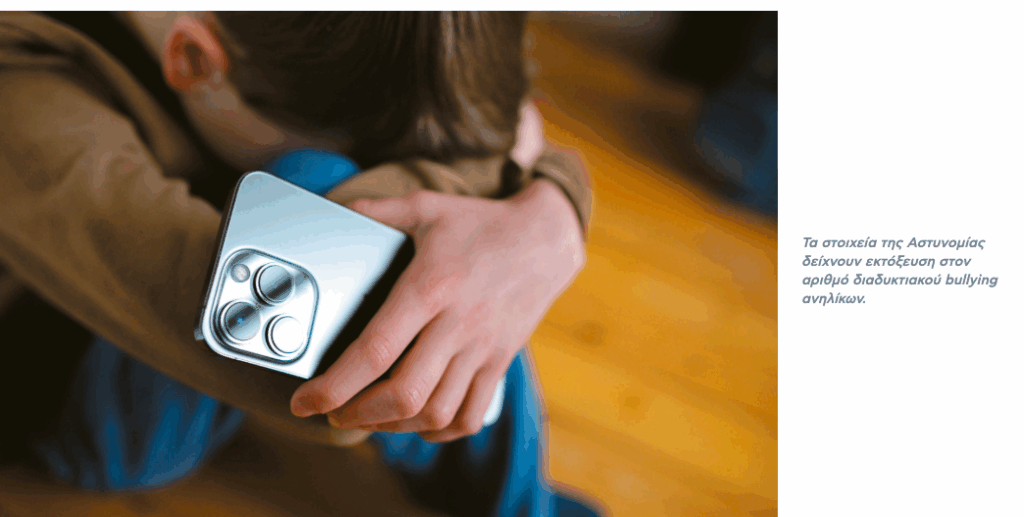
Online bullying has become an everyday occurrence. Incidents include sharing private data, revenge porn, and livestreamed assaults. These attacks are often recorded and shared online for entertainment. Violence among minors now extends beyond schools—knives are pulled in public squares, and gangs are increasingly active. Police data shows a sharp rise in both the number of minors involved in such incidents and the incidents themselves. While theft remains the most common offense, there is an increase in dangerous assaults, even homicides, and sexual violence—sometimes involving children under 12. Experts note that many young offenders show apathy and a lack of empathy.
Notable Juvenile Crimes
1. The “Satanists of Pallini”
In the summer of 1995, the public learned about horrific crimes committed by three teenagers under the pretense of satanic rituals: 20-year-old Asimakis Katsoulas, 18-year-old Manos Dimitrokalis, and 16-year-old Dimitra Margeti. On August 27, 1992, they lured 14-year-old Dora Syropoulou to a remote area and strangled her. They abused her body, poured gasoline on it, and set it on fire. Their next victim, 28-year-old mother of two Garyfallia Giourga, met the same fate in April 1993. Dimitrokalis later confessed, revealing the group’s actions. Although other high school students participated in rituals, only the three were sentenced. All have since been released from prison.

2. The Disappearance of Little Alex
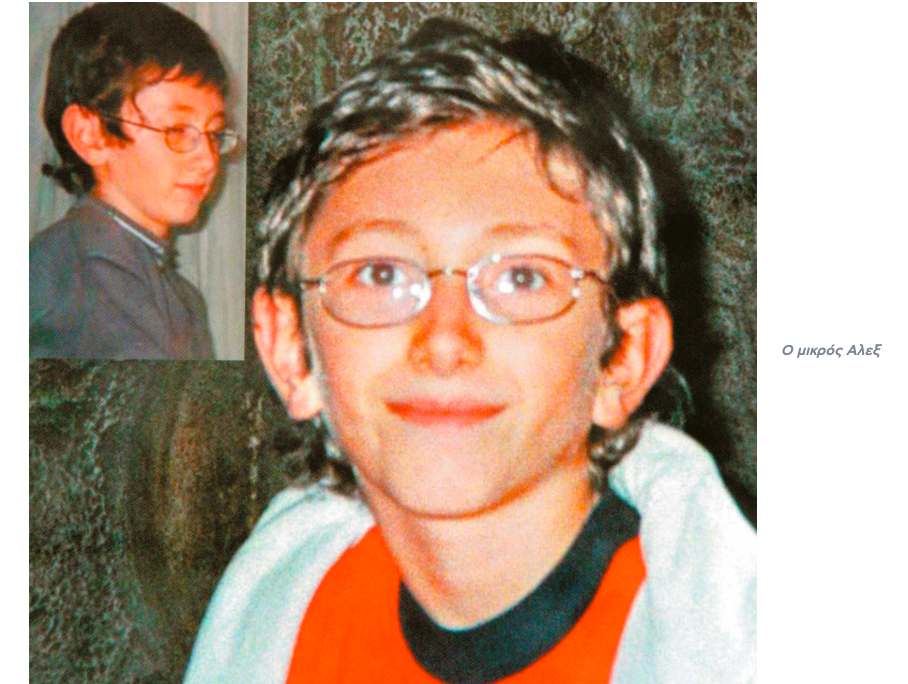
On February 3, 2006, 11-year-old Alex Meshishvili from Georgia disappeared in Veria. This was one of Greece’s first widely known bullying cases with tragic consequences. Five children aged 11 to 13, with the alleged help of at least one adult, hid Alex’s body and made a pact of silence. For years they went unpunished, until his mother’s persistence led to legal action.
3. The “Dragon of Drama”
Kyriakos Papachronis, known as the “Dragon of Drama,” committed multiple rapes, murders, and bombings in the early 1980s, at age 21. Dressed in military uniform, he attacked women. He began his violent spree by raping and killing a sex worker and ended it by severely injuring a 30-year-old mother of four. His crimes included two murders, seven attempted murders, eight attempted rapes, sexual assaults, and five bomb attacks.

4. The Boy Who Killed His Parents
On March 2, 1995, a 15-year-old boy in Katerini—described as a good student and well-behaved—killed both his parents and tried to burn their bodies before going to bed. He claimed he felt oppressed and that a fight escalated into the killings.
5. Murder of a Scrap Collector
In August 1995, two 15-year-olds killed a 79-year-old man in Komotini. They broke into his shack to rob him, and when he caught them, they beat him to death with a wooden beam and a hammer.
6. The Thasos Murders
In 1996, 24-year-old student Theofilos Sehidis killed five members of his family on the island of Thasos—his parents, sister, grandmother, and uncle. He dismembered the bodies, dumped them in a landfill, and kept their brains in the freezer for “later study.” He claimed he was acting in self-defense due to a supposed family conspiracy against him. He was found to be mentally ill.

When Innocence Fades
Today, Greek families face challenges in monitoring and protecting their children. As one child put it, “My mom even put a GPS on me to see where I am.” Law enforcement and social experts see a shift in both the scale and severity of youth behavior, raising questions about how society can intervene earlier and more effectively.
Ask me anything
Explore related questions




