





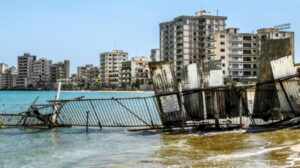
Fifty-one years after August 14, 1974, Sandbank remains the most resounding silence in Cyprus. A city alive in memory, locked in reality.
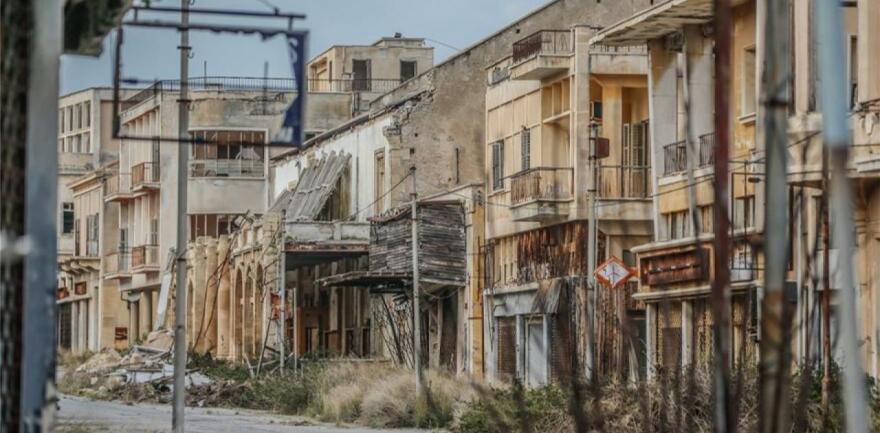
Its daily life was abruptly cut in two, the moment the second phase of the Turkish invasion, “Attila 2”, brought the occupation of Karpasia and much of Mesaoria, throwing down an impenetrable barbed wire fence.
The images are familiar but each time they hurt as if you were seeing them for the first time. Empty hotel facades, concrete skeletons, stores with faded storefronts, schools with closed classrooms and mute churches.
This frozen frame has become an international symbol of a dead end. The “ghost town” is not a landscape, it is politics, justice, memory and a struggle to return it to its rightful inhabitants, as UN Security Council resolutions explicitly stipulate.
Turkish piracy
August 14, 1974 was not just another date. It was the beginning of the second phase of the invasion, when Turkish forces advanced despite the ceasefire and while the Geneva talks had artificially collapsed.
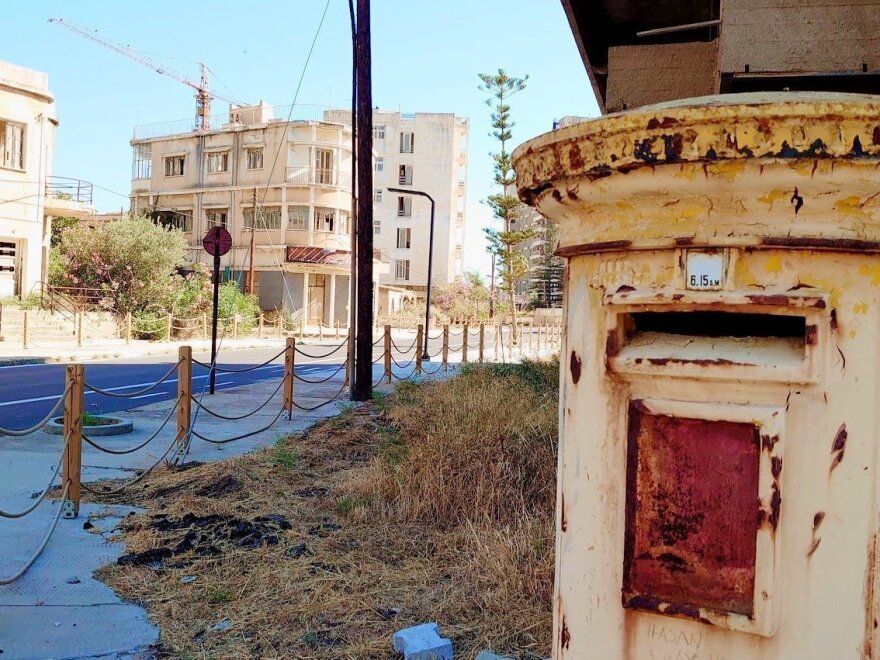
In a matter of twenty-four hours, “Attila 2” imposed new ultimatums. Famagusta was evacuated, fenced off, and sealed under military control. Since then, the international legal order, embodied in UNSC Resolutions 550/1984 and 789/1992, clearly states that any attempt at settlement or colonization “by other than the legal inhabitants” is unacceptable and that the area must be placed under UN administration until the return of its legal inhabitants. This is not a detail. It is the hard core of international law in Varosha.
It is precisely on this framework that, from 2020 onwards, the most provocative moves by the Turkish side have come. The partial lifting of the military regime and the opening of parts of Varosha for walking and … “visiting”, started with the opening of the Republic Avenue and part of the beach. The image of visitors walking or riding bicycles and taking pictures in front of dilapidated hotels, on streets that have remained silent for decades, is the rape of memory and legitimacy. They set up a tourist attraction on top of the pain.
In 2022, they went even further. They opened a beach zone for commercial use, putting up sunbeds and umbrellas as if it were any “common” Mediterranean coast. UNFICYP was quick to remind that the UN position remains unchanged and to forward the matter to the Security Council and that was that. The semantics remain blunt. The sun and sea are used as camouflage, but the barbed wire and resolutions are still there.
Erdogan’s “picnic”
The height of cynicism came in November 2020, when Recep Tayyip Erdogan visited Varosha, even advertising a “picnic” in the enclosed zone, although the weather spoiled it with heavy rain.
A few months later, in July 2021, Turkish Cypriot leader Ersin Tatar announced the start of the “second phase” of the opening, with the lifting of martial law on about 3.5% of the area, while encouraging Greek Cypriot owners to apply to the “Real Estate Commission”. The Security Council’s response was as expected. “Unacceptable” unilateral actions, and zero impact.
At the same time, the US and the EU called the Turkish moves “provocative”, “unacceptable” and “incompatible” with Erdogan’s commitments, nor did Tatar lose sleep over them. Instead, Erdogan responded that talks can only be held “for a two-state solution,” indicating his intention to enforce the fait accompli.
They are undoing history
In 2020, the city’s central axis was renamed, Kennedy Avenue was christened “Semih Sancar” in honor of the head of the Turkish armed forces during the invasion. The message was political and the response was clear. Illegal naming cannot rewrite history nor can it serve as an alibi for the political acrobatics of the present.
In the meantime, cycle paths and controlled walking routes have been created within the visitable part of Varosha, with the iconic, now-ruined, hotels as reference points. The image of tourists being photographed in front of the sea and empty buildings is not an innocent one. It is a political act, because it legitimises in the minds of international public opinion a “new status” that is in direct opposition to international legality.
They are not sweating their ears
Against the same backdrop, the reopening of the Bilal Aga Mosque, a 19th-century monument that had remained closed since 1974, was allowed in July 2021. For Tatar’s occupation “logic”, this is a “return of the place to its everyday life”. For the Republic of Cyprus and the UN, it is another step towards imposing a fait accompli.
The European Union and the United States have repeatedly condemned any “unilateral action” in Varosha and have called for immediate implementation of the relevant resolutions.
Former EU High Representative, José Borel, in statements in 2021, made it clear without asterisks that Turkey must comply with UN resolutions and contribute constructively to the resumption of negotiations for a comprehensive solution. The international actor insists on protecting legitimacy, preventing new fait accompli and seeking a solution of a bizonal, bicommunal federation with political equality… but they alone say it and they alone hear it.
At the UN level, the Security Council in 2021 made a Presidential Statement condemning Turkey’s decision to “further open” the fenced-off Varosha and calling for the immediate restoration of the status quo. No one knows what weight these words carry, even though they constitute an official reading of legitimacy at a moment when the risk of a slide into “normalization” of the fait accompli is growing.
Gone are the people, left their souls
Famagusta is not just its streets and buildings. First and foremost it is its people
The family who left the pot of hot food believing they would return that night, the father who took his children in his arms running through alleys that are now grassy, the women who hung up the last of their clothes and never came back to take them down from the rope. They are small stories that form a collective memory that does not fade with the years and visits that merely scratch the wound with a fingernail.
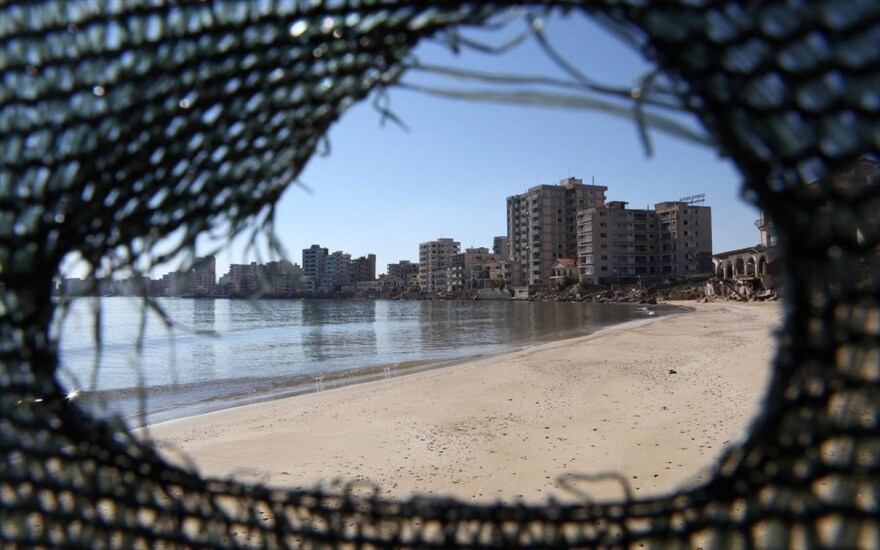
The most disturbing development in recent years is the attempt to transform Varosha into a “tourist attraction”. Organised tours of the coastal zone up to the King George and Oceania hotels, the placing of umbrellas and sunbeds on Golden Sands beach, cycle paths and ‘selfies’ on the skeletons of buildings, constitute a political act with a communicative veneer of ‘normality’. The image of a beach bar set up on barbed wire is deeply offensive to the people who have been waiting half a century to return to their homes.
Famagusta is not a postcard, and injustice is not embellished.
The legal “yes” and the political “no”
At the level of international law, the line is crystal clear. No settlement, no settlement in Varosha by non-legal residents, administration of the area by the UN, return to the rightful owners. Political negotiation may be complicated, but it cannot invalidate the obvious. The “two-state” proposals are not a “new idea”. They are just the old recipe for partition with a new label. That is why the international community recognizes that opening up parts of the city under Turkish Cypriot administration is not an act of confidence-building but an undermining of the negotiation itself.
There is no “neutral” view when talking about Famagusta. Neutrality in an illegal act is complicity. This city does not need “image management”, it needs restoration of law. And that means:
– No normalization of “visits” to the enclosed area.
– No acceptance of the “two-state” narrative that nullifies the very prospect of liberation and reunification.
– No tolerance for changing the physiognomy of the city.
Famagusta remains, despite the fatigue of half a century, the history of its people. Every 14th of August, a debt is renewed, to protect the memory from alteration, to prevent colonization and not to close your history a bureaucratic case filed away by time.
History is not rewritten by changing license plates.
Ask me anything
Explore related questions




