





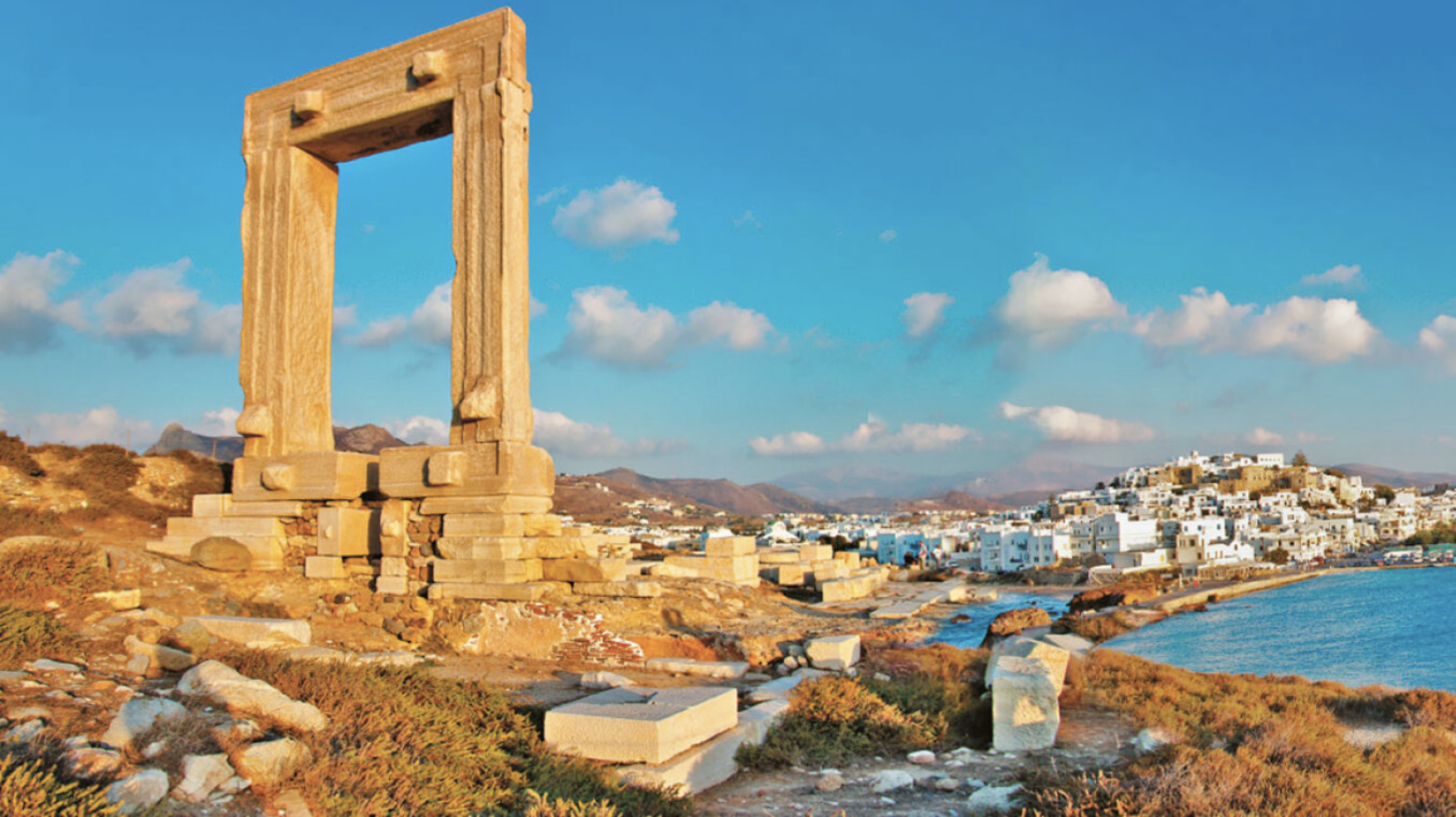
It has adorned postcards and unsurpassed paintings, inspired top composers, and starred in stories connected with ancient Greek myths that decorated everything from the walls of Pompeii to royal palaces.
The subject in question is the so-called Portara of Naxos, which, according to some versions, was the Temple of Dionysus and the refuge of Ariadne after her abandonment by Theseus.
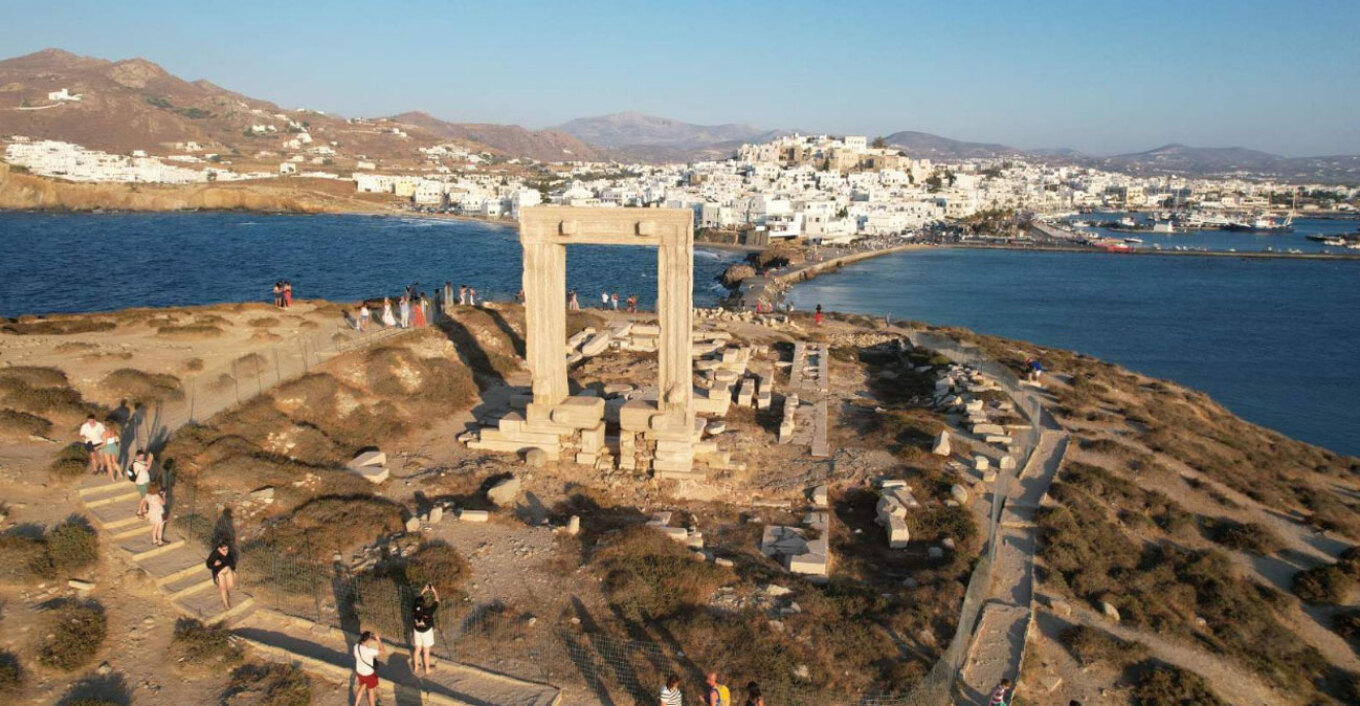
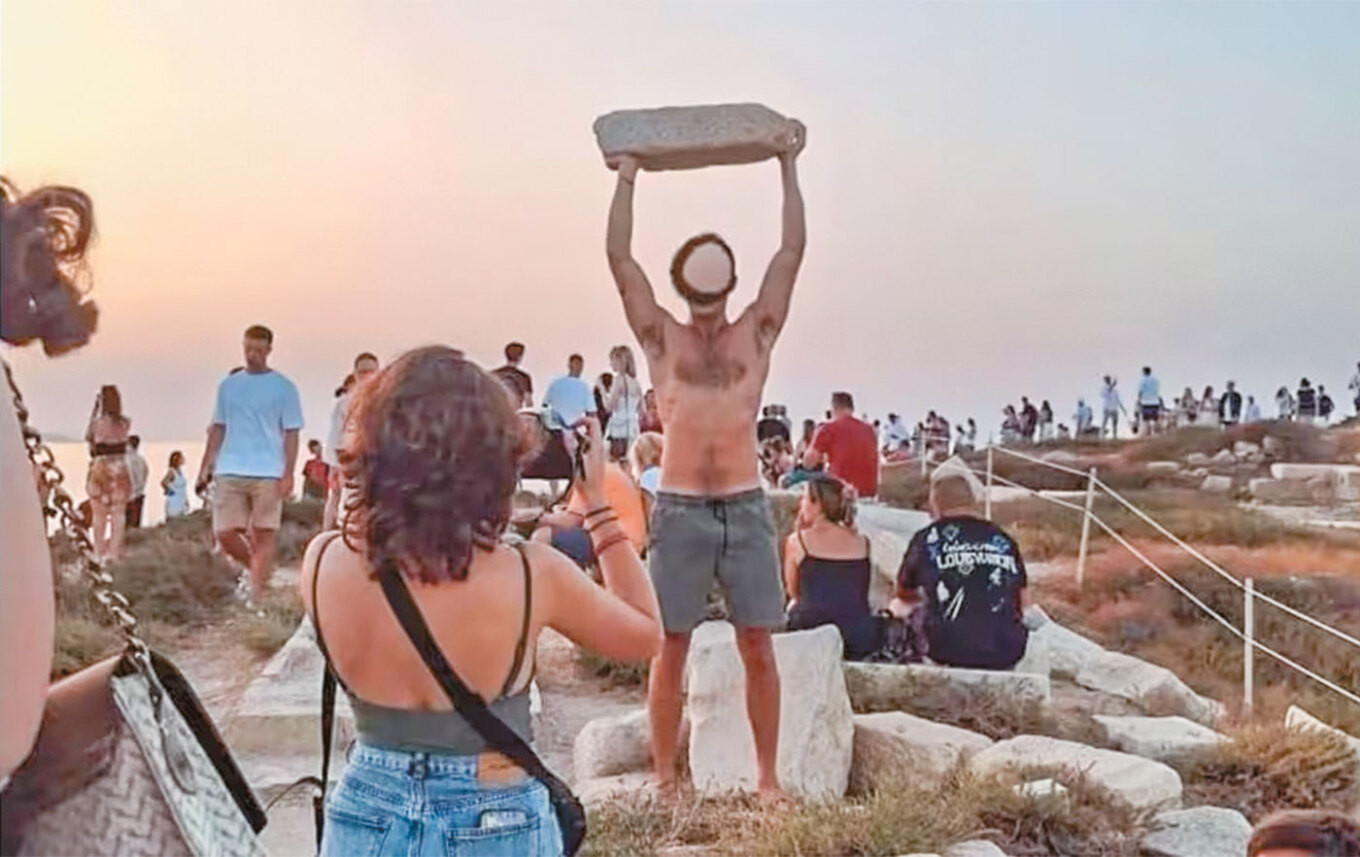
However, the reason why the emblematic Portara, this jewel of the Aegean and the trademark of Naxos, returned to the spotlight is because of a photograph circulating online showing a tourist ostentatiously lifting one of the marbles from the archaeological site.
This brazen act provoked not only public outrage but also an immediate response from the Ministry of Culture and the Cyclades Ephorate, who hurried to fence off the area until further measures were taken – a move opposed by the island’s mayor, who ordered the arrest of the archaeologists themselves!
A subsequent statement by the Association of Greek Archaeologists agreed with the decision – perhaps one of the few times a decision found consensus between the Ministry of Culture, the academic community, and the professional associations.
The Significance of the Portara
The large, presumed entrance to a temple belonging either to Dionysus or Apollo, destined to become the most brilliant jewel in the heart of the Aegean, is the first thing sailors and visitors of the island see from afar.
Huge and imposing, the Portara inevitably sparks the imagination about the glorious past of an island that was a point of reference in antiquity due to its wealth, size, and significance.
Countless myths are associated with the history of the Portara, some attributing it to Apollo, while others connect it with the island’s patron, Dionysus, who found there his beloved Ariadne, whom Theseus had abandoned on his return from Knossos.
A series of stories that crossed centuries and reached the far edge of Europe, nurturing romantic legends and countless dreams, testify to the importance of the myth of Ariadne’s love for Dionysus, who was destined to marry his sorrowful princess on this edge of Naxos, the islet called Palatia, where the temple’s gate dominates.
Countless depictions, from the walls of Pompeii to Pre-Raphaelite paintings, demonstrate the widespread influence of the ancient myth and the love between Dionysus and Ariadne.
Unsurpassed is, therefore, Titian’s painting Bacchus and Ariadne in Naxos, as well as Richard Strauss’ opera Ariadne auf Naxos, with a libretto by Hugo von Hofmannsthal, for the melancholic Ariadne and the three nymphs Naiad, Dryad, and Echo announcing Dionysus’ arrival on the island. Other versions of the myth have the god of the island and wine appearing in Theseus’ dreams, convincing him to abandon Ariadne, with whom he had always been in love.
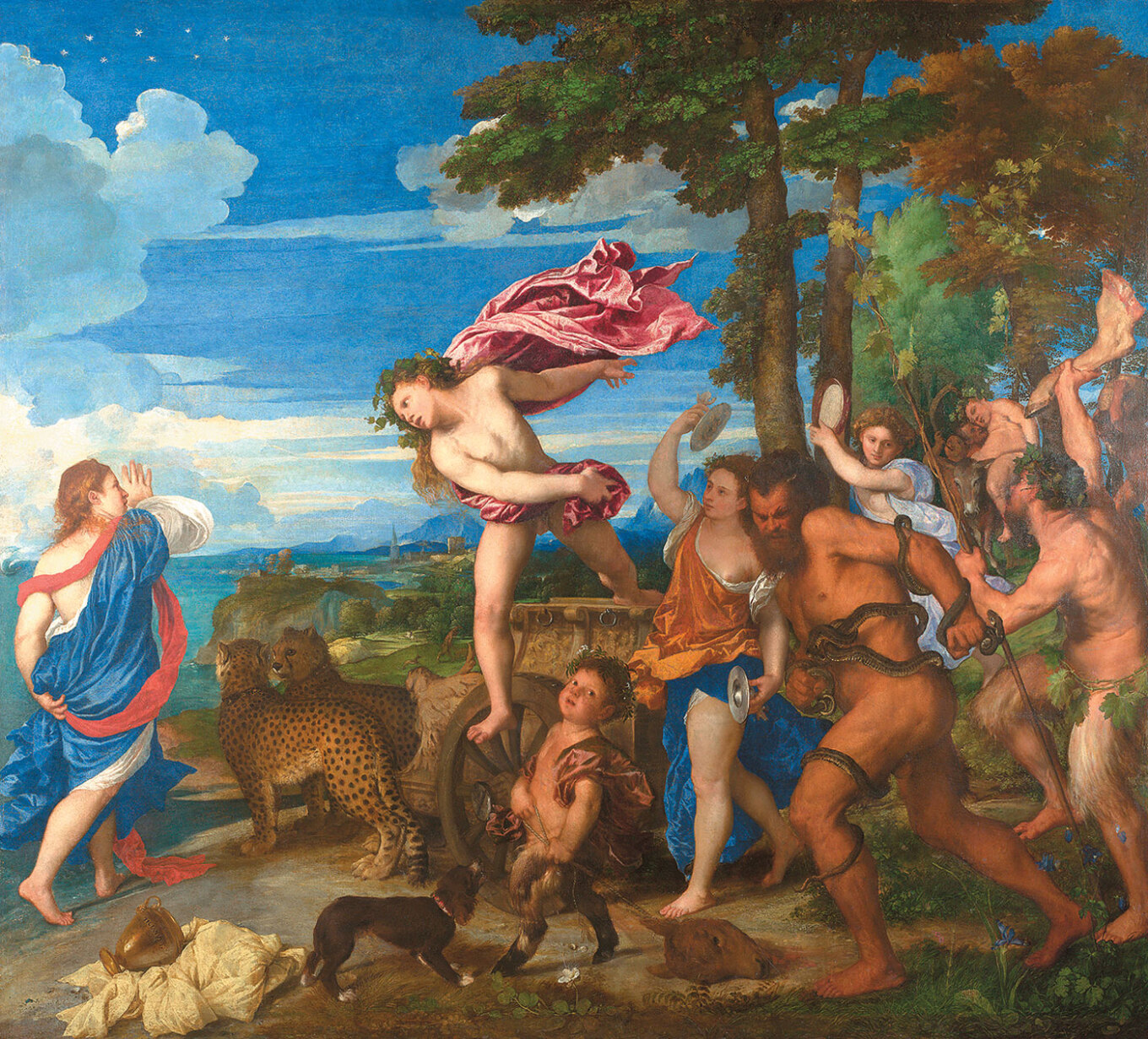
Titian’s painting Bacchus and Ariadne in Naxos
But it is not only paintings, musical works, and frescoes that testify to the power of the myth: one only needs to look at the sky to see the constellation Corona Borealis, essentially identified with the crown with which Dionysus wed his beloved Ariadne.
Even the locals proudly spoke of these myths, while others believed that the souls lost around the islet of Palatia were connected with the eternal sorrow of the abandoned and trapped daughter of Minos on the island.
Just like the bitter and trapped princess, the people who perished here, whether swimmers unable to cope with the wild waters striking the northern part of the so-called Grotta – in contrast with the nearly always calm southern part – or those who decided to end their lives in the island’s most sacred spot, haunt the area, which continues to hold a strange energy.
The mysteries associated with the Portara, combined with the unexplored subsoil and the isolated location of Palatia, inevitably let the imagination run wild.
Blessed or cursed, the foundation of Naxian culture or simply a unique tourist attraction, whatever the case, the first thing that comes to mind when Naxos is mentioned is the Portara. But it is not only the place’s peculiar energy that has generated countless legends; primarily, it is the impressive position of the Portara, as it overlooks the Aegean on one side and the capital on the other.
All those of us with roots on the island always remember summers spent running between the marbles or posing at the base of the imposing gate for the classic commemorative photo. Even today, one of the most beautiful sunsets in the Aegean is recorded at this striking edge of Naxos’ capital, accompanied by the sound of waves and seagulls.
Theories About the Unfinished Temple of Apollo
Although no one has confirmed the truth about the monument that stands proudly at the island’s entrance, closely intertwined with its history and significance, there is ample evidence regarding this monumental construction and its remains, which no disrespectful visitor may neglect, let alone threaten to destroy.
As for the islet of Palatia, during the Mycenaean period around 1300 B.C., it was a single location, as revealed by archaeological findings from excavations at Grotta. These helped draw more valuable conclusions about the island’s importance and wealth.
Regarding the temple and its identity, prevailing theories suggest it began construction in the 6th century, around 530 B.C. Most likely, the tyrant of the area, Lygdamis, wanted to build a temple that would rival the two iconic temples of antiquity: the Temple of Olympian Zeus in Athens and Hera’s Temple in Samos.
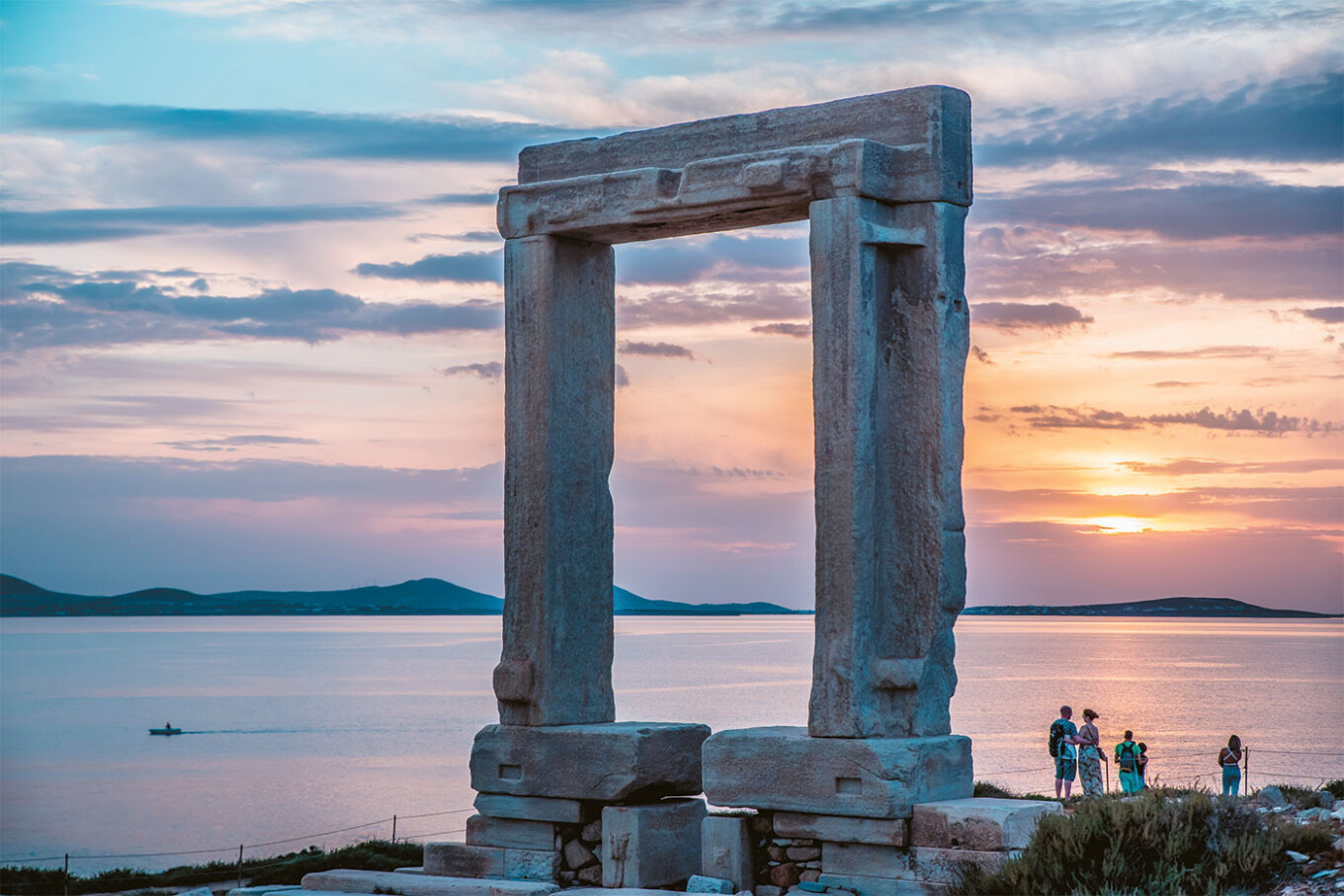
The tyrant of Naxos, Lygdamis, began construction around 530 B.C. on a temple intended to rival the Temple of Olympian Zeus in Athens and Hera’s Temple in Samos. Construction plans, however, ceased, presumably due to his defeat by the Lacedaemonians.
The island’s prosperity and its immense significance in the ancient world are evident even today in a tour of the Cyclades, with the most impressive kouroi and finest statues originating from Naxos, which, thanks to its marble, could erect iconic temples, populate nearby islands with statues, and offer tribute to the deities. Pindar did not call the island “fertile” by chance – meaning radiant and luminous – while Herodotus, referring to its offerings, wrote that “Naxos, fortunate among the islands, gave generously.”
A glance at the Temple of Apollo in Delos, built in his honor, shows why the Naxians gained this reputation: it was one of the first peristyle temples – columns surrounding the entire temple – demonstrating the island’s major role in Cycladic culture.
Similarly impressive are the Delian kouroi, among the first and most imposing created in Naxos and sent there in honor of Apollo, nearly 10 meters tall, a clear sign of the island’s prosperity and progressive spirit.
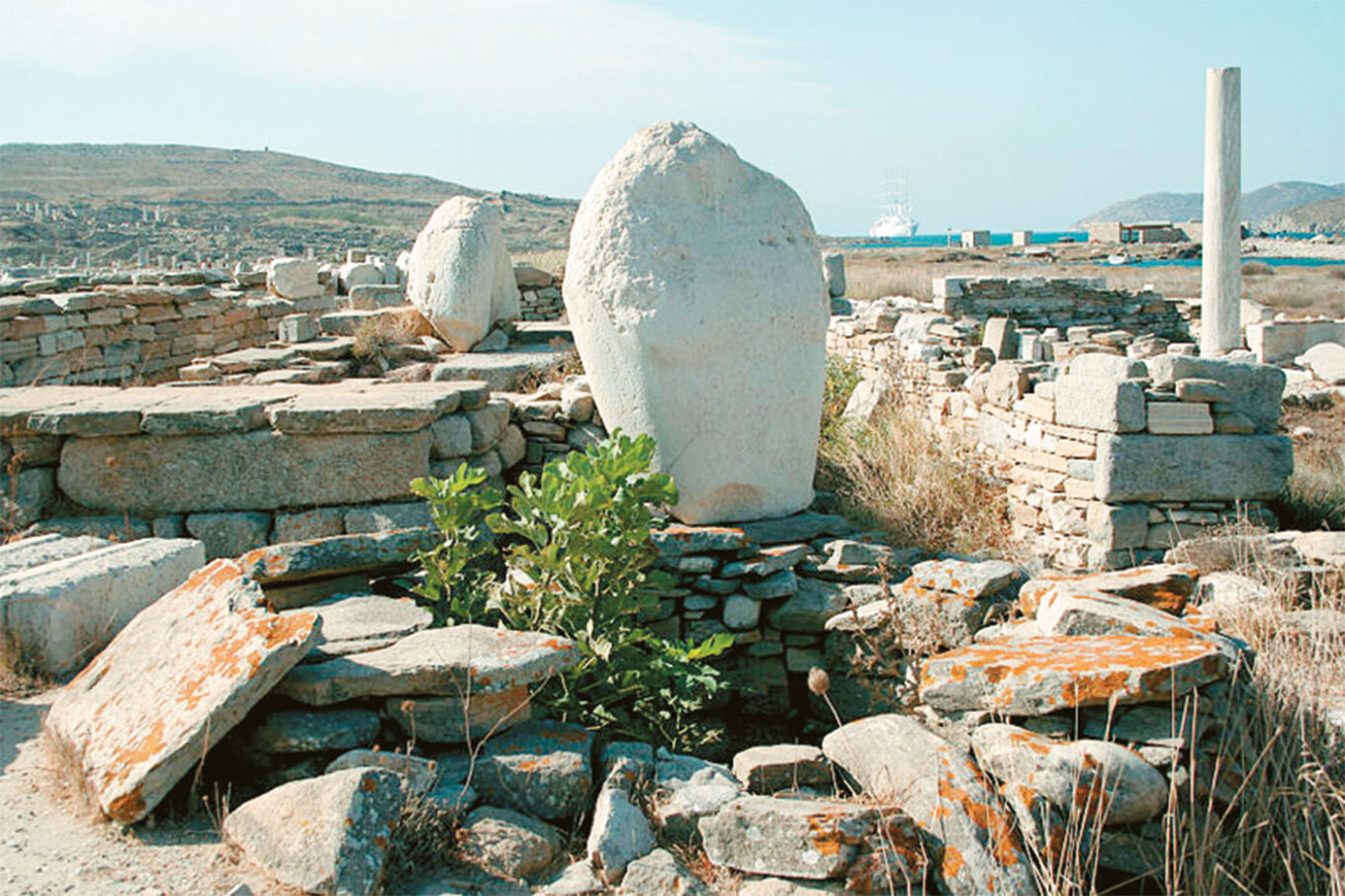
The Colossus of the Naxians in Delos broke apart, leaving its pieces scattered. It stood 9.5 meters tall and dates to the 6th century B.C., with the Lion Avenue ending at its base.
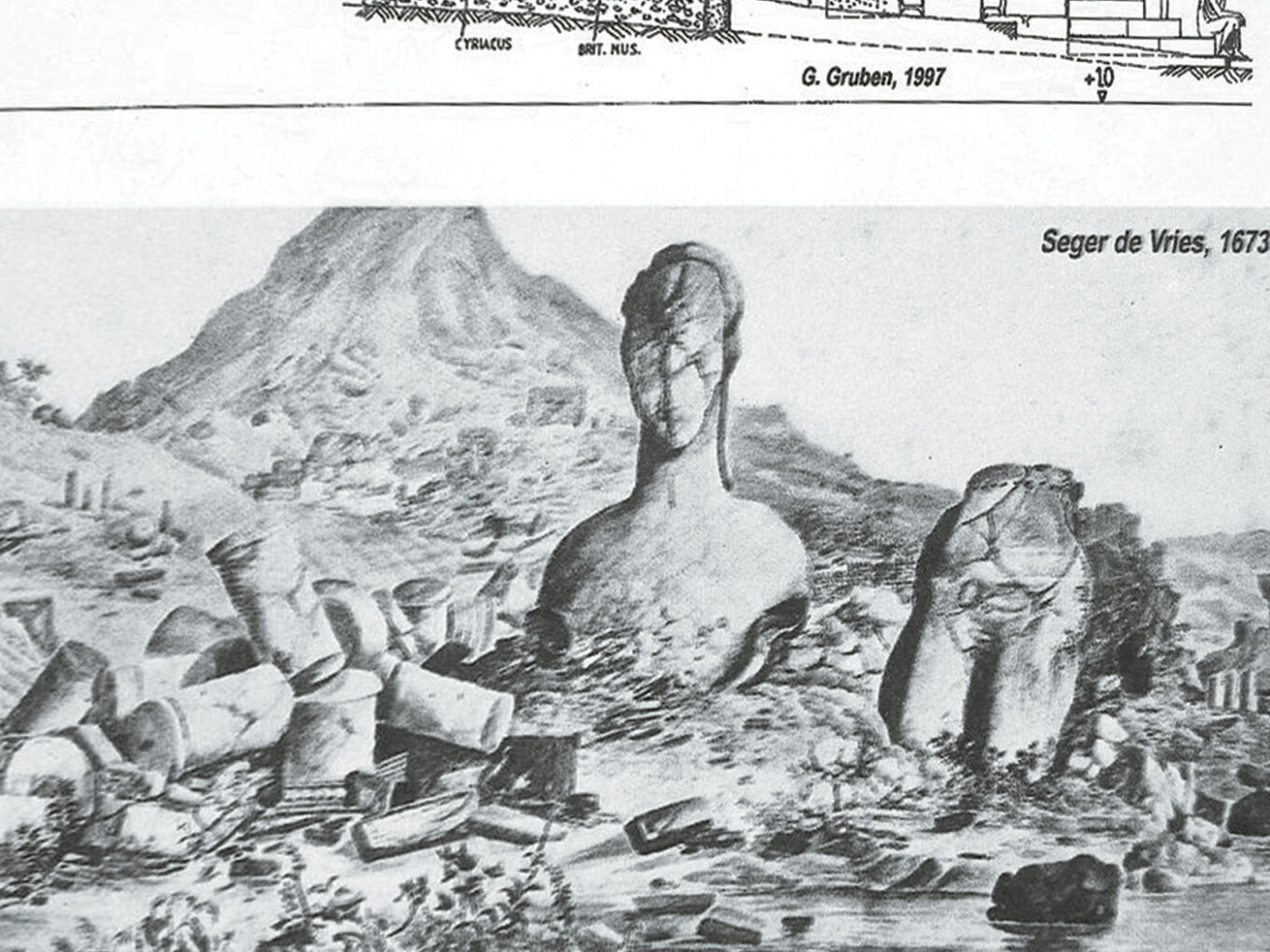
Seger de Vries’ 1673 plan showing the Colossus ruins…
The Naxians were also the first to use the Ionic capital in a monument, something seen again in the impressive temple to which the Portara likely belonged, as an Ionic decorative scheme was also planned to support the entablature, architrave, frieze, cornice, and pediment.
All this, of course, is hypothetical but carefully studied by archaeologists, who speculate that the Portara’s impressive size could not be accidental and was evidently intended for an equally impressive temple.
From its foundations, it is clear that its aim was to surpass or at least rival others, with dimensions comparable to the impressive Temple of Zeus at Olympia, and it was clearly intended as a dipteral temple, like other grand temples in the Eastern Aegean and Ionia.
It Mimics the Erechtheion
Even those claiming its perimeter is only half that of Polycrates’ Temple in Samos, all evidence suggests the Temple of Apollo could have enclosed the Naxian temple in Delos as well as the other known temple in Naxos, the Yria, twice over.
No one, however, will ever know for sure, as construction plans were abruptly halted, presumably due to the tyrant’s defeat by the Lacedaemonians, who seized the island.
Yet, it seems to be a structure consistent with the sacred architecture of the Cyclades, destined to become.
Ask me anything
Explore related questions




