Prime Minister Kyriakos Mitsotakis is preparing to announce, from the podium of the Thessaloniki International Fair (TIF) in early September, an economic package worth €1.5 billion, mainly targeting the middle class, which has carried a disproportionate burden over the last decade. The package will include tax cuts, pay raises mainly for uniformed employees, measures to relieve the impact of high prices, interventions in housing, targeted subsidies, and incentives in sectors where state intervention is necessary.
The final fiscal cost for 2026 is expected to be higher and may exceed €2 billion. As was the case this year, the economic team is planning a second package of measures for April 2026, which will depend on the course of economic growth and the primary deficit/surplus of 2025 once the data are confirmed by Eurostat.
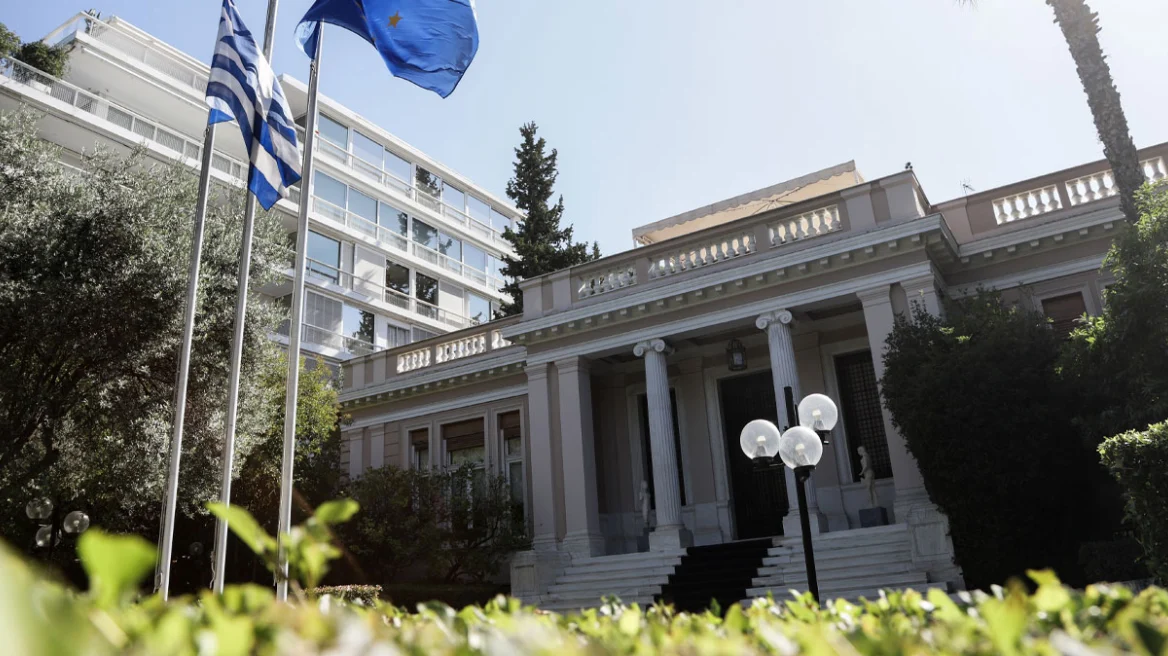
In the alternative scenarios, more than 100 proposals have been gathered, processed by ministries in meetings that started in July. Beginning tomorrow, at the Maximos Mansion, the Prime Minister together with his economic team and close associates will evaluate and finalize the measures by the end of August 2025.
The set of interventions to be announced by the Prime Minister is planned with a two-year horizon (until the next national elections) and includes:
Specification and implementation of new benefits and measures announced in April this year but not included in the 2025 Budget voted in December. These will be applied immediately, before the end of the year.
New measures to be announced for the first time at TIF. These will come into effect in October 2025 or January 2026.
“Post-TIF” measures that will be announced for implementation after March 2026, once Brussels validates Greece’s 2025 economic performance.
Tax Cuts
At the heart of the measures is relief for the middle class—households with incomes up to €50,000—as this group was most burdened during the bailout years and continues to be tested by successive crises. In a realistic scenario, the combined “gain in the pocket” from tax cuts, wage increases, housing subsidies (over 40 measures in total) will range from €300 to €2,000 per year for more than 4 million workers, professionals, pensioners, and property owners.
The government’s plan has received the green light from the European Commission, confirming it does not violate fiscal rules. Thus, the stability of the national economy is not threatened, as the country awaits positive reports from the Commission and international organizations, as well as credit rating upgrades (Moody’s on September 19, Standard and Poor’s on October 18, Fitch in November, etc.).
In this context, the government seems to permanently abandon proposals for indexing the income tax brackets to inflation. The reason: if inflation persisted (3.1% in July and up to 9% a few years ago), the annual fiscal cost would reach €1 billion, threatening the budget and economic stability. Proposals to reinstate holiday bonuses in pensions and the public sector (costing €3–5 billion annually) are also rejected, as well as new VAT cuts or a “vacancy tax” on unused homes.
Instead, the economic team favors a one-off restructuring of tax brackets benefiting middle incomes up to €50,000 annually, with emphasis on families with children. Changes will apply to incomes earned from January 1, 2026 (declared in 2027), with immediate relief visible in reduced withholding tax from January 2026. Estimated annual savings could reach €1,500–€2,000—nearly one full monthly salary for middle-income households.
Key scenarios include:
New 15% tax bracket on income between €10,001 and €16,000 (to smooth the jump from 9% to 22%). Potential savings: up to €420 annually for those earning €1,000+ net per month.
Adjustments to higher brackets: the 44% top rate currently applies above €40,000. Options: raise threshold to €45–50k, or reduce rate to 42–40%. Could save €1,000–€2,000 annually.
Raising the tax-free threshold (currently €8,636 for singles) to €9,500–10,000. Symbolically important as it was lowered under bailout rules in 2016. Would save taxpayers another €100–120 annually.
Extra relief for families with children: higher tax-free thresholds starting at €11,000+, with benefits of €150–220 per child.
Gradual 30% reduction of “living expense imputed income” (τεκμήρια) until 2027, easing burdens on 1.5+ million households.
Pensioners
Initially, full abolition of the “personal difference” (προσωπική διαφορά) in pensions was proposed so that 500–600k old pensioners could also receive annual increases. The prevailing scenario, however, favors partial or full abolition for those with a difference below €150–200.
Additionally, from this year, pensioners will receive a permanent annual bonus of €250 (possibly €300) every November, beyond the 2.3–2.4% annual pension increase. About 1.1 million pensioners and 350,000 vulnerable citizens will benefit.
Wages
Significant raises are planned for Armed Forces and public sector employees:
New military pay scale, likely adding up to half a month’s salary annually.
Minimum wage increase in the private sector from €880 to €915–920 gross monthly as of April 2026. This means €250–300 more annually for over 1 million workers.
Public sector raises: from April 1, 2026, all public salaries will rise by €35–40 gross monthly (€200–250 net annually). The entry-level wage is set to reach €950 by 2027.
Professionals
Changes are also planned for self-employed and freelancers, correcting imputed income rules for fairness. Adjustments will apply to entire professions (e.g., school canteens) or small municipalities (<500 residents). Many professionals will thus be taxed on lower imputed incomes, reducing their tax bill. Combined with cuts in imputed living expenses, professionals could save €300–500 annually.
Ask me anything
Explore related questions