





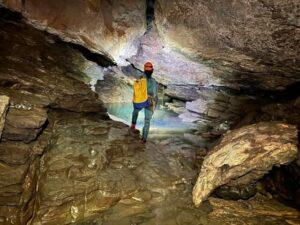
A unique cluster of cliffs, lakes, waterfalls, paths, like an inverted geographical relief of Crete, was revealed in Apokoronas in Chania, to members of speleological expedition “Gourgoutakas – Lion 2025” that reached a depth of 1.129 meters underground, searching for the secrets of a labyrinthine underground system that is one of the world’s most important geological monuments.
According to zarpanews.gr, for the first 13 days of August, the caves became home to 40 cave explorers from all over the world who set off with backpacks on their backs, a 2.5-hour climb to reach point LO1 (Lefka Ori 1), where they set up camp, at an altitude of 1,650 meters.
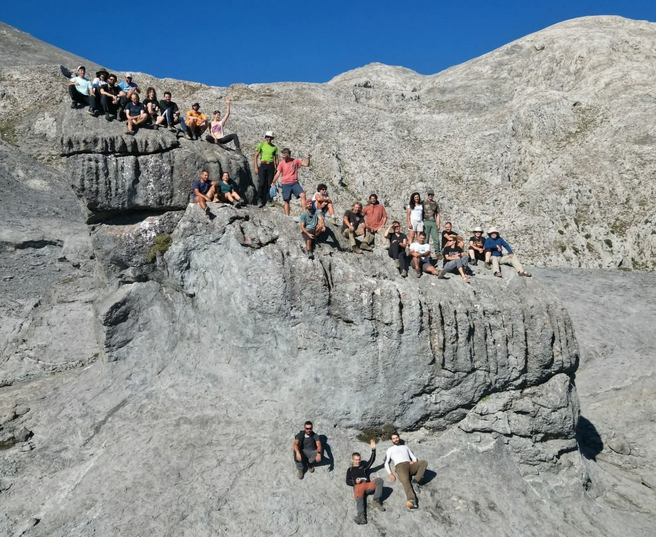
Every day, 3-4 members of the expedition would enter the cave and fill the cans from a depth of 30 meters with water for drinking and cooking as there is no other water on the mountain. For refrigeration, they use the entrance of the “Lion” where the air coming out has a temperature of 5-6 degrees Celsius.
Next to this point, there are the entrances of the caves “Gourgoutakas” and “Lion“, which are the two deepest caves in Greece with serious indications that they are connected to a magnificent underground system, at more than 1,100 meters below the surface of the earth.
“I think 99% of the time they will be joined!” noted in the recent presentation of the expedition’s results, the expedition leader and PhD in geology, speleologist Mr. Markos Vaxevanopoulos.
“The deepest dive ever made in Greece”
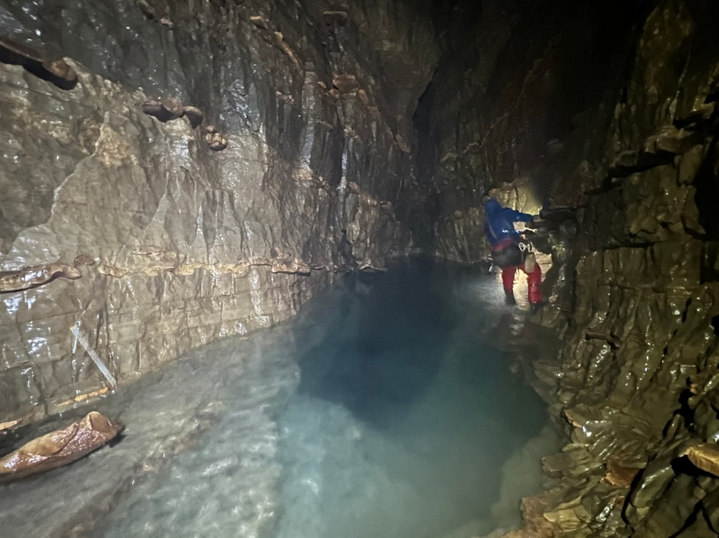
In torrential rain, the diver of the expedition, Vassilis, managed this year to make a dive in the dark and icy waters of Gourgouthukas, at a depth of 1,129 meters below the entrance of the cave, the deepest (so far) point in Greece, hanging from a mite.
Indicative of the conditions is the video taken by the camera on his helmet, and what he found is that it all goes on. “Dives at such depths are few and far between around the world,” Vaxevanopoulos noted, noting that “you can clearly see that it’s a pipeline going on, it can go on for miles.”
Wi-fi and routers 650 meters underground
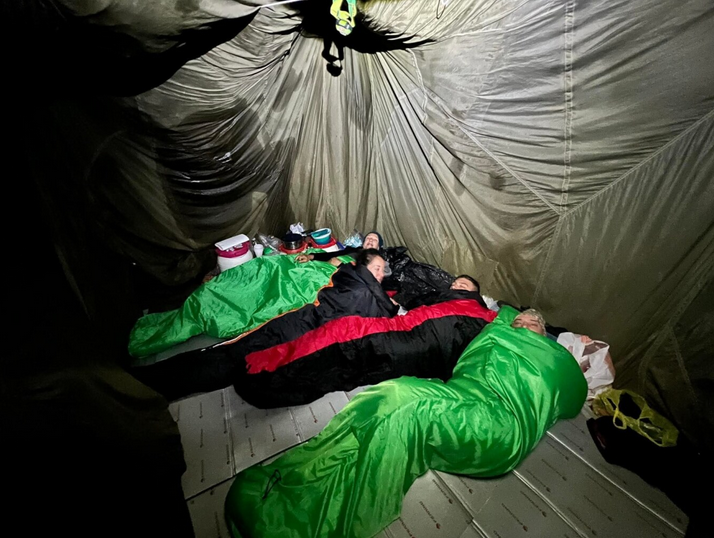
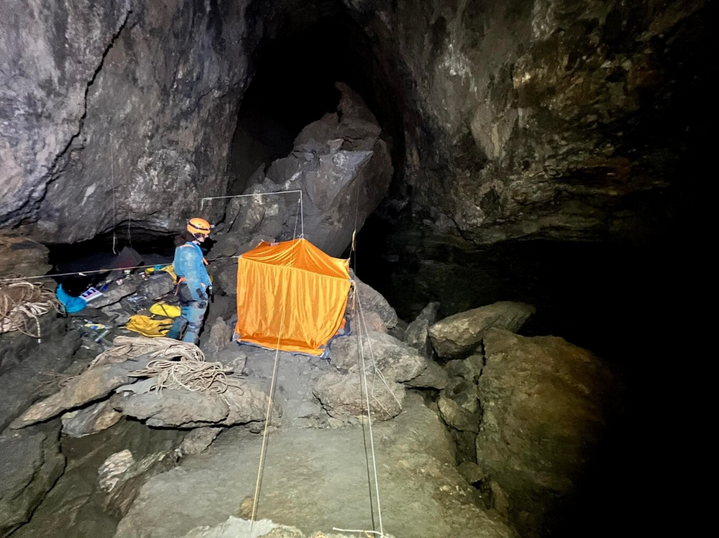
For the exploration of Gurgutaka, a camp was set up 650 meters below the earth’s surface. In fact, thanks to the team’s technician, the camp had not only telephony but also wifi with a router, facilities that are crucial for safety reasons now as well.
“We stay two weeks in the caves, cooking, sleeping, exploring. Safety is fundamental for us, we always organize for the possibility of speleological rescue,” Vaxevanopoulos said.
Gourgoutakas Cave
– Entrance at 1,550 and at a depth of 1,129 meters (and counting)
– The entrance was a small hole that no human could fit through, and which gave off air, very cold air. The French opened it up and slowly went down, continuing to open it until in 1998 they reached 1,100 meters
– The descent has successive openings and wedges.
– Very large and impressive seismic faults – roads opened into the mountains thanks to the earthquakes
– Interesting geology with squamous limestones
– But also micro-fauna, organisms that live there, many of which are endemic
– The cave has continuity
Lion Cave:
– It is so called because the shape from above resembles a lion sculpture
– It is 1,110
– The air from its entrance hole has a temperature of 5-6 degrees Celsius, hence it is called a refrigerator
– In the first 30-40 meters it is narrow and the descent is roped down.
– It continues with a narrow “meander”
– Below 400 meters it becomes a canyon
– Camp at 500 meters, pots, pans, food, a self-sufficient system that accommodates 2-3 cave explorers who start their explorations from there.
Cave LOC 81
At the same time, a group of Englishmen explored the smaller cave LOC 81 and even captured the entrance with a drone. The cave has an entrance at 405 meters and follows a steep 120-meter descent.
Next Targets
Presenting the impressive findings to the public, Mr. Vaxevanopoulos, made special reference to the connection between the cavers and the local community while presenting the next goals which are “to go further, to continue the siphon in Gourgoutakas and in Liontari we will go further”.

Finally, Mr. Vaxevanopoulos, did not fail to mention the enormous value of caves for life and man:
“95% of the water we drink in Crete passes through caves, so their protection and conservation is directly related to the water we drink. If we don’t take care of the mountains and caves, everything we do will be found in our glass,” he noted.
Ask me anything
Explore related questions




