





France in Political Turmoil
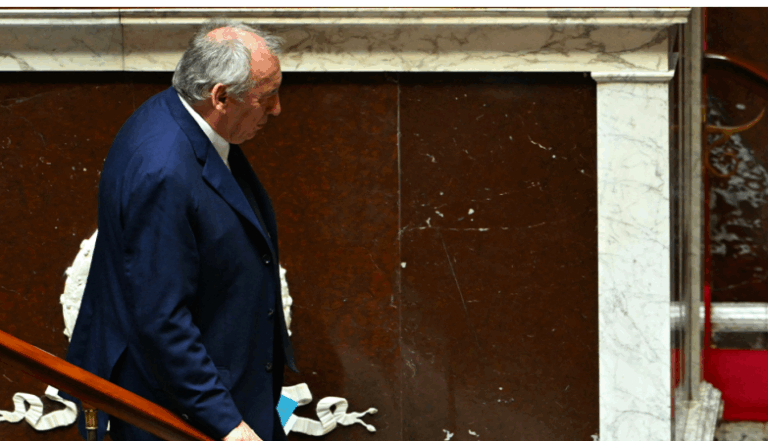
Despite his dramatic appeals, François Bayrou lost the vote of confidence ahead of the tough fiscal measures he had announced to tackle the debt crisis. With 364 votes against and 194 in favor, Bayrou’s government failed to secure the necessary majority of 280 votes. Bayrou becomes the fourth prime minister under Emmanuel Macron to resign, and he is expected to submit his resignation tomorrow.
Fabien Roussel, secretary of the French Communist Party (PCF), described Bayrou’s fall and the defeat of the austerity supporters as “a breath of fresh air for the French.” Writing on X, he called it “a victory for all those who refuse to touch public services and holidays” and urged citizens to “build the future” by mobilizing on September 10 and 18.
France in Political Turmoil
Despite his dramatic appeals, François Bayrou lost the vote of confidence ahead of the strict fiscal measures he had announced to address the debt crisis.
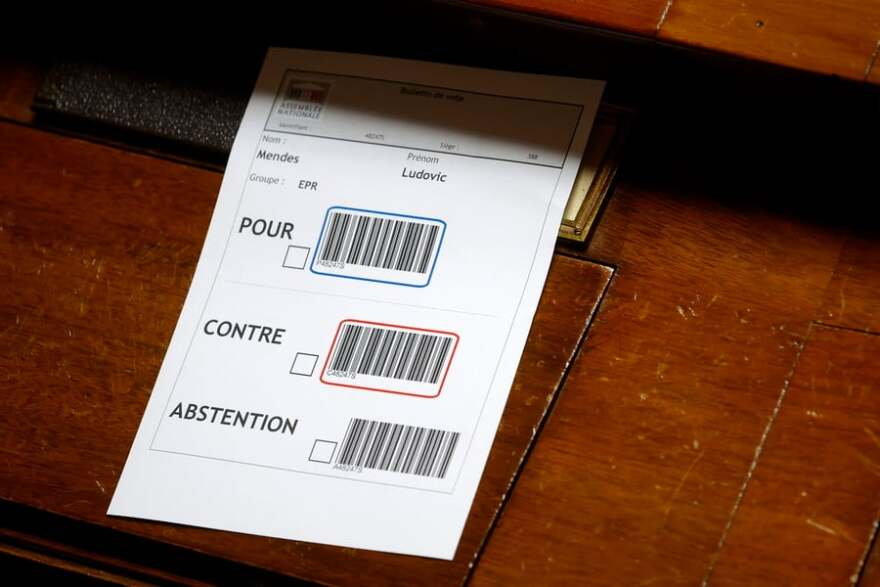
With 364 votes against and 194 in favor, the Bayrou government failed to secure the required majority of 280 votes.
Bayrou is the fourth Prime Minister under Emmanuel Macron to resign. He is expected to submit his resignation tomorrow.
Mélenchon: Macron Must Go Too
“Bayrou has fallen. Victory and relief for the people. Macron is now on the front line against the people. He must go too,” wrote Jean-Luc Mélenchon.
The debate in the French National Assembly has concluded, and the vote of confidence has officially begun. The voting process is expected to take approximately half an hour. Earlier, Francois Bayrou took the floor to formally close the discussion before the ballots were cast.
The French National Assembly is currently holding a crucial vote of confidence for the Bayrou government, with tensions running high among political factions.
François Bayrou opened the debate in the Assembly, urging lawmakers to confront “not a political, but a historic issue” that will determine the future of France.
Speaking on behalf of the Socialists, Valo launched a sharp attack, labeling President Emmanuel Macron as a “defeated president” and describing Bayrou’s initiative as a “evasion” designed to shirk responsibility.
Laurent Wauquiez of the Republicans warned of “political instability that is economic poison,” ruled out any cooperation with the left, and accused Bayrou of proposing “hidden tax increases.”
Marin Tondelier, head of the Greens, described Bayrou’s speech as a “lackluster finale,” noting that he “did not even attempt to convince anyone.”
The atmosphere in the Assembly remains tense, with political forces appearing deeply divided ahead of the decisive vote that will determine the government’s survival.
The French National Assembly has begun a crucial vote of confidence for Prime Minister François Bayrou’s government, amid tense political divisions and widespread public scrutiny. The vote is expected to take approximately half an hour.
Bayrou Opens Debate
Francois Bayrou opened the debate in the Assembly, emphasizing the historical significance of the vote. “The deputies are not facing a mere political choice, but a historic question that will determine the future of France,” he said, framing the moment as pivotal for the nation beyond party politics.
Bayrou acknowledged criticism that his decision to request a vote of confidence was risky, but argued that the real danger would be to continue “politics as usual” without bold action. He highlighted urgent national challenges, including declining productivity, education reform, immigration, pension system pressures, housing shortages, and environmental and security issues, calling for a fundamental restructuring of the political model.
Socialist Criticism
Gabriel Attal, former Prime Minister (January–September 2024), warned that falling political confidence would not solve France’s challenges nor the problems facing its citizens. He described growing public frustration with politics and parliamentary democracy, cautioning that some risk “playing with fire.” Attal praised Bayrou for transparency but emphasized that his deputies would vote based on the general interest of stability, not to give the government a blank check.
Jean-Valo of the Socialist Party sharply criticized both Bayrou and President Emmanuel Macron, calling Macron a “defeated president” and describing Bayrou’s confidence vote as an evasion of responsibility. Valo argued that government policies had “impoverished the poor, enriched the wealthy, and ignored the future,” framing the vote as both a moral and political failure.
Republicans Demand Stability
Laurent Wauquiez, leader of the Republicans, stressed the dangers of political instability, calling it “economic poison.” He ruled out any cooperation with left-wing factions and accused Bayrou of proposing “hidden tax increases.” While highlighting the need for stability and compromise, Wauquiez underscored that many on the right would vote against the government or abstain.
Greens: “Lackluster Finale”
Marin Tondelier, head of the Green Party, criticized Bayrou’s speech as a “lackluster finale,” observing that it appeared he made little effort to persuade anyone. Green lawmakers have expressed deep reservations about the government’s bid to secure confidence in a moment of critical political tension.
Le Pen Calls for Macron’s Resignation
Marine Le Pen, president of the National Rally, reiterated her call for President Macron’s resignation, arguing that France needs a “restart” to repair a system burdened by decades of mismanagement. She described the current government as “fantasy,” claiming it governed in name only rather than effectively leading the country. Le Pen advocated for the dissolution of the Assembly and early elections to break the political deadlock.
Resignation on the Horizon
According to French media reports, Bayrou plans to submit his resignation to President Macron tomorrow morning if the confidence vote fails. The government’s fall appears almost certain, as the majority of deputies have already indicated they will withhold their support.
A Dramatic Moment for France
The atmosphere in the National Assembly is tense, reflecting a nation at a critical crossroads. Bayrou called on deputies to rise above party lines and act in the broader national interest, warning that failure to address these issues would leave the next generation trapped in insecurity, unemployment, and housing shortages.
As the vote continues, political analysts emphasize that this moment represents more than a parliamentary procedure—it is a defining test of France’s ability to respond to longstanding social, economic, and political challenges.
François Bayrou began his speech to the French National Assembly by acknowledging that several of his critics considered his decision to ask for a vote of confidence risky. But he stressed that the real risk was that politics would continue “as usual” without bold changes. “The biggest risk would be to take no risks, to let things continue as they are,” he said.
Bayrou stressed that MPs were not being asked to face a simple political choice, but a historical responsibility that would determine France’s future. He referred to critical issues that require immediate solutions, such as falling productivity, education, immigration, pressure on the pension system, homelessness and acute environmental and security issues. “The model needs to be reshaped,” he said.
A central point of his statement was the issue of the fiscal deficit. As he pointed out, France has been running a deficit for 51 years, which has become a “reflex, or worse, an addiction” of the state to cover its needs with money it does not have. He warned that this course is leading the country to gradual poverty: “France is working in the hope of becoming richer, but every year it gets a little poorer.”
To describe the situation, he likened himself to a captain of a ship that is taking on water. “Our task is first and foremost to make the ship watertight as quickly as possible,” he said, calling for immediate and difficult decisions. “If we want to save the ship, the ship we and our children are on, we must act without delay,” he added.
Bayrou warned that submitting to debt is tantamount to loss of freedom: “Submission to debt is like submission to military power. In both cases we lose our freedom.” He also pointed out that past debt decisions have “broken the contract of trust” between generations, leaving the younger generation trapped in an environment of insecurity, unemployment and inability to find housing.
“It is not sustainable, neither morally nor politically nor democratically,” he said, stressing that France must make deep changes immediately to secure its future.
Acknowledging the dramatic state of his government, he argued that his resignation would not change much, as he stressed to lawmakers “you have the power to overthrow the government, but you don’t have the power to eliminate reality.”
After 43 minutes of speech, Bayrou concluded with a spirited defense of democracy, asking lawmakers to leave behind the “curse of permanent division” and choose the path of unity.
Ask me anything
Explore related questions




