





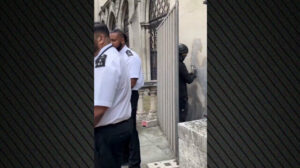
Banksy’s graffiti on the wall of the Royal Courts of Justice, the iconic court complex on London’s Strand, which houses the High Court and the Court of Appeal of England, lasted just a few days as the relevant authorities proceeded to cover it up and planned its removal.
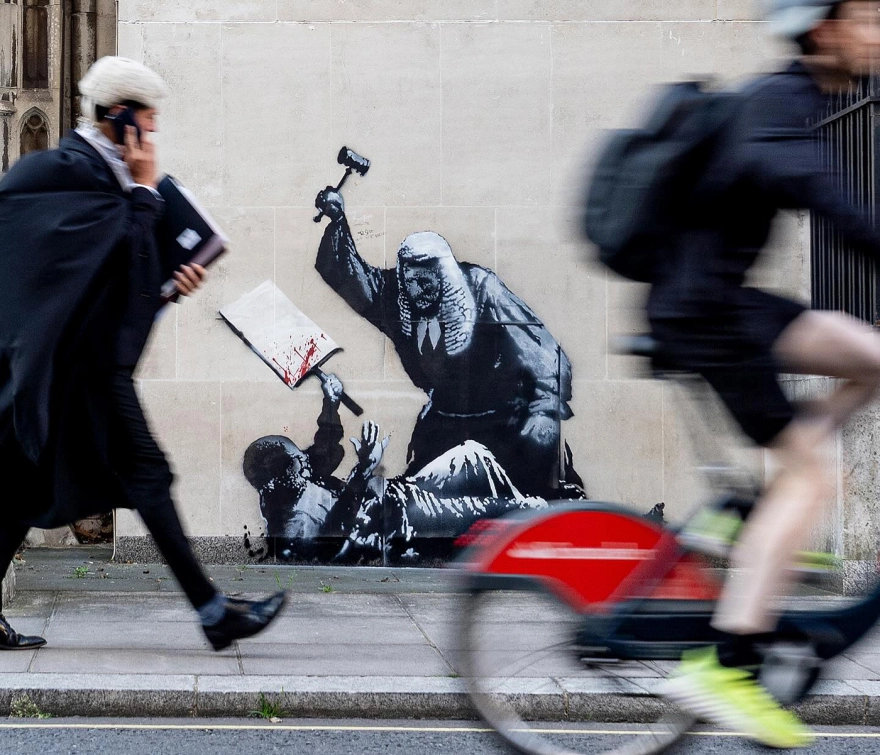
The artwork, which appeared on a wall of the complex on Monday, depicted a judge in a black robe beating a protester who was on the ground, with blood splattered on his placard.
The mural caused a sensation, with authorities confirming it will be removed as the building is a listed building and subject to strict protection rules. Until its removal, the work was guarded by security personnel and remained covered up from time to time. Banksy himself posted a photo of the work on his Instagram account, confirming it was his.
The image was interpreted by many as a commentary on the recent arrests of hundreds of protesters holding up placards in support of Palestine Action. The organisation was banned by the government in July as a terrorist organisation after activists caused damage to RAF aircraft. The work comes just weeks after the High Court in England and Wales reiterated its concerns about the safety of judges, stressing that they have been subjected to “ever-increasing and increasingly unacceptable attacks of an excessive nature.”
London police described the work as “damage to other people’s property” and said an investigation was underway. The Courts Service said the obligation to preserve the architectural character of the building made removal unavoidable.
Banksy’s graffiti before it was removed:
Ask me anything
Explore related questions




