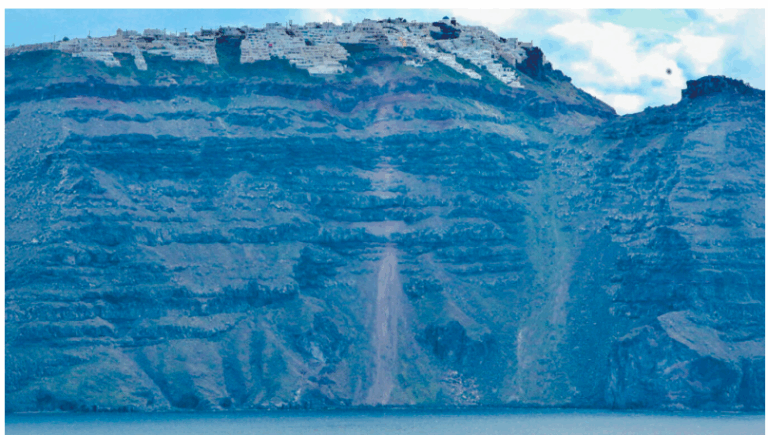
Santorini, world-renowned for its dramatic Caldera views and thriving tourism industry, is also confronting the perils of unbridled development. The volcanic cliffs, which give the island its unique identity, are increasingly burdened by concrete, pools, and unregulated extensions that often cling precariously to the very edge of the precipice. That pressure revealed its danger this summer: on August 15, in Imerovigli, a section of the cliff suddenly gave way beside a hotel under construction. Rocks cascaded into the void, engulfing nearby properties in a thick cloud of dust, as shocked tourists witnessed a scene more reminiscent of catastrophe than leisure.
A warning before the fall
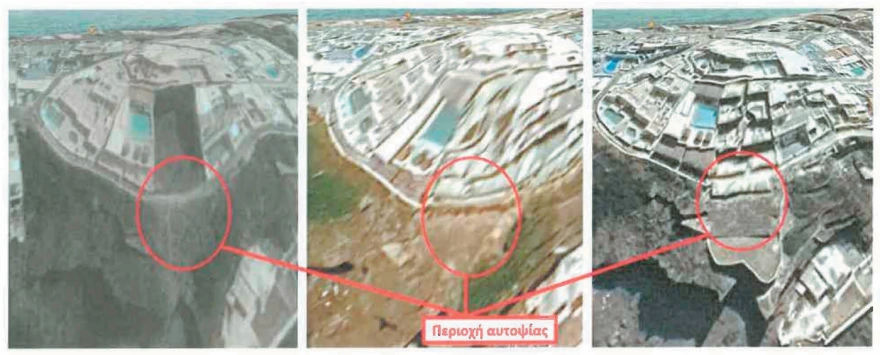
Landslides are not unprecedented in Santorini, yet the location and timing of this collapse alarmed engineers. Just four days earlier, on August 13, 2025, the Thira Urban Planning Authority had issued a formal report identifying extensive violations in the very same development. The document ordered a revised topographical survey, restoration of a damaged public path, verification of building distances, corrections to construction calculations, and — crucially — a complete structural study. Inspectors had noted that cave-style rooms were being excavated “empirically” into volcanic soil without any supporting engineering design.
The developer was given four months to bring the project into full compliance. While the landslide cannot be directly attributed to the violations cited, the coincidence starkly illustrates the fragility of the Caldera and the risks posed by inadequate oversight.
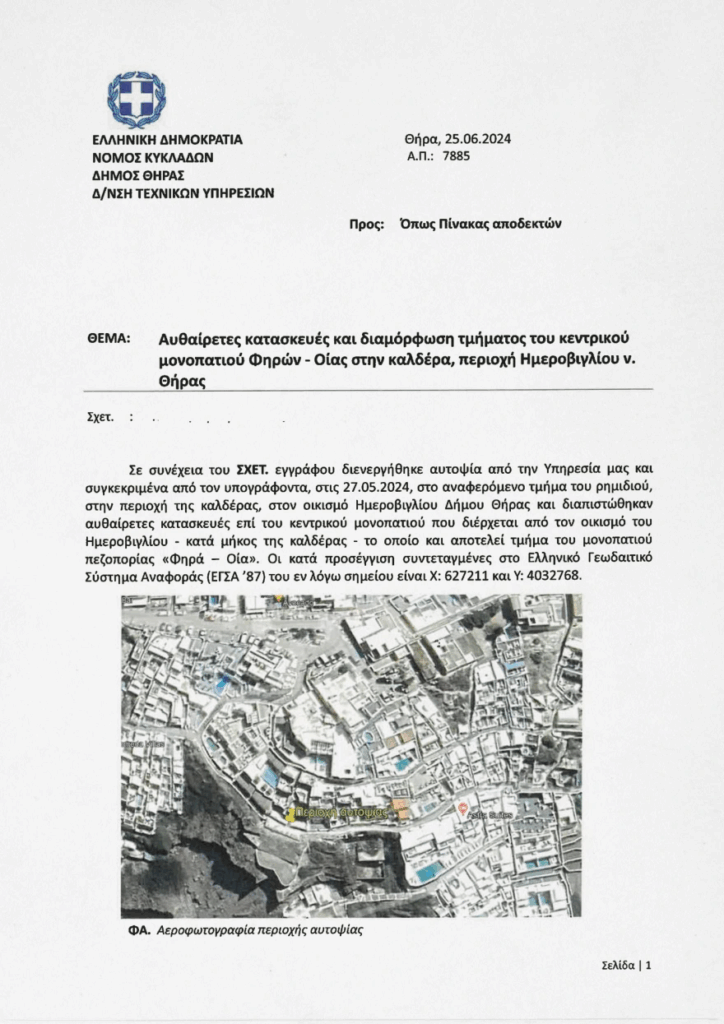
The cementing of a historic path
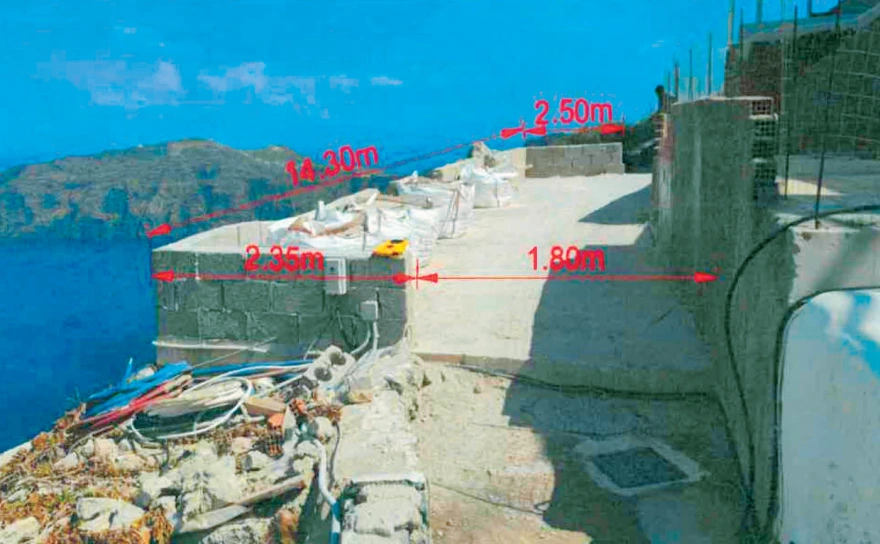
The controversy first surfaced on May 27, 2024, when inspectors visited the Fira–Oia cliffside path — one of Santorini’s busiest pedestrian routes. They found 16.5 meters of the traditional stone paving torn out and replaced with a 60 m² reinforced concrete slab, raised above the original path and jutting 2.5 meters beyond its boundaries. Building materials were stacked atop the platform; makeshift retaining walls and substandard supports had been hastily installed, while debris was dumped down the slope below.
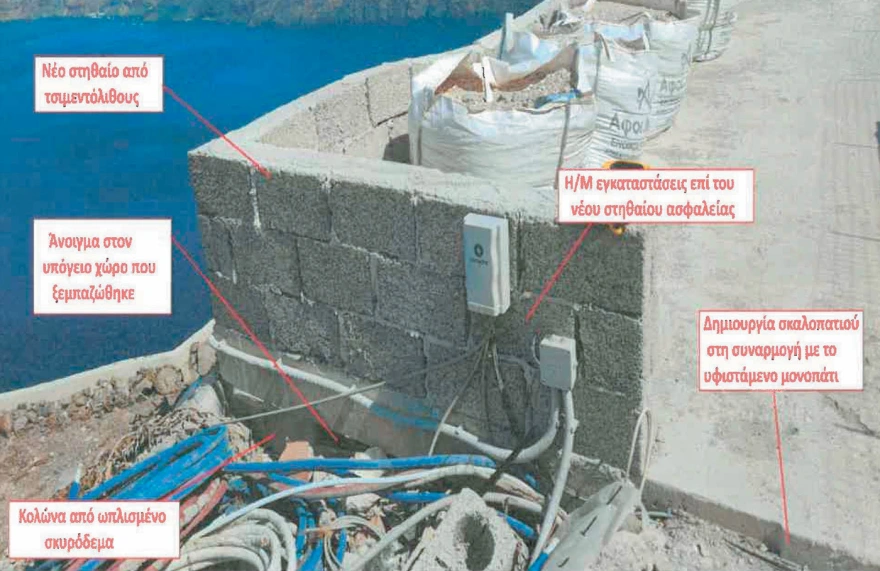
Escalating violations and penalties
A subsequent inspection in January 2025 uncovered further breaches: brick walls erected where stonework was required, creating an additional 61.6 m² of unauthorized construction. Authorities assessed the value of the unlawful works at €360,360, imposing an equivalent fine, alongside an annual penalty of €180,180 until either demolition or legalization.
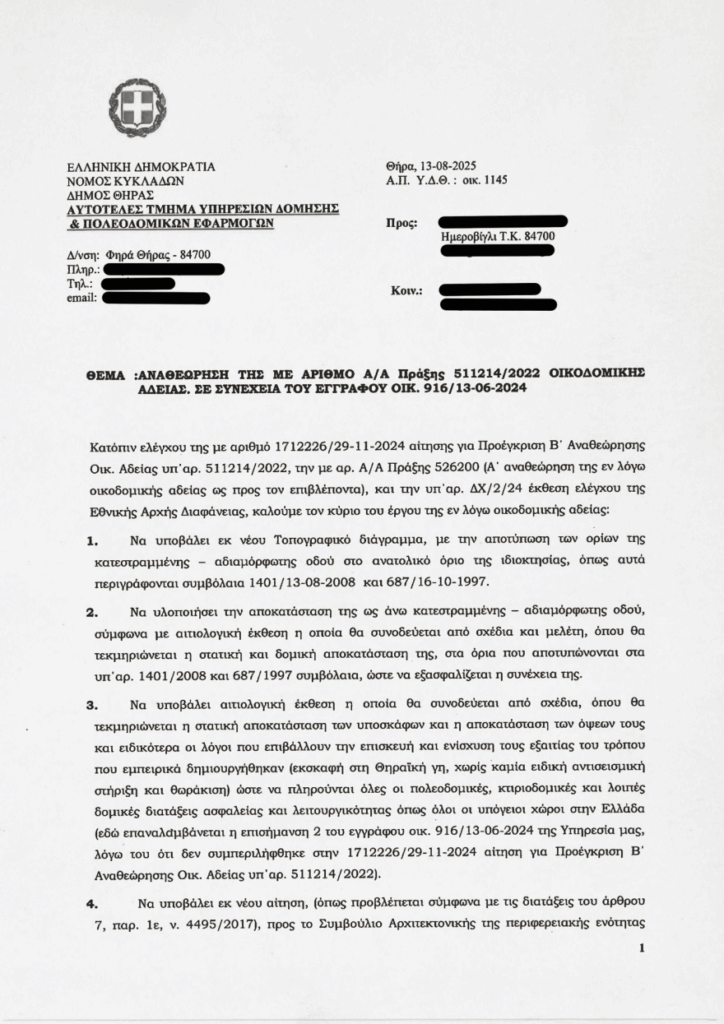
Although partial demolitions were later carried out and the owner applied for compliance, the project remained under investigation by the National Transparency Authority. Inspectors also demanded structural justification for stabilizing the Caldera path — vital as an evacuation route in the event of seismic activity.
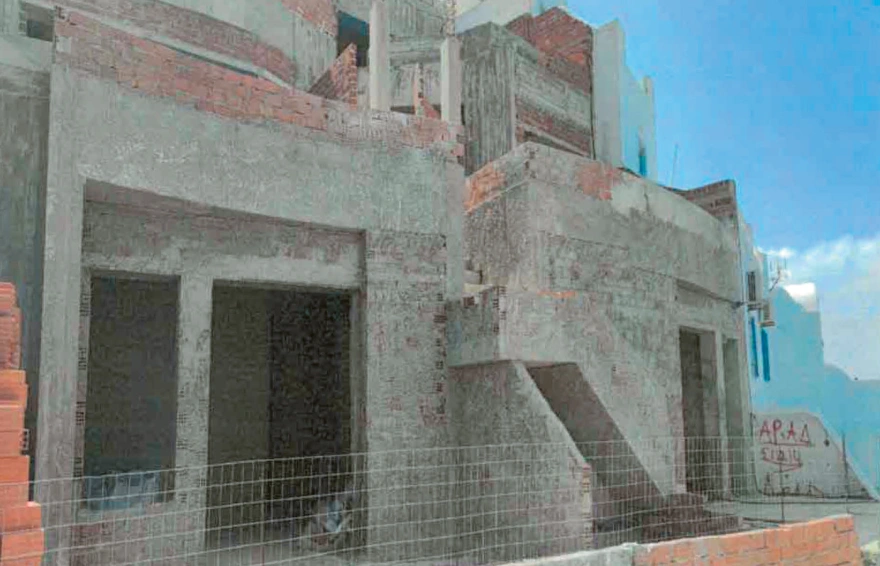
A landscape under siege
Experts caution that one project alone cannot be blamed for the August collapse. Rather, the landslide reflects the cumulative burden of decades of unchecked construction: inadequate seismic safeguards, routine dumping of debris and water down the cliffs, and the proliferation of pools and additions clinging to the fragile volcanic slopes. Yet each unauthorized extension, they warn, brings the Caldera closer to breaking point.
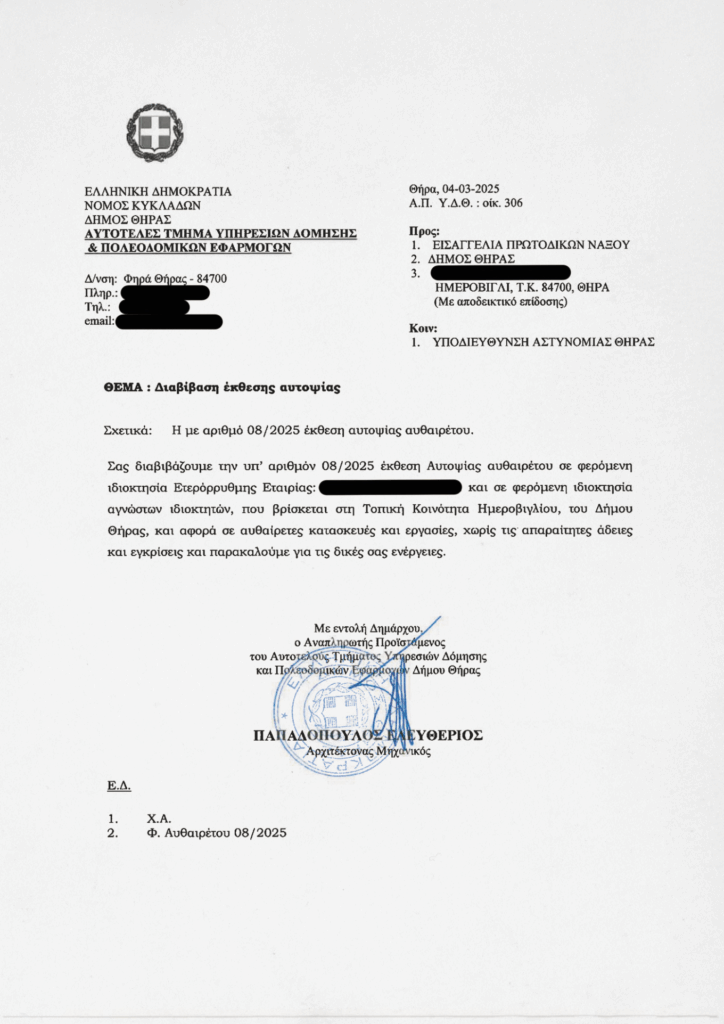
When contacted by Proto Thema, the architect who signed the original hotel permit stressed that she had resigned from supervising the project before works began. The developer, reached through a relative, declined to comment while reportedly abroad.
Ask me anything
Explore related questions