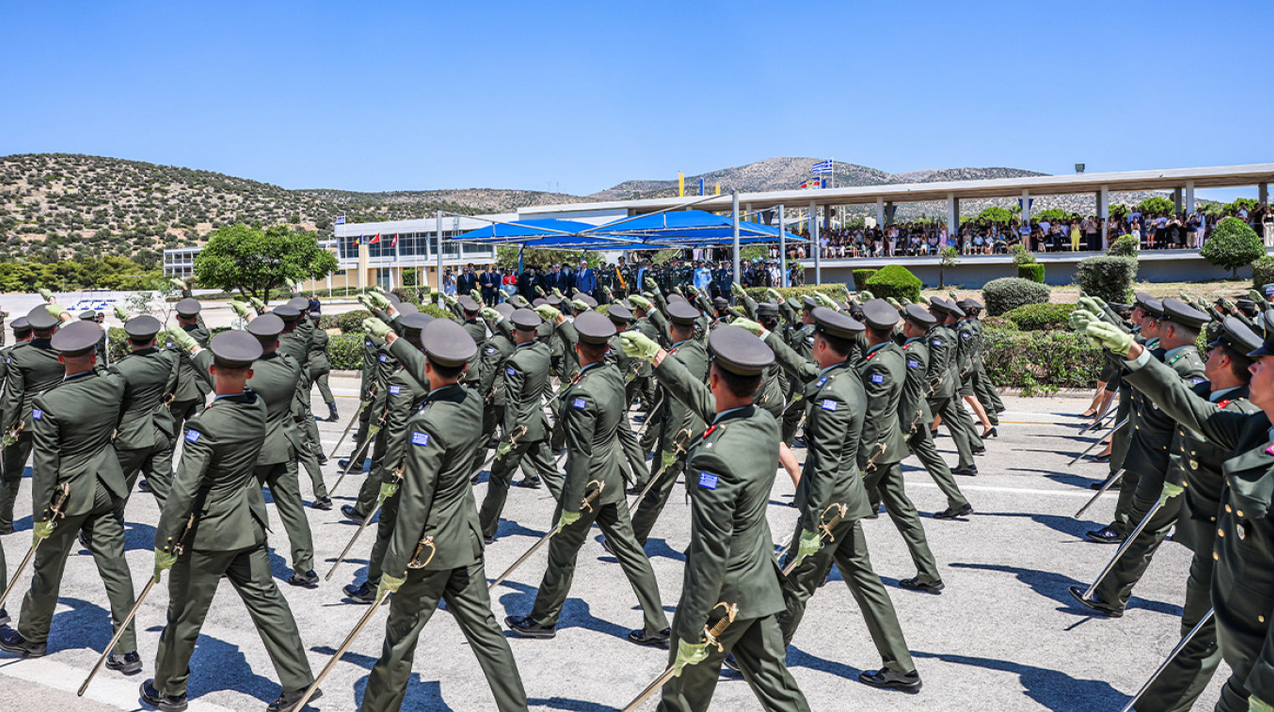
On average, the earnings of the Hellenic Armed Forces and security corps personnel will rise by the equivalent of 1.5 to 2 extra monthly salaries annually in the coming months, as the government’s announced measures for uniformed officers are gradually implemented. The first raise will be reflected in October’s payroll.
According to the economic team, this is the largest pay increase in at least the past 20 years.
Changes in special pay scales
The first raise will appear in October’s payroll, when the restructured special pay scales are applied for the first time. Armed forces personnel are expected to see their pay increase by an average of €145 per month, while police, fire service, and coast guard personnel will gain about €111 per month.
It should be noted that the horizontal risk allowance, introduced in July, has already raised pay, meaning that in just three months the average uniformed officer has seen their salary increase by more than €200 per month.
Uniformed officers also benefit significantly from the tax reform due to their early entry into the labor market.
Next step: January tax reform
The next milestone is January, when the tax reform announced by the Prime Minister at the Thessaloniki International Fair comes into force. The income tax rate will be cut by two percentage points in the three brackets between €10,000 and €40,000, reducing tax withholdings for middle-class employees and pensioners.
Specifically:
– For individual incomes between €10,000 and €20,000, the rate drops to 20% (from 22%).
– For €20,000 to €30,000, the rate drops to 26% (from 28%).
– For €30,000 to €40,000, the rate drops to 34% (from 36%).
Families with children will benefit even more, with extra relief depending on the number of children. Young people, however, will gain the most: those under 25 are exempt from tax on income up to €20,000, while for those up to 30, the tax rate for this bracket is just 9%.
This is particularly relevant for armed forces and security corps members, since graduates of military and police academies usually enter the job market before the age of 25, meaning they will enjoy these tax benefits for more years of their working lives.
Older personnel will also see their withholdings reduced, increasing their net pay, with further benefits if they have dependents.
Examples of pay increases for young uniformed officers after January’s tax cuts
Government spokesman Pavlos Marinakis presented the following examples:
– Second Lieutenant (entry rank for graduates of the Hellenic Military Academy), under 25 years old: Net monthly pay rises from €1,151 in October to €1,352 in January, an increase of €201 per month, or over €2,400 annually.
– Second Lieutenant aged 26–30: Net monthly pay rises from €1,199 to €1,395, an increase of €196 per month, nearly €2,400 annually.
– Police sergeant (22 years old, newly graduated, under 25): Currently earns €947 net, which will rise to €1,040 in January — an increase of €93 per month, or about €1,100 annually.
New raise through the minimum wage
The fourth raise for uniformed officers in nine months will come in April, when the regular increase in the minimum wage — which now also applies to the public sector — takes effect.
This will be the sixth increase since 2019 and will push up both linked allowances and reinstated seniority increments, delivering multiple benefits to all employees, including uniformed officers, who will see both direct and indirect improvements in their pay.
Thanks to these measures, the roughly 150,000 personnel of the armed forces and security corps are expected to gain the equivalent of 1.5 to 2 extra monthly salaries each year on average.
Ask me anything
Explore related questions