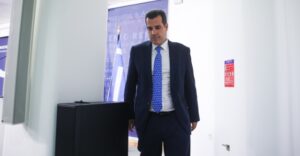
Minister of Migration Policy and Asylum Thanos Plevris spoke about the recent arrivals of migrants to Crete. He stressed that on the one hand, the elimination of flows from war zones—citing as an example Egyptians, who previously made up about 70% of arrivals—is clear evidence that the strict measures implemented have been effective.
On the other hand, he noted: “The fact that flows now come mainly from countries whose nationals have a strong chance of being granted asylum creates a problem. Yes, we have limited the inflows of illegal migrants, but not those from countries such as Sudan, or potentially Palestinians, who can arrive and apply for asylum.”
The minister emphasized the situation in Crete, where, he said, “sites have been cleared and those not entitled to asylum are kept in closed facilities awaiting return.” At the same time, he announced that a permanent reception facility is being planned on the island, since “40% of flows into the country now occur via Crete.”
Mr. Plevris also spoke at length about Prime Minister Kyriakos Mitsotakis’s meeting today with Turkish President Recep Tayyip Erdogan in New York. As he pointed out, “In the Eastern Aegean there is cooperation with Turkey, which has led to a 50% reduction in flows. However, Ankara is not cooperating on the issue of returns.”
Regarding Syrian refugees, the minister said that a new chapter is opening, as “those who received asylum due to persecution by the Assad regime can no longer justify retaining refugee status, except for minorities who continue to be persecuted.” He added that this issue will be raised both in Mr. Mitsotakis’s meeting with the Turkish president and in his discussions with the president of Syria.
“Exhumation is a matter for the judiciary”
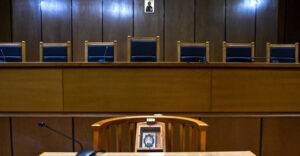
Asked about the hunger strike by the father of a victim of the Tempi rail disaster, Mr. Plevris stressed that the government fully respects the rights of the families, but “the decision on a possible exhumation lies exclusively with the judiciary,” adding that “it is not a matter for government intervention.”
Commenting on Panos Routsis’s hunger strike—he is the father of Denis, who died in the Tempi tragedy—the Health Minister reiterated that while the government respects the relatives and their rights, the exhumation of the child “is a matter solely for the judiciary.”
“He is requesting the exhumation in order to shed light on aspects that may not have been fully investigated. The right to exhumation falls under the jurisdiction of the courts, and the government cannot intervene,” Mr. Plevris said.
He also noted that the Supreme Court clarified that, in the event a request is submitted, the judiciary will assess whether the conditions for an exhumation are met. “This is not an evasion by the government but respect for the role of the judiciary,” he added.
The minister also referred to a public memorial space for the victims of Tempi, stressing the need for a distinct site separate from the Tomb of the Unknown Soldier. “The space in front of the monument is dedicated to the fallen of the homeland and should not be used for protests. However, we respect the pain of the relatives and their mobilizations, which remind us all of the national tragedy,” he said.
Finally, he noted that the Municipality of Athens could take initiatives for a monument or memorial site for the victims, ensuring respect for both memory and the families’ demands. Mr. Plevris emphasized that the government fully understands the father’s pain and his demand for exhumation, but the process must proceed strictly through judicial channels.
Ask me anything
Explore related questions