





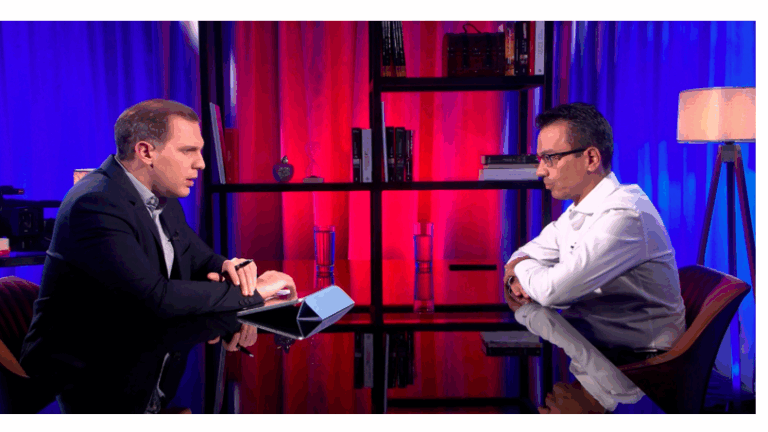
A few hours before the meeting between Kyriakos Mitsotakis and Recep Tayyip Erdoğan, Sotiris Sermpos, Associate Professor of International Politics at Democritus University of Thrace, explained to Direct and Giorgos Evgenidis why Turkey today appears more demanding and confident than ever, the mistakes of Greek diplomacy, and how international developments from Gaza to Ukraine shape the limits of Greek foreign policy.
Sotiris Sermpos on Direct
In his interview with protothema.gr, Sermpos emphasized that Greece must realistically assess the new international environment: “We are in an era where liberal values and international law are devalued. The world is becoming harsher and more transactional, without a power able to stabilize it,” noting that this requires an adaptation of Greek diplomacy.
Regarding today’s Mitsotakis–Erdoğan meeting, he explained that the framework is completely different from previous periods: “In the past, when Turkey had a poor relationship with the West, it sought support. Today, we have a West that wants to approach Turkey, and Erdoğan has learned his lessons and appears more confident. Turkey’s diplomatic leverage has increased, and Greece will need to navigate the triangle of West–Greece–Turkey.”
The Professor of International Politics warned that Athens cannot continue with the same old approaches: “We have a bunch of keys and keep trying the same ones, but the door has changed. Turkey is not the same, its demands have multiplied,” highlighting the need for “planners and architects” in foreign policy capable of managing a complex environment.
On regional developments, he noted that the Middle East will remain a central focus, emphasizing that “Turkey is transactional in its approach.”
About Gaza, he stated: “What triggered the conflict was October 7. This is a war that must be won ideologically at the end of the day. Legitimacy does not only apply to Israel; Hamas does not have it either.”
Sermpos explained that Greece must see its relationship with Israel through the lens of harsh reality: “It was Israel that came to us when Turkey changed its stance. We are a community of interests and values. However, every country fights its own wars. Israel will not solve everything for us.”
Finally, he assessed that Europe has already missed crucial opportunities: “Putin’s success is inseparably linked to Europe’s failure. Ukraine received aid only to defend itself, not to reclaim territory. The historian of the future will be harsh on the EU. We must see crises as opportunities,” he emphasized.
He concluded that Greek foreign policy needs a triple strategy: “Self-preservation, renewal, adaptation. This is the triptych for Greece in a changing world.”
Ask me anything
Explore related questions




