Sustainability emerges as a decisive factor for business resilience and growth, according to the new CEO Study 2025 by the UN Global Compact in collaboration with Accenture. Specifically, 88% of CEOs state that the business case for sustainability is stronger today than five years ago, while 99% plan to maintain or even strengthen their commitments to climate, the environment, and society — even if they choose to speak less publicly about them.
The survey, which captures the views of nearly 2,000 CEOs across 128 countries and 18 industries, records the shift from ambition to action at a time when 2024 marked the first year exceeding the 1.5°C threshold of the Paris Agreement.
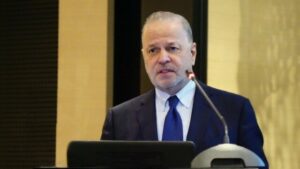
As part of the study, 35 in-depth interviews were conducted with CEOs and Chairpersons of companies that are UN Global Compact members, including Evangelos Mytilineos, CEO of METLEN Energy & Metals and President of Eurometaux, and Marcel Cobuz, Chairman of the Executive Committee of TITAN Group.
According to the study, Greek companies are participating more actively in the global sustainability dialogue, embedding sustainable development in their strategic planning with the support of the UN Global Compact Network Greece, which brings together companies and organizations to apply the Principles of responsible business and achieve the SDGs.
Addressing the challenges, Evangelos Mytilineos emphasized:
“While the world is investing in green technologies and renewable energy, the foundations remain shaky. At the peak of summer, up to 25% of renewable energy production is lost because the grid cannot absorb it. Investments in core infrastructure are needed to ensure that we move forward strategically.”
For his part, Marcel Cobuz noted:
“By expanding our activity in alternative cementitious materials, we are promoting sustainability in construction through the circular use of industrial byproducts such as fly ash and slag, while at the same time responding to the ever-increasing demand for low-carbon, high-performance materials.”
Overall, the CEOs participating in the study stress that sustainability is a critical factor for business resilience, growth, and positive impact:
- 97% believe that by 2050 sustainability will be fully integrated into core strategies and linked to executive compensation.
- Already, 93% report significant benefits from renewable energy over the past 25 years, while 72% foresee even greater progress in the coming years.
- At the same time, 95% of CEOs underline that timely compliance with the international regulatory framework is a fundamental priority for top management, and 97% expect strong growth in digital monitoring tools and sustainable supply chains.
Despite the recognized role of innovation and technology in achieving the SDGs, businesses show delays — mainly in the use of digital monitoring and measurement tools for sustainability across value chains, as well as in workforce skills. Only 27% of CEOs are considering the use of such tools, while many admit they are only partially prepared for macroeconomic and environmental challenges.
Conclusion
The CEO Study 2025 proposes five strategies to help businesses close gaps and turn commitments into credible action:
- Collaboration on regulatory frameworks to strengthen sustainable development
- Responding to and leveraging consumer demand to drive innovation and competitive advantage
- Expanding access to technology for inclusive sustainable solutions
- Upskilling the workforce for long-term resilience and competitiveness
- Leading with credibility and integrity to build trust and positive impact
The study concludes that the transition to sustainability is now inevitable, and that businesses acting swiftly will secure resilience and a leadership position in the market of the future.
Ask me anything
Explore related questions