





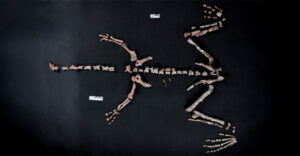
Argentine scientists have discovered in the Andes mountains the nearly complete skeleton of a new dinosaur species that lived about 230 million years ago, making it one of the oldest dinosaurs in the world, the Conicet institute announced on Wednesday.
The skeleton of this long-necked species, named Huayracursor jaguensis, was found at an altitude of 3,000 meters in the province of La Rioja, northwestern Argentina, by a team of paleontologists from Conicet, the country’s public research institute.
The discovery was published in the scientific journal Nature.
[CIENCIA] En La Rioja, investigadores del CONICET descubrieron restos de una nueva especie de dinosaurio: lo llamaron "Huayracursor Jaguensis". https://t.co/7HtjExGLXg pic.twitter.com/AJqIGs0O1b
— ElCanciller.com (@elcancillercom) October 15, 2025
This species lived at the end of the Triassic period, a geological era during which the first dinosaurs and the ancestors of mammals appeared, the researchers explained in their statement.
“We estimate that Huayracursor is between 230 and 225 million years old, which makes it one of the oldest dinosaurs in the world,” explained Agustín Martinelli, one of the authors of the article.
Although the species belongs to a group of herbivorous dinosaurs that includes the giant long-necked sauropods, researchers note that an adult would have stood about two meters tall and weighed around 18 kilograms.
The skeleton found includes part of the skull, a complete vertebral column extending to the tail, and almost all forelimbs and hind limbs.
The authors of the study believe that this fossil will become a reference point for the study of dinosaur evolution, thanks to its exceptional state of preservation.
Ask me anything
Explore related questions




