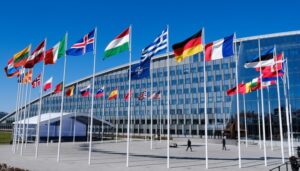
A proposal to allow new countries to join the European Union without full voting rights is being considered by the bloc in an attempt to overcome a veto by Hungary and other countries on Ukraine‘s membership and speed up the enlargement process. The plan – of which Politico has learned – is at an early stage and, according to European diplomats, requires unanimous approval from member states.
The idea envisages that new members would only gain full rights once a review of how the EU works is completed, making it harder for individual countries to veto policies and critical decisions.
It is an initiative promoted by pro-enlargement countries such as Austria and Sweden, which are seeking to reinvigorate a process that has been “frozen” by opposition from Hungary and other capitals.
Enlargement has become a strategic priority for the EU amid Vladimir Putin‘s policies. However, the prospect of increasing the number of member states from 27 to 30 in the next decade reveals deep internal disagreements.
“Limited rights until reforms are completed”
The chairman of the German parliament’s European Affairs Committee, Anton Hofreiter, stressed that “future candidates must give up their veto rights until basic institutional reforms, such as the adoption of qualified majority voting in most political decisions, are implemented.” As he said, “enlargement cannot be delayed because individual member states block changes.”
Under the proposal, countries such as Ukraine, Moldova and Montenegro could join partially, enjoying the economic and institutional benefits of the EU without, however, having a veto.
According to European officials, the plan is being discussed informally between member states and the European Commission. The logic behind the proposal is that partial membership would allow for more flexible terms without the need to revise the EU treaties – a process that is considered politically impossible in many capitals.
Internal resistance and diplomatic concerns
In the past, EU leaders have argued that such a review is necessary before any new enlargement, warning that the entry of countries such as Ukraine could cause an institutional deadlock. Efforts to remove the veto for existing members as well have been strongly resisted, not only by Hungary, but also by France and the Netherlands.
Hofreiter argued that the new plan “will ensure that the EU will remain functional even after enlargement”. He said representatives of the Western Balkan countries have already expressed “positive signals” in this direction.
Increasing frustration in the Western Balkans
The proposal comes at a time of intense discontent from countries that have been waiting years to join, despite having undertaken extensive reforms. Montenegro’s president, Jakov Milatovic, told Politico that “the last country to join the EU was Croatia ten years ago – and in the meantime the UK has left,” adding that “it’s time to revitalize the European idea.”
Similar concerns were expressed by Ukraine’s Deputy Prime Minister Taras Kachka, who called for “creative solutions” to move the accession process forward, stressing that “waiting is not an option”. Ukraine’s candidacy remains frozen due to Hungary’s veto.
“We need a solution here and now,” Kachka said. “Russia is testing European security with drones – it is doing the same thing by undermining the unity of the European Union.”
The political context of enlargement
Commission President Ursula von der Leyen has put enlargement at the heart of her strategic agenda, seeking the accession of Ukraine and Moldova by 2030. However, member states appear cautious, as the strengthening of right-wing parties in many countries makes it politically difficult to expand the Union.
According to draft conclusions of Thursday’s summit in Brussels, enlargement is not even mentioned, sparking anger from countries in favour of the process.
Austrian European Affairs Minister Claudia Plakolm warned that “unless the EU moves faster and more effectively, it will lose ground to third parties already waiting to take its place.”
Outlook and next steps
On Wednesday, the leaders of the Western Balkans – Albania, Bosnia-Herzegovina, Kosovo, Montenegro, North Macedonia and Serbia – will meet in London as part of the “Berlin Process” to strengthen regional cooperation in view of their European perspective.
Meanwhile, the Commission is preparing to present the new enlargement package, which will include a proposal for institutional reforms to make the EU ready to welcome new members.
Ask me anything
Explore related questions