Hurricane Melissa, after its destructive passage through Jamaica, is now approaching southeastern Cuba with winds of 210 km/h. The National Hurricane Center (NHC) reports that the storm is strengthening again and could reach land in the next few hours as an extremely dangerous Category 4 hurricane.
The eye of the storm is about 180 kilometers southwest of Guantánamo, moving northeast at 14 km/h. The core is expected to cross Cuba’s eastern tip during the night (local time) and then sweep across the southeastern and central Bahamas on Wednesday.
Meanwhile, Jamaica has been downgraded from a hurricane warning to a tropical storm warning as conditions gradually improve there.
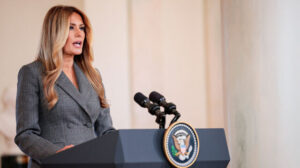
U.S. President Donald Trump stated that the United States is closely monitoring the damage caused by Hurricane Melissa and is ready to assist Jamaica in its recovery. “On a humanitarian basis, we must. So we are watching closely and are ready to act. But it is causing tremendous damage,” Trump said to reporters aboard Air Force One, traveling from Japan to South Korea. “It is literally just… tearing everything down in its path,” he added about the storm.
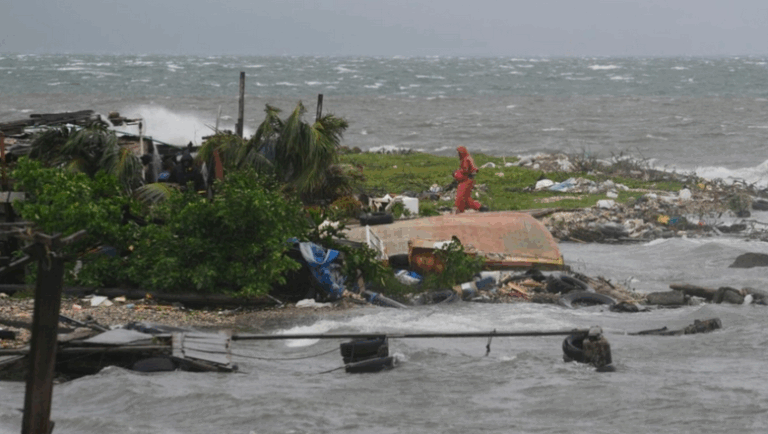
A video shared by the Jamaican Police shows officers inspecting extensive damage in Black River, near the area where Hurricane Melissa made landfall as a Category 5 storm on Tuesday.
The area suffered severe damage, with debris and vehicles submerged in muddy waters, according to the video. Downed power lines covered the area as police patrolled.
Jamaican authorities reported on Tuesday that the country’s infrastructure had been “severely threatened” after the hurricane made landfall, marking the strongest storm ever to directly hit the Caribbean nation.
Jamaica Counts Its Wounds After Melissa’s Passage
Hurricane Melissa struck Jamaica with unprecedented intensity, leaving widespread destruction and massive power outages. The U.S. National Hurricane Center reported that the hurricane’s “eye” has now left the country and is heading toward Cuba, while the Jamaican government declared the island nation a disaster zone.
The NHC announced that “the eye of Hurricane Melissa is leaving western Jamaica via the northern coast.” Meanwhile, the public was urged to remain protected as conditions remain “extremely dangerous.” The hurricane, which had hit the country as a Category 5 on the Saffir–Simpson scale, was downgraded to Category 4 a few hours later, but it continues to cause extensive damage.
Jamaican Prime Minister Andrew Holness announced that his government officially declared the country a “disaster area.” In a social media post, he stated: “The government’s first priority is always the safety and well-being of every Jamaican. Hurricane Melissa is now here, crossing the island. This requires new legislative measures.” Holness added that the government will continue “to proactively maintain stability, protect consumers, and prevent exploitation at a time when citizens are securing food, water, and supplies.”
According to authorities, more than 530,000 residents remain without electricity — about 77% of all customers of Jamaica’s Public Service Company. Meanwhile, nearly 15,000 people have found temporary shelter in camps and school buildings across the country. Authorities warned that heavy rainfall would continue in many areas, while others would experience lighter effects in the coming hours.
Nearly every parish in Jamaica has reported blocked roads, fallen trees, and severe flooding, making damage assessment currently impossible. Jamaica’s Minister of Local Government, Desmond McKenzie, said that St. Elizabeth Parish has been severely affected by floods, noting that “the water reaches up to my waist.”
So far, no deaths have been confirmed in Jamaica, while emergency services continue rescue and relief operations in isolated areas. Authorities remain on alert as the hurricane moves north toward Cuba, maintaining strong winds and heavy rainfall expected to impact the island in the coming hours.
To date, seven people have died in the Caribbean due to the storm — three in Jamaica, three in Haiti, and one in the Dominican Republic — while another person is missing, according to the Associated Press.
Meanwhile, a dramatic account came from a man in western Jamaica who called a local radio station seeking help for a pregnant woman going into labor as the storm hit the island. A midwife intervened by phone, giving instructions on how the delivery could be managed if the woman could not reach a hospital in time.
The Red Cross warned that up to 1.5 million people are expected to be directly affected by the hurricane.
Warning About Crocodile Movement Due to Flooding
Jamaica’s Southeastern Regional Health Authority announced that the extreme weather hitting the country could displace crocodiles from rivers, streams, and swamps, causing the reptiles to seek shelter in populated areas in search of dry land.
Authorities warned citizens to avoid flooded areas and emphasized that they should not attempt to capture or harm the animals if encountered.
Ask me anything
Explore related questions