





An old stone-built “prosteada” — a small, simple building where villagers sheltered their animals, stored food, and kept tools — was the only structure on the plot purchased by chef and Saronia owner Kostas Karpondinis. This would become the home of his dream: to open his own dining space in his village and serve the best versions of the flavors he grew up with — dishes that honor Naxos, its traditions, and the people who work tirelessly across the island.
Passion for Cooking
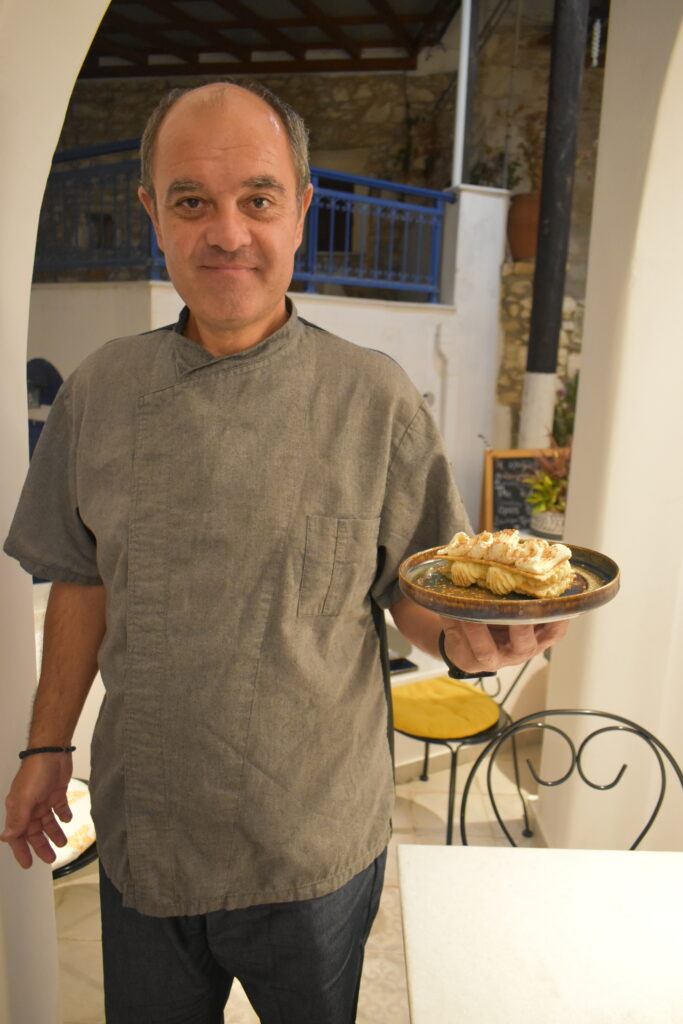
Originally from Kinidaros, Kostas Karpondinis, like his wife — an Athenian with a deep nostalgia for her husband’s village — always felt drawn to cooking and gastronomy. After two years of studies in food technology, a stint as a chef at a well-known Santorini restaurant where he decided to open his own place, his long-awaited return to his homeland, two years of culinary studies at the Naxos Culinary School to gain the proper foundation, countless hours in the kitchen experimenting, innovating, and finding the ideal balance with authentic Naxian flavors — all fueled by passion and love for the culinary arts. The result is a menu of roughly 35 dishes, consciously focusing on traditional cooked meals so as not to compete with the village tavern, which has made Kinidaros a top destination for meat lovers in Naxos.
Ingredients from the Family Garden
Alongside talent and the pursuit of perfection, the purity of ingredients plays a central role at Saronia. “We are lucky to cook with our own products and are proud of that. I wanted this, my second home, to offer pure, clean flavors — like the ones I cook at home for my children,” Kostas emphasizes. Seasonal vegetables from the family garden are prominently displayed in the kitchen: potatoes, tomatoes, eggplants, zucchini, onions, fennel, and chard. They also use organic olive oil from the family’s 300 olive trees in Kinidaros for salads and stews.
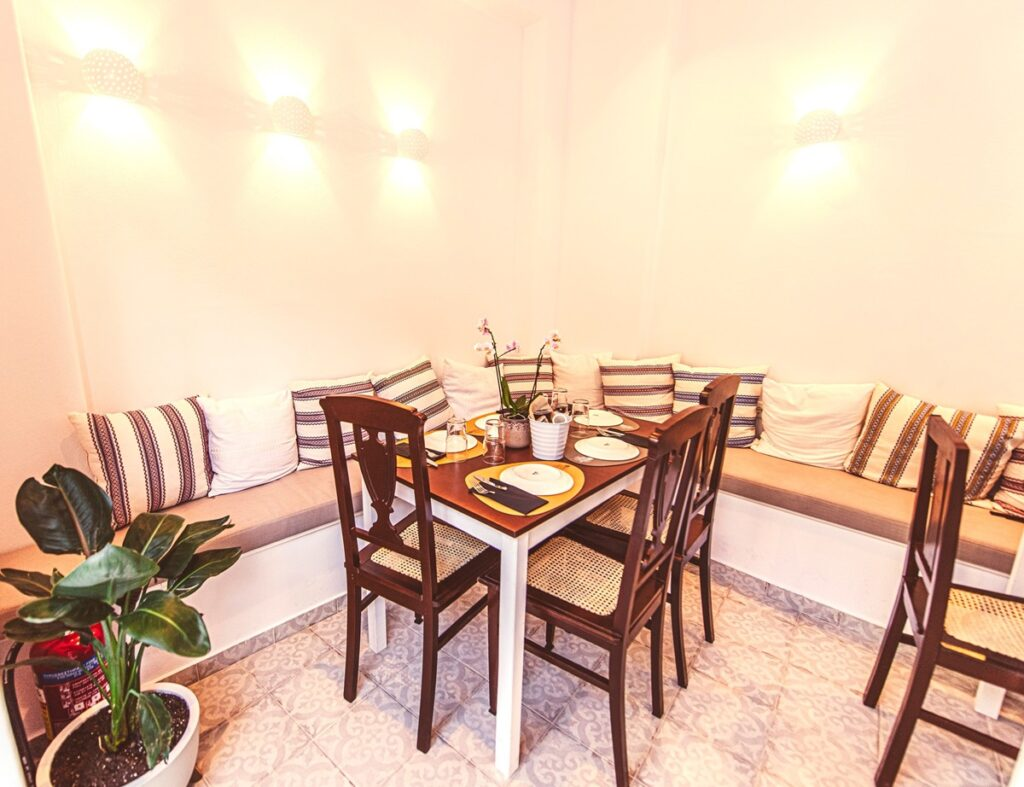
Meat comes from their own sheep, goats, rabbits, and roosters. They also make their own anthotyro and xinotyro cheeses and collect eggs from their hens. “With our own xinomizithra and tomatoes from the farm, the ‘kagianas’ becomes the signature flavor of the family,” he says. Anyone tasting his dishes immediately feels transported to an authentic, well-prepared family table.
A Modern Interpretation of Kinidaros Tradition
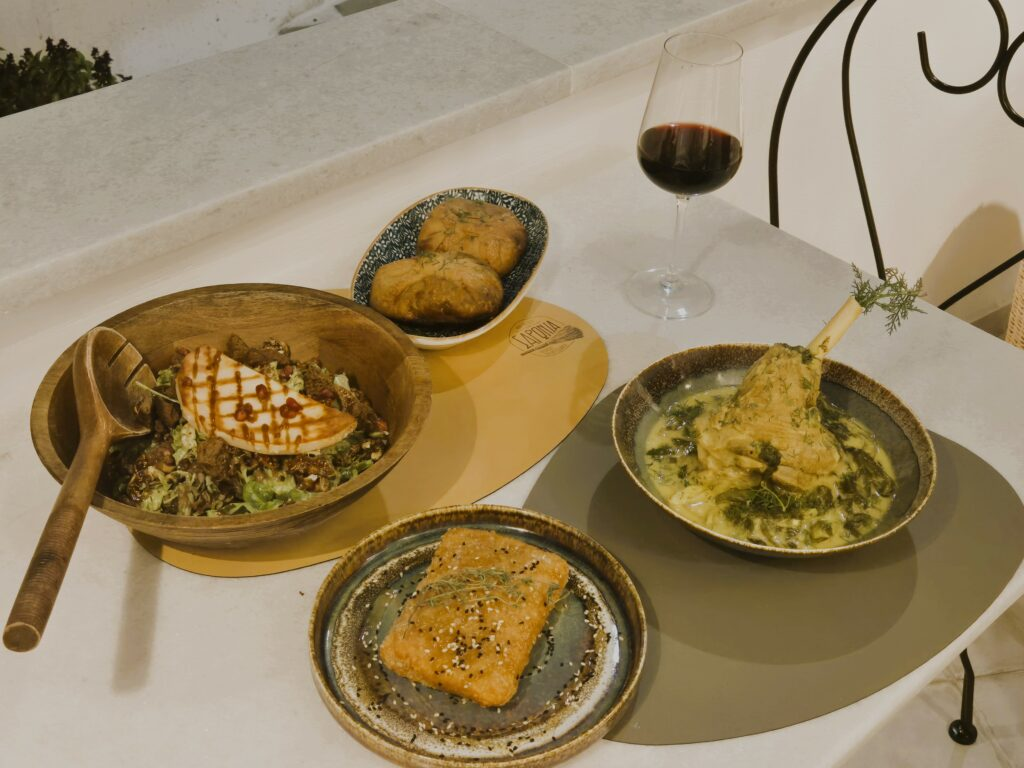
When asked which flavors customers favor, Kostas replies that fricassee lamb is undoubtedly the star of the menu.
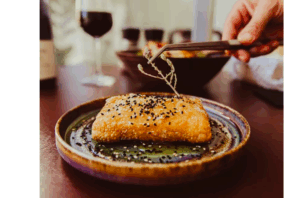
One of Naxos’ famous cheeses, the dry anthotyro (here called “travagmeno”), is served grilled in a refreshing Saronia salad with green leaves, dried figs, caramelized walnuts, and pomegranate seeds. Feta, often misused elsewhere, is transformed here into the ultimate appetizer with honey, paying tribute to tradition. Traditional pies with chard (“sefoukla” in local dialect) are prepared in some villages of the island, just like the xerotigana, both of which bring guests straight to mountainous Kinidaros. The difference in this special saganaki lies in the dough, the same used by Naxian housewives for the classic sweet treat: xerotigana.
Making Traditional Xerotigana
Kostas invites his wife’s mother, Maria, to share her version, serving sweet treats made with raki, orange juice, and ash water. Maria explains: the traditional Kinidaros dessert was made as a morning treat before weddings, served at the end of the church service as an invitation for villagers to stay for the wedding feast. Simple fried dough pieces, made without water but with raki, were sprinkled with honey, roasted sesame, cinnamon, or walnuts depending on family wealth. It was also a dessert for christenings and a winter treat that lasted because it contained no eggs. Until 1968, when electricity arrived, xerotigana were fried over open fires, and until 1985, Naxos produced its own flour from local emmer wheat.
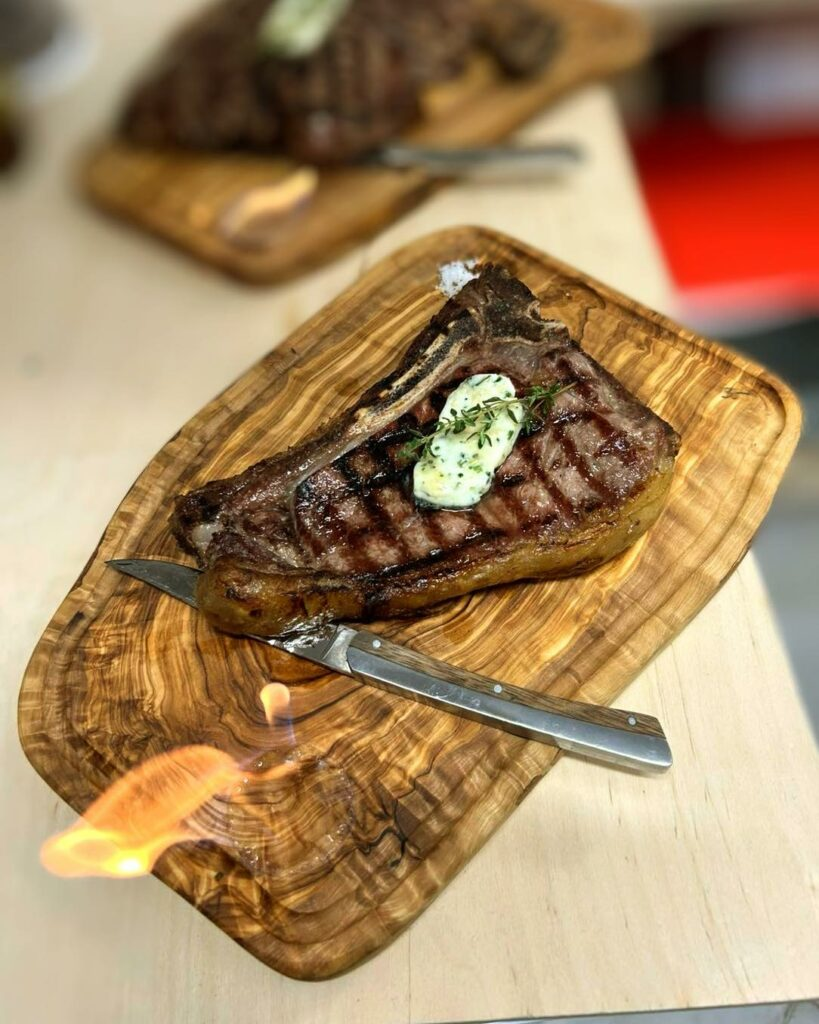
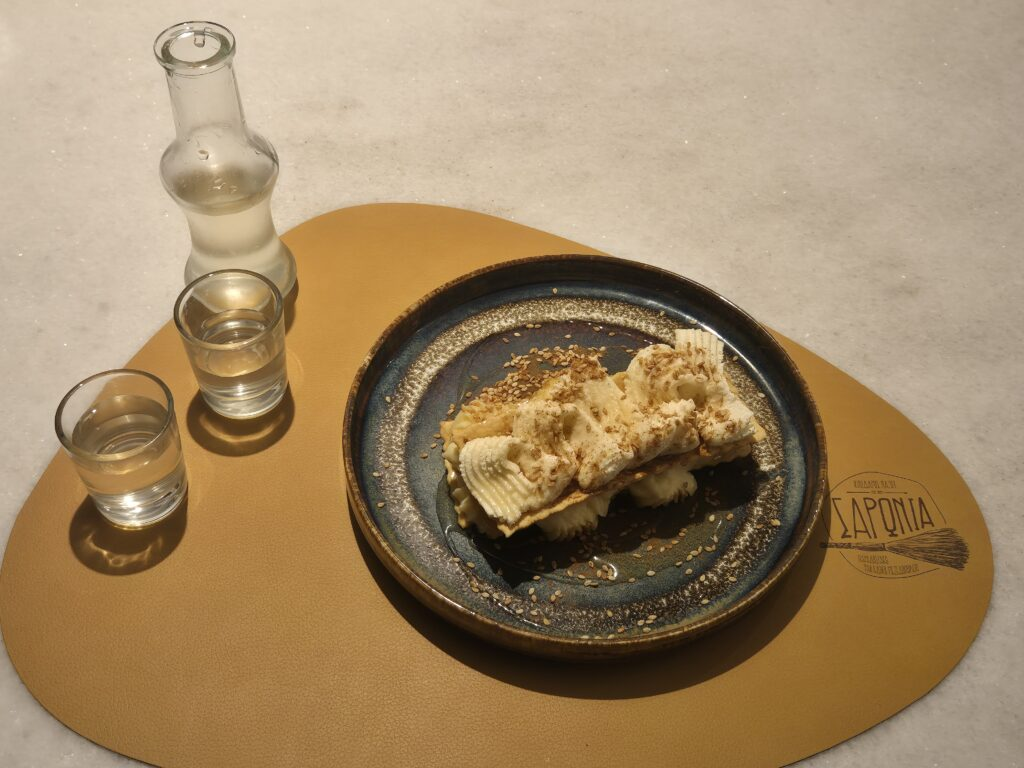
Kostas elevates the dough with pronounced raki notes, while honey and sesame highlight traditional flavors, transforming it into a modern dessert — a creative mille-feuille. Puff pastry is replaced with oven-baked xerotigana for a lighter texture, and the classic cream is replaced by a custard-like cream with local anthotyro.
Recipe for Kinidaros Naxos Xerotigana
Ingredients
- 1 kg strong flour
- 1 small glass vegetable oil (for a lighter dough, per Maria)
- ½ tsp salt
- 1 small glass fresh orange juice
- 1 small glass lye water, preferably from fresh aromatic wood, not pine (double-filtered through a coffee maker)
- 1 tsp baking soda
- 1 glass raki
For frying:
- 1 kg vegetable oil
- 1 kg olive oil
For serving:
- Honey
- Cinnamon
- Roasted sesame
Method:
- In a bowl, mix flour with salt and oil, just enough to rub the oil into the flour.
- Add orange juice, then the lye water with dissolved soda and half the raki. Knead, gradually adding the remaining raki until the dough is silky.
- Divide into 100 g pieces, roll thin, cut into rectangles, and fry in hot oil. Flip once they rise to the surface and remove after a few seconds. Drain on paper towels.
- Store in a paper box with layers separated by paper towels for up to a month.
- Before serving, drizzle with honey, sprinkle with cinnamon and sesame.
From October until the next summer season, Saronia restaurant operates Friday to Sunday and on official holidays.
Ask me anything
Explore related questions




